Changes and continuities: language, laws and Church (OCR GCSE History B (Schools History Project)): Revision Notes
📚Revision Notes
Changes and continuities: language, laws and Church
Language
French became the main language used by the king and his court from the Norman Conquest until the end of the 14th century. The Normans introduced new words into the English legal system such as justice, prison, constable, agreement, court, fine, evidence and debt. Ordinary people continued to speak English.
The first written statements and proclamations were made in English when William became king since he wanted a smooth transition from Edward the Confessor's rule to his. After the Anglo-Saxon resistance between 1068 and 1070, the king relied less on the English for support and more on his loyal Norman advisors. As the Norman culture became dominant, changes in language were evident.
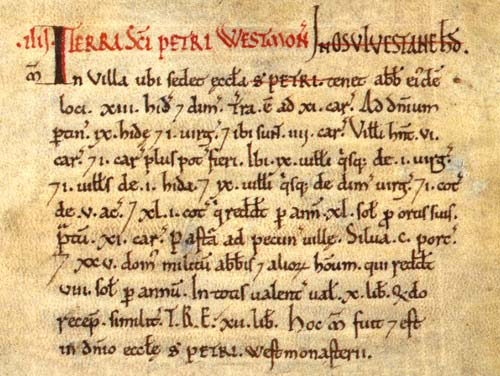
Domesday Book written in Latin
Note
Church and official documents continued to be written in Latin. The judge gave his sentence, which was written in Latin, orally in French.
Church
England had been a Christian country for centuries by the time of the Norman Conquest. Every village had a church. There were several large cathedrals and a significant number of monasteries could be found in England. The institution of the church was extremely powerful, owning a large proportion of the land and theoretically run by the Pope in Rome, not the King.
There were also many problems within the Church, with accusations of corruption and criticism of the tendency of leading churchmen to enrich themselves. This would be tackled during William's reign by an extensive series of reforms.
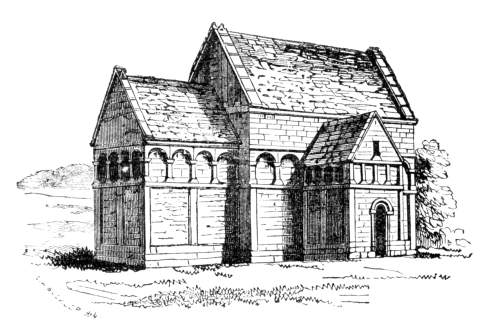
Saxon church at Bradford-on-Avon, Wilts
Note
William was a devoted Christian. Before he became the King of England, William had ordered the building of new monasteries in Normandy. He attended church services and prayed every day.
William was a supporter of the Pope and had been extremely pleased to receive papal backing prior to his invasion of England in 1066. When he became king, he was shocked by several aspects of the English Church. There was widespread corruption amongst the highest ranks of the clergy, which he wanted to address.
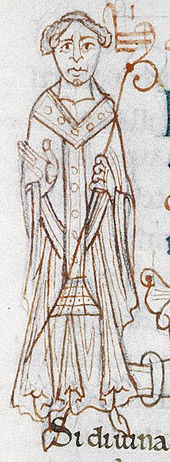
Stigand
- Stigand was an Anglo-Saxon churchman prior to the Norman Conquest and became the Archbishop of Canterbury. He acted as an advisor to both Anglo-Saxon and Norman English kings, serving six successive kings.
- Stigand was controversial because he was an archbishop but also refused to give up his position as the Bishop of Winchester. Since pluralism was not condoned by the Pope, he was excommunicated, but managed to hold on to his position until 1070.
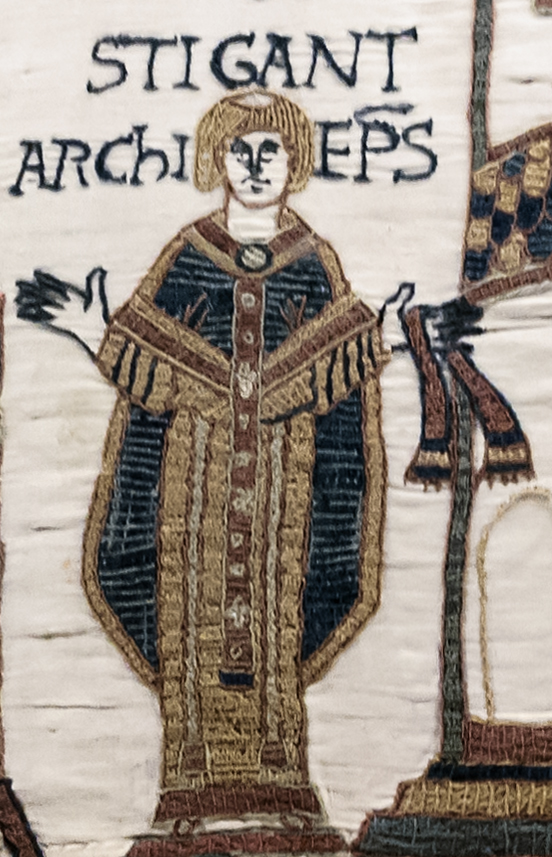
A depiction of Stigand from the Bayeux Tapestry
Note
Stigand was finally deposed and imprisoned in 1070, and his estates and personal wealth were confiscated by William. He was replaced by Lanfranc who became Archbishop of Canterbury.
Lanfranc, Archbishop of Canterbury
Religious Advisor
Lanfranc was a key adviser to William on religious affairs. Prior to William's invasion of England in 1066, Lanfranc had travelled to Rome on his behalf to collect the papal banner.
Papal Support
William was crowned for a second time by the Pope's officials to celebrate his crushing of the revolts against him. The presence of the papal ambassadors assisted William in removing Stigand. Lanfranc was confirmed as the new Archbishop of Canterbury and Thomas of Bayeux became Archbishop of York.
Archbishop of Canterbury
In 1070, Lanfranc became the Archbishop of Canterbury, replacing Stigand. This change happened with the support of the Pope who sent his ambassador to England in 1070
Reforms Implemented
Once he had established his authority in his new position, Lanfranc began to carry out far-reaching reforms of the English Church. He sought to make it less corrupt, more disciplined and efficient, and better able to communicate God's message to the people of England.
The Normanisation and reform of the Church during the reign of William I
Lanfranc identified a number of problems in the English Church that needed reform:
-
The practice of simony (buying and selling positions within the Church) needed to be eradicated.
-
Pluralism (holding more than one office within the Church) needed to end.
-
Priests needed to be more obedient to the rules of the Church (such as celibacy).
-
The Church needed to be better organised.
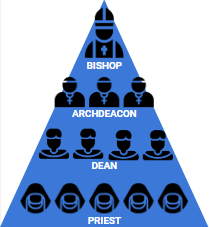
-
England was split up into areas called dioceses.
-
Each diocese was controlled by a bishop who was assisted by an archdeacon.
-
Diocese were divided into smaller deaneries with a parish priest who served a smaller church.
-
A dean ensured each priest followed Church law.
-
Synods (council for leading Church members) were held often to discuss important issues
The building of churches and cathedrals
- After their victory at Hastings, the Normans embarked upon a programme of church building. William wanted to show that the Normans were not just strong military leaders, but also that the king had an authority over and interest in religious matters.
- Wooden Anglo-Saxon churches were replaced with larger stone ones. This allowed the Normans to show their power and wealth to the people they ruled over.
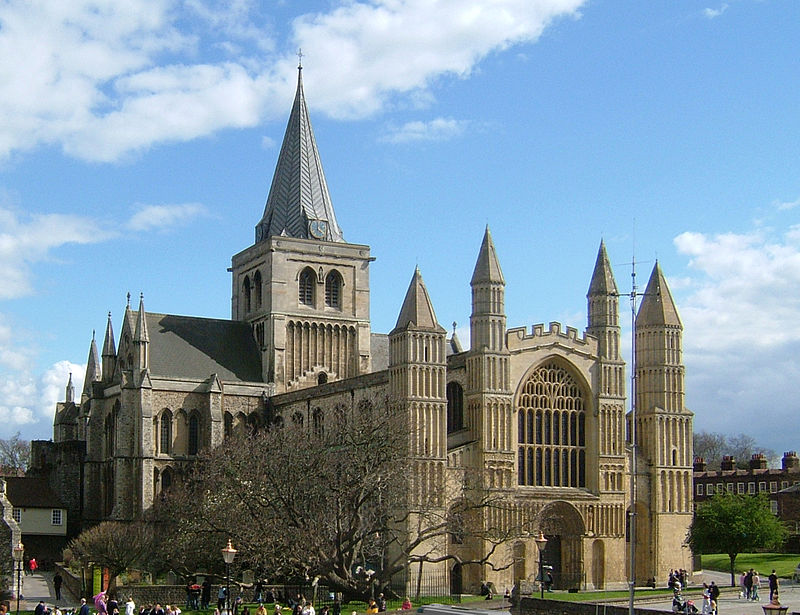
Rochester Cathedral, built in the 12th century
Cathedrals were also built in a number of places, such as Durham, Winchester and London.
The Church courts and Church-state relations
- The Church had its own courts in which clergy had the right to be tried. These courts often passed lighter sentences than those of the secular court.
- William mostly accepted the authority of these Church courts. However, when his half-brother, Bishop Odo, was arrested in 1082 after attempting to make himself Pope, William insisted he be tried in the king's court.
- Whilst William recognised the authority of the Pope over the Church, he disagreed with papal supremacy, believing the king should have the right to disagree with the Pope.
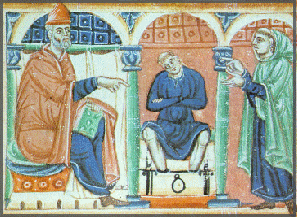
A depiction of a Church court in which a monk is held in stocks while being delivered judgement
- William also rejected that he owed the Pope homage for the lands that he had won in England. The relationship between the Pope and William's sons would deteriorate further.
The extent of change to Anglo-Saxon society and economy
Life for mediaeval people revolved around the king and the Church.
Peasants came under more pressure because William wanted more revenue from the land. Their life was tied to the land. Some slaves were freed because Normans believed that slavery was wrong.
For lords, life consisted of collecting taxes, studying Latin literature on how to rule, practising military skills, and hunting. Earls became tenants-in-chief but the earldoms' power was reduced to prevent the king's position from being challenged.
The most significant change from Anglo-Saxon to Norman society was the elimination of the classes of thegns and slaves: thegns were replaced by knights whilst slaves were freed primarily through the Church's disapproval of the practice.

Note
Whilst William stopped trade with Scandinavian countries, which impacted the Danelaw areas, he enabled the increase in trade with Normandy. The king's introduction of the feudal system made him more powerful
Laws and government
The Anglo-Saxon government was strong before the Norman Conquest. Therefore, William kept the structure and improved areas that needed changes.
How was the power centralised?
In order to gain total control and authority in the kingdom, William centralised power and placed the ownership of land under him.
The king owned all the land.
Reliefs and geld tax were paid to the king.
All land owners and users depended on the king.
The Church was Normanised under Lafranc.
Knights and troops were loyal to the king.
The limited use of earls and the role of regents
William wanted to maintain continuity with the reign of Edward the Confessor and prevent too much disruption. The centre of government remained the royal household and the Witan was renamed the Curia Regis (king's council).
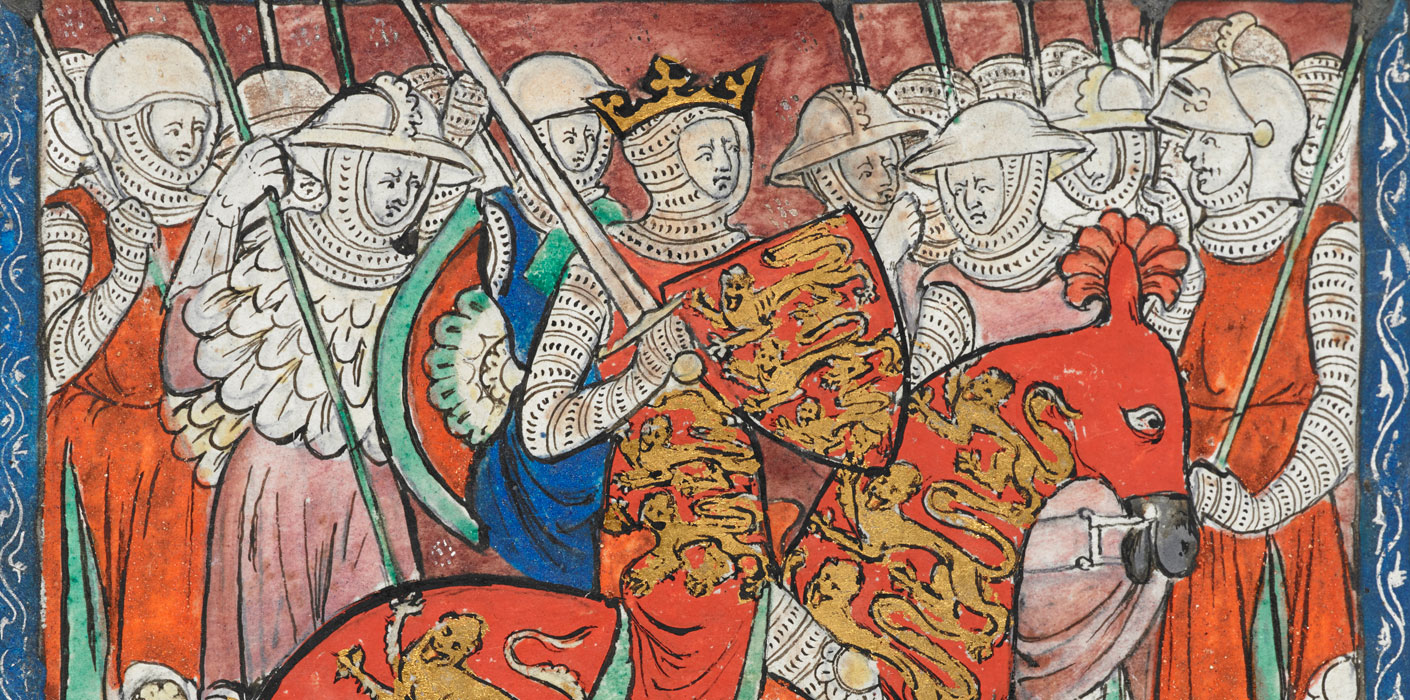
William the Conqueror
William then slowly changed the personnel helping him run the country:
- Anglo-Saxon officials were replaced by Normans and titles were changed to reflect those in use in Normandy, with officials including the chamberlain and the chancellor.
- The language of government, particularly writing, changed from English to Latin.
- The power of the earls was reduced and earldoms decreased in number.
- William appointed regents such as Lanfranc to run either England or Normandy whilst he was away.
The office of the sheriff and the demesne
Sheriffs, or shire reeves, were already in place in Anglo-Saxon society. WIlliam replaced the Anglo-Saxons with Normans and relied on them to strengthen royal justice.
How were the Norman sheriffs different?
- A reeve from Anglo-Saxon times had the power to hold court and deal with civil and criminal matters. They were generally barons and the position was only at the king's pleasure.
- Norman sheriffs were important royal officials, who only answered to the king and were responsible for keeping the peace, holding court and ensuring taxes were paid.
Note
Norman sheriffs were unpopular because they were entitled to a share of the revenues they collected from their shire and land-grabbing activities were associated with them.
All land that fell under a lord of the manor was called the demesne. It could be used by the lord himself or by sub-tenants and usually bordered the manor house. When William conquered England in 1066, all land in England was claimed by the king and came to be known as the Royal Demesne or Crown land.
Introduction and significance of the 'forest'
Before 1066, people were able to hunt, cut wood and collect food in the forest, woods, moorland and wetlands. This fell away after the Norman Conquest and Forest Laws were introduced.
Why was the forest significant?
- Ordinary people could not hunt, collect wood or gather food in areas legally designated as 'forest'. The penalty for breaking these laws was severe.
- Many landholders lost land to forest, which was not necessarily covered in trees.
- There were entire areas turned into forest, such as the New Forest in southern England.
- It proved that the power of the king was unquestionable.
- The conversion of areas into forest was basically land-grabbing, hence this made the act, which was also done by sheriffs and barons, seem acceptable.
- William earned revenue from the forests through the fines and the sale of hunting rights.
Glossary of terms
Domesday book
A manuscript record of the Great Survey of much of England and parts of Wales completed in 1086 by order of King William the Conqueror
Tenant-in-chief
A person in Norman England who held lands under feudal tenure
Fiefdom
An area over which someone exercises control as or in the manner of a feudal lord
Knight service
A form of feudal land tenure under which a knight held a fief or estate of land
Elite
A select group that is superior in terms of ability or qualities to the rest of a group or society
Demesne
A piece of land attached to a manor and retained by the owner for their own use
Forest
A legally defined area in mediaeval England where animals and the food they ate were protected for the pleasure of the king and for royalty and nobles to hunt
Normanisation
The conversion of Anglo-Saxon England into Norman
Exam Practise
Task 1
Note
Analyse the source and answer the questions which follow:
- What is the significance of the Domesday book?
- What can be inferred from the source about Norman government and the system of landownership?
Rohese, wife of Richard, son of Count Gilbert, holds Standon. Land for 24 ploughs. 29 villagers with a priest. 15 smallholders, 2 freemen and a Frenchman have 12 ploughs. 9 cottagers and 8 slaves. 5 mills at 45s; meadow for 24 ploughs; pasture for livestock; woodland, 600 pigs. Total value in 1086 £33; before 1066 £34. Archbishop Stigand held this manor in 1066. In this manor were six freemen.
- Domesday entry for Standon in Hertfordshire (1086)
Task 2
Note
Analyse the sources carefully and make a substantial discussion about the feudal system during the Norman period in England. Write about what you think of the hierarchy.
SOURCE B
Tenant-in-chief
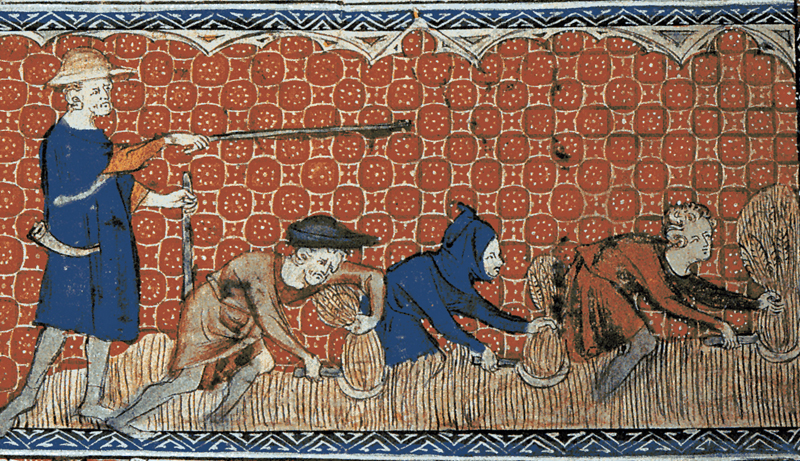
SOURCE C
Knight