Living conditions and lifestyles: housing, food, air quality and inactivity (OCR GCSE History B (Schools History Project)): Revision Notes
📚Revision Notes
Living conditions and lifestyles: housing, food, air quality and inactivity
Housing
Note
At the start of the 20th century, it is said that about 25% of the British population lived in poverty. Meaning, they could only afford to buy basic food, clothes, rent and fuel. Surveys suggested that the main cause of poverty in Britain was low wages. Meanwhile, extreme poverty, about 10% of the population, was caused by the loss of the main breadwinner due to illness and death.
By 1936, surveys showed that about 4% were living in extreme poverty, far much less than in the previous century. By 1950, absolute poverty (those who cannot afford to eat) is said to have been eliminated. Homes of the working class now had two rooms compared to one during the Industrial Revolution. In general, people had higher living standards.
By the 1920s, electric lights and appliances, such as vacuum cleaners and washing machines, became available to those who could afford them. Refrigerators and central heating were widely used by the rich in the 1960s.
Note
Both Booth and Rowntree's findings agreed that the main causes of poverty in 19th-century London were unemployment, illness and old age. They argued that the very young and old were more likely to be subjected to poverty.

Unemployment

Illness

Old age
In 1900, about 90% of the British population rented their home. By 1939, about 27% were able to own their own house. Many slum houses were cleared. However, bathrooms and lavatories inside houses only became common in the 1950s and 1960s.
Food
Note
By the turn of the 20th century, the food and diet of common Britons improved greatly. However, malnutrition among poor children was still common. During the First World War, food was expensive. About 60% of the working class income was spent on food. Before the Second World War, this percentage decreased to 35%.
During WWII, food like sugar, butter, bread, eggs and ham were rationed. Tea and sweets were also rationed until 1952 and 1953. By the 1980s, takeaways and restaurants became common. The British palette was introduced to Chinese, American and Indian cuisines.
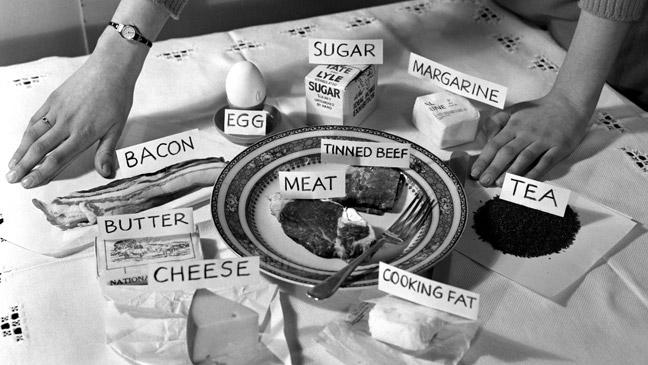
Image showing common food part of rationing in Britain until 1954
Working conditions
1900: 54 hours average working time in a week
1900: Workers had no paid holidays, only bank holidays
1939: One week annual paid holiday was introduced
1950s: Two weeks paid holiday was practised by many
1980s: At least 4 weeks paid annual holiday
Air pollution
Brought by the Industrial Revolution, London became the wealthiest yet most crowded city in Britain in the 1850s. The tremendous migration to London led to poor urbanisation, lack of access to clean water, and lack of proper waste disposal and sewage systems which then caused poor sanitary and health conditions. Given the filthy living and working conditions, particularly of the poor, epidemics quickly spread and life expectancy in London was just 37 years. The River Thames became the river of death for Londoners.
Note
Pea-soupers or the infamous London smogs choked many Londoners. Dense fog came from industries, homes with heaters and motor vehicles. In December 1952, London was covered by a killer smog. This five-day poisonous smoke prompted the passing of the Clean Air Act in 1956. At first, the government failed to take immediate action as many believed that thousands of mortalities were caused by the unseasonal weather conditions and influenza epidemic.
The 1956 Clean Air Act was passed to control domestic and industrial emissions. These emissions included dark smoke, smoke from furnaces and grit and dust from furnaces. Furnaces were required to be smokeless. Moreover, the act also enacted smoke control areas. In 1968, the Clean Air Act was revised which regulated chimney height. Local authorities were tasked to approve chimney heights so that emissions could not affect people's health.
Moreover, a fine of up to £100 was levied to those found guilty of emitting dark smoke. However, definition of dark smoke remained vague leaving the interpretation to the authorities.
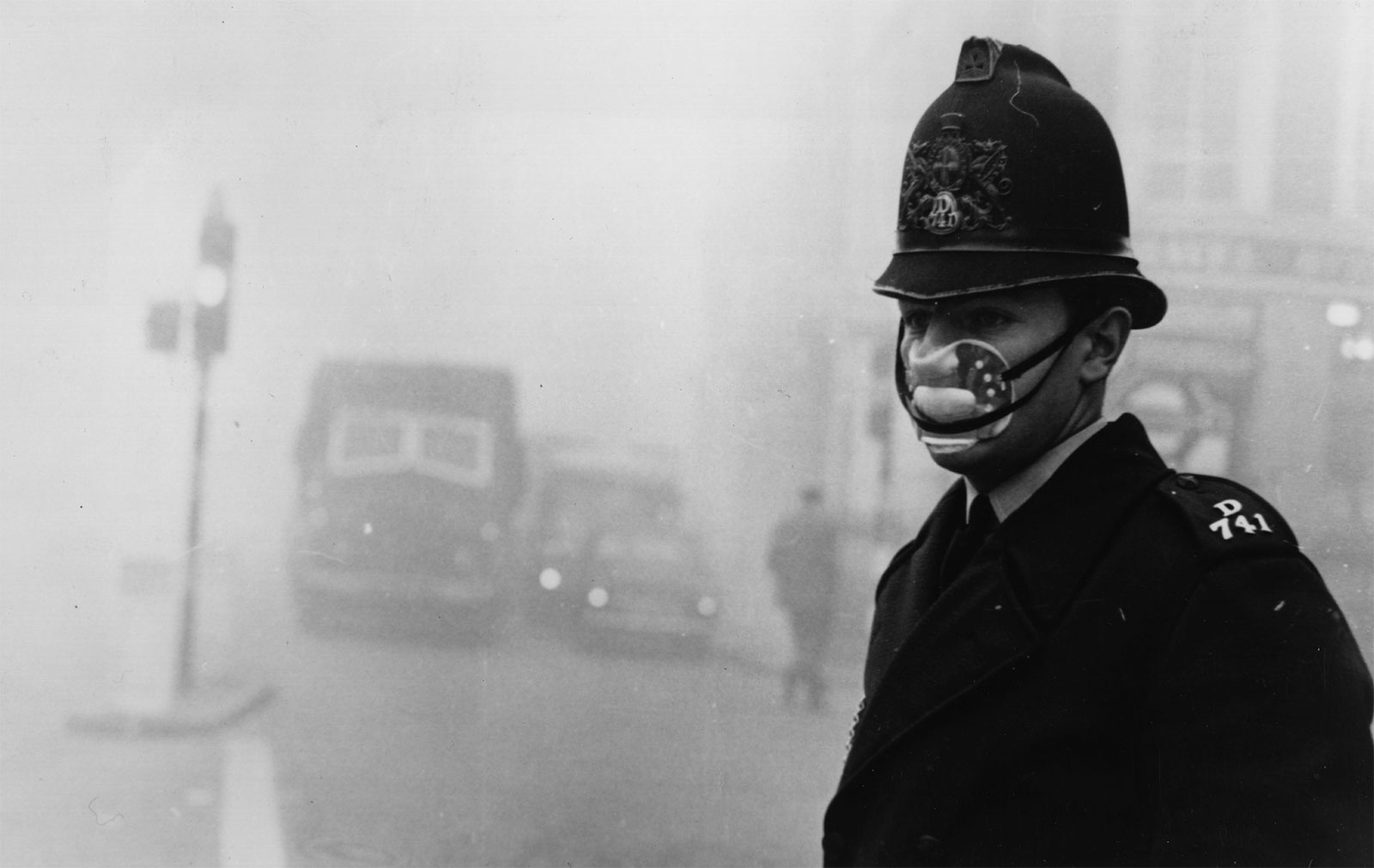
Great Smog of London, 1952.
Inactivity
"... After dinner, he may find himself drinking Brazilian coffee, smoking a Dutch cigar, sipping a French cognac, reading The New York Times, listening to a Brandenburg Concerto and entertaining his Swedish wife - all at the same time, with varying degrees of success" (Staffan Linder 1970: 79).
Inactivity and time for leisure became common in Britain with the introduction of holiday entitlements. These holidays gave working people a time to relax for personal enjoyment. In addition to the entertainment brought by cinema, television and radio, different types of toys and games also emerged. Moreover, by the 1950s, almost all men smoked tobacco. From pipes, tobacco was later smoked in cigarettes.
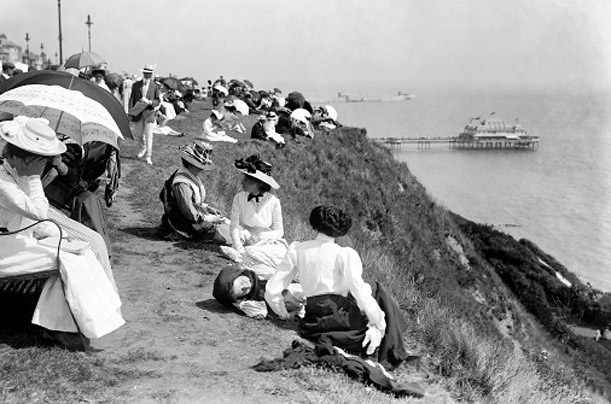
Holidaymakers enjoying the sun on the cliffs near the seaside at Folkestone, Kent, southern England, July 1909