Changing living conditions: housing, food, clean water and waste (OCR GCSE History B (Schools History Project)): Revision Notes
📚Revision Notes
Changing living conditions: housing, food, clean water and waste
Note
People in early modern Britain largely retained a mediaeval diet. Fish became a vital part of their diet, particularly in the 16th century when meat was forbidden due to religious reasons.
During this period, many believed that drinking water could make them ill, so they preferred to drink wine, ale or beer.
As a result of merchants from Asia and the Americas, people began to have more variety in food choices. Pumpkin, tomatoes, peppers, chillies, cocoa, tea and coffee were introduced. As a result, many had problems of obesity and rotting teeth.
Note
In case of the poorer class, food and diet was very similar to that of mediaeval peasants. In times of bad harvest, many died of famine and disease.
In early modern Britain, the hygiene of people from the lower class was poor. The modern concept of bathing was not part of their daily routine. Cleaning the body was often done using dry linen cloth. Access to clean water became a problem as towns and cities grew. In urban centres, people paid for water pipes to be connected. In some towns, Conduits and bosses were free for public use.
Note
Bosses were smaller versions of Conduits.
Similar to the mediaeval period, disposal of household waste was a problem. Scavengers or rakers sometimes collected baskets of rubbish outside homes. But those living near waterways dumped their garbage directly. The problem of getting rid of excrement remained the same as in the mediaeval period. Many still used privies, while in the countryside, excrement was thrown directly into a river. Those who could afford it built cesspits in their garden and rarely inside the house. These cesspits were emptied by scavengers every year.
<img src="https://simplestudy-assets-prod.s3.eu-west-1.amazonaws.com/assets/backend/uploads/manually-styled-note-images/4ac5c258-0bfd-4a31-9dca-d31082cbcfd0.png" width="542" height="288" alt="The Civitas Londinum, more widely known as the "Agas" map, was first carved into woodblocks in approximately 1561" />
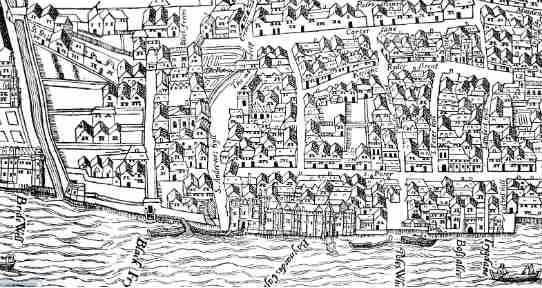
The Civitas Londinum, more widely known as the "Agas" map, was first carved into woodblocks in approximately 1561
Emptying a cesspit was a filthy and expensive job. However, these barrels of excrement often created dunghills in backyards which regularly leaked into alleys and streets.