Living conditions (OCR GCSE History B (Schools History Project)): Revision Notes
📚Revision Notes
Living conditions
Note
During the mediaeval period, the majority of the population was composed of peasants. They typically lived in small cottages with minimal windows and doors. Livestock, such as sheep, pigs, and cows, lived with them inside, which caused high chances of attracting pests, like rats and fleas, and diseases jumping between species.
Housing
Peasant homes were usually built with logs held together with mud. A hole in the roof suggests that they cooked inside. The majority of peasant houses were made of sticks and straw, and they built them themselves. By the later mediaeval period, those who could afford better housing built wattle and daub houses which were better in times of bad weather.
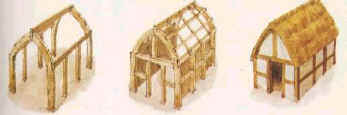
Wattle and daub houses
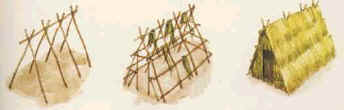
House from sticks and straw
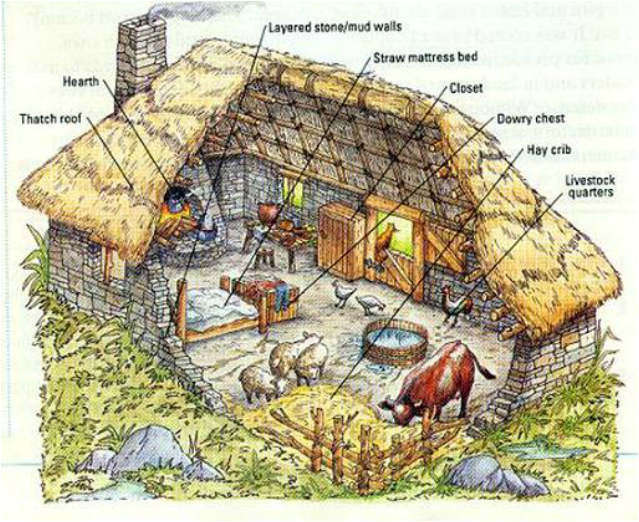
Artist depiction of a peasant's mediaeval house
Food and diet
Much of the food and diet of peasants during the mediaeval period was homegrown. They cultivated rye or barley for bread and vegetables and herbs for cooking. Domestication of pigs, sheep and poultry was common for meat. Peasants usually consumed cabbage, beans, eggs, bread and oats. The common food of the noble class, such as cheese, meat and spices, was a speciality for peasants. All classes drank ale but of different quality and variety. Freshwater and saltwater fishes were usually prepared dried, salted or smoked.
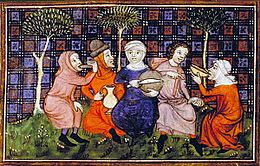
A group of peasants sharing a simple meal of bread and drink; Livre du roi Modus et de la reine Ratio, 14th century.
Few peasants kept cows for milk, cheese and curds. They usually preserved food for the winter. Unlike the noble class, peasants had a less impressive diet.
Clean water and waste
Streets in mediaeval towns were often covered with mud tracks, and were sometimes cobbled or covered with gravel. Waste from every household was thrown into the streets. Open sewers were usually placed near houses and streetside. Most families owned pigs and dogs that were living with them and free to roam the streets. In towns like London, they tried to clean up the streets, but rarely. People during this time had no idea that a filthy environment could cause disease.
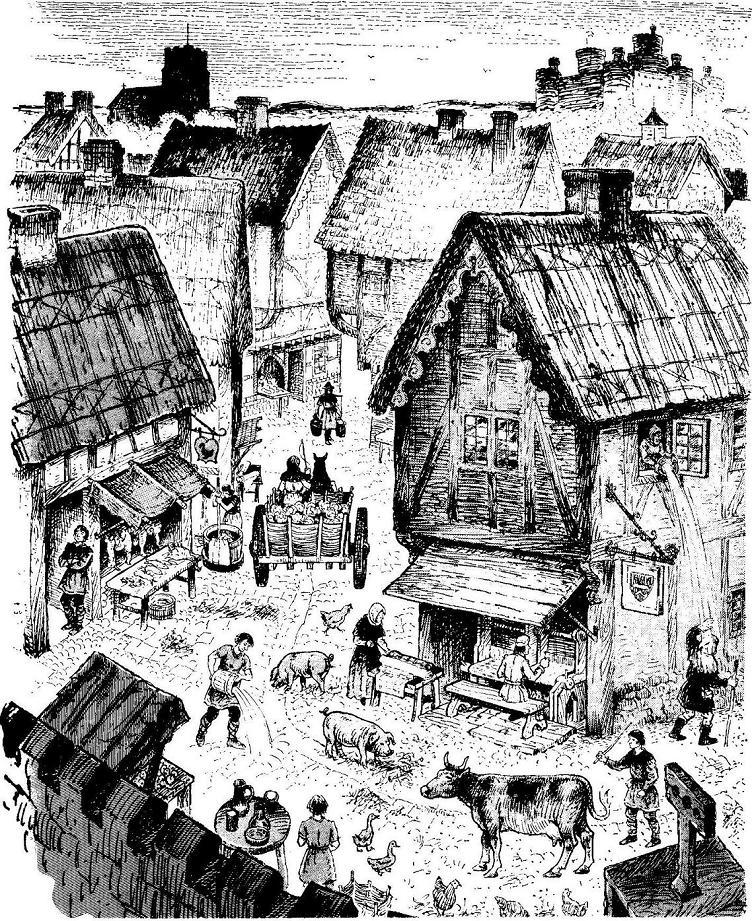
Illustration of mediaeval town by Norman Meredith, 1969
Contrary to common belief, mediaeval people preferred ale to water. Clean water during this period was used for drinking, washing, gardens and in case of fire outbreak. In the 13th century, 'The Conduit', a system of lead pipes, was built in London. However, mediaeval people had the idea that all water was safe for drinking, including the polluted water.
Moreover, public bathhouses often compensate for the lack of bathrooms and running water in individual houses. In addition, an increase in the urban population and lack of sufficient living space contributed to overcrowding, particularly in London. While most sewers ran through the streets, other places had no sewers at all. Through modern archaeological findings, historians were able to discern that this living condition was the primary cause for the spread of plague in Europe, particularly in England.
Note
As for personal hygiene, those who were wealthy could afford to have their own supply of water at home. The majority, however, used public or communal latrines and bathhouses. By the 15th century, public latrines in London were often placed near bridges and rivers. In Southwark, London, there were 18 communal hot baths. In smaller towns, bathhouses were often built near a bakery to heat their water. The use of soap was only introduced to Europe by the Crusaders from the Middle East.
A mediaeval town during the plague


