Changes in law enforcement including the use of new technology (OCR GCSE History A (Explaining the Modern World)): Revision Notes
📚Revision Notes
Changes in law enforcement including the use of new technology
Note
In the 20th and 21st centuries, the main role of the police force remained the same: to maintain public order and prevent crimes. However, the development of science and technology greatly affected policing.
Change in size and scope
Mainly composed of small police forces, England and Wales had 200 units in 1900. By 1964, police forces declined to 117, then 43 in 2000. This substantial decline was due to the need to share information, communicate better and be more cost effective.
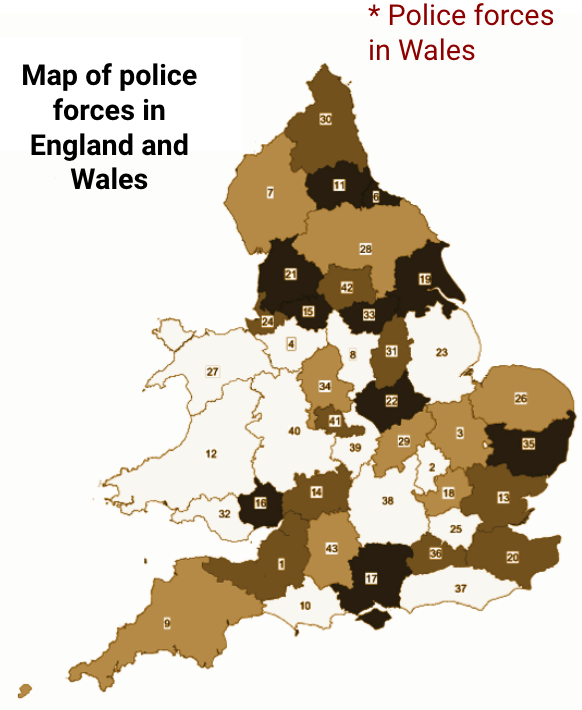
Map of police forces in England and Wales
-
Avon and Somerset
-
Bedfordshire
-
Cambridgeshire
-
Cheshire
-
City of London
-
Cleveland
-
Cumbria
-
Derbyshire
-
Devon and Cornwall
-
Dorset
-
Durham
-
Dyfed-Powys *
-
Essex
-
Gloucestershire
-
Greater Manchester
-
Gwent *
-
Hampshire
-
Hertfordshire
-
Humberside
-
Kent
-
Lancashire
-
Leicestershire
-
Lincolnshire
-
Merseyside
-
Metropolitan Police and City of London
-
Norfolk
-
North Wales *
-
North Yorkshire
-
Northamptonshire
-
Northumbria
-
Nottinghamshire
-
South Wales *
-
South Yorkshire
-
Staffordshire
-
Suffolk
-
Surrey
-
Sussex
-
Thames Valley
-
Warwickshire
-
West Mercia
Originally known as the South Wales Constabulary, the South Wales Police was the largest unit in Wales. Formed in 1969, South Wales Police was the combination of the Glamorgan constabulary, Cardiff City Police, Merthyr Tydfil Borough Police and the Swansea Borough Police.
Purpose of policing
Over time, the purpose of policing changed. Initially, police officers were tasked to patrol the streets, deter criminals, arrest suspects and investigate crimes. Now, their purpose is to prevent crime from happening. Each police force has Crime Prevention Officers who visit schools and communities to raise awareness through PACT (Police and Communities Together).
Logo of Durham Constabulary PACT
By the end of the 20th century, the idea of community policing changed the relationship between the police and the community. Initiatives and developments include:
- Introduction of neighbourhood watch in 1982 which involved local people in crime prevention;
- In 2002, the Police Community Support Officers began to address juvenile and anti-social behaviour crimes;
- Crime Prevention Scheme was created in the 1990s, which promoted personal safety.
Police officers
In 2000, there were over 125,000 police officers in England and Wales. In 1947, the National Police Training College was established, which provided aspiring police officers 14 weeks of training.
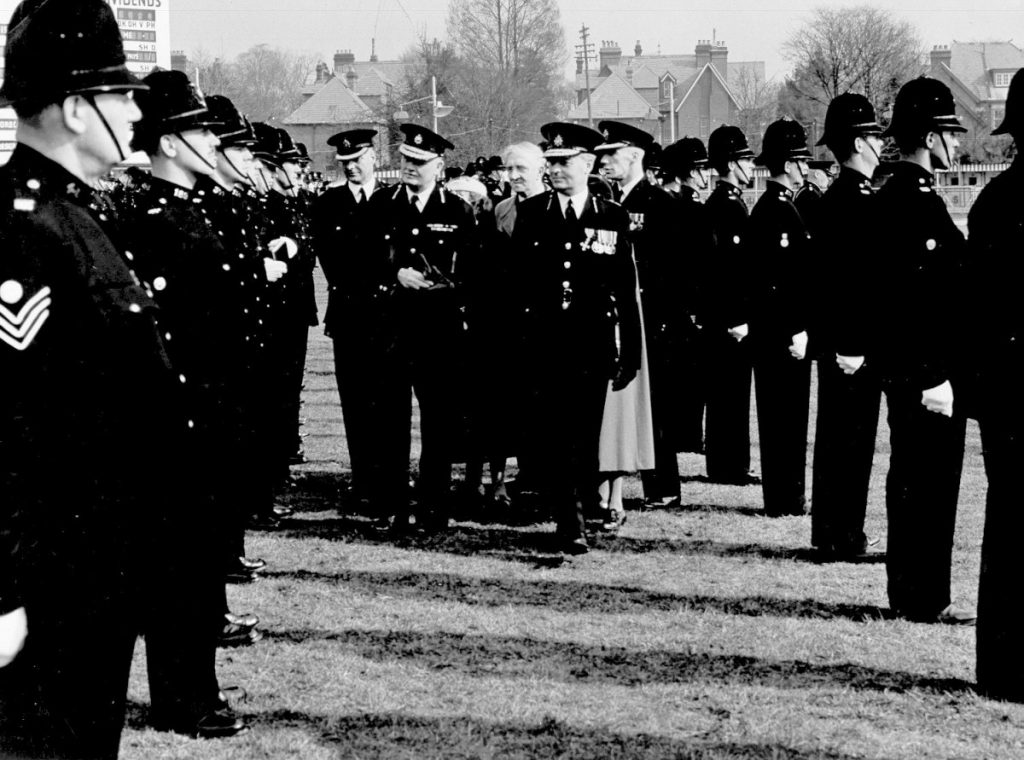
Hampshire Constabulary, 1950s
Proportion of female police officers in England and Wales between 2006 and 2015
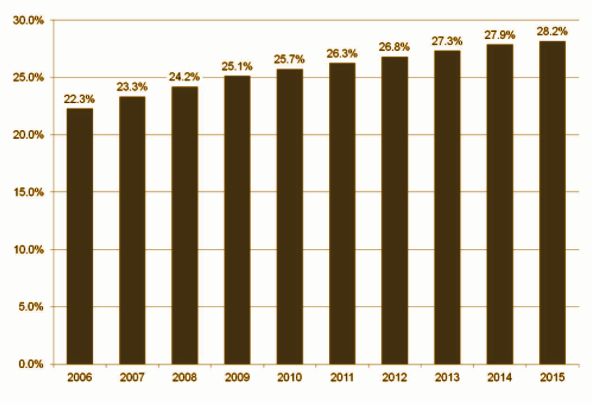
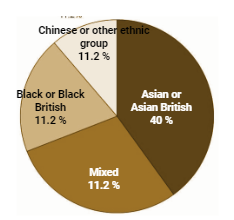
Proportion of police officers from ethnic minorities in England and Wales between 2006 and 2015
Proportion of police workforce by type of police worker in England and Wales between 2006 and 2015
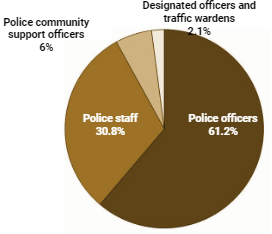
During the twentieth century, there have been many changes in the police force. It has expanded and has become more diverse, with women first appearing in the force in 1919, and drives to increase representation of different groups continuing today. Some of the other major changes have been in the role of the police force, and increasing specialisation for officers.
Specialised units have developed to deal with the challenges of evolving crime. These include the Fraud Squad, police working in the field of counter-terrorism, and specialist firearms officers.
Since 1900, police officers have become increasingly involved in a wider range of policing. These include non-criminal incidents such as keeping order at sporting events.
The training of police officers has improved. All new recruits undergo a fourteen-week basic training course. It is now also possible to enter the police force following the successful completion of a university course.
New technology has undoubtedly made some kinds of crime more difficult to prevent but has also allowed the police force to develop a wider range of strategies with which to investigate and deal with crime.
NEW TECHNOLOGY
The increase in CCTV allowed the police to both deter criminals from committing offences, and identify criminals if a crime does take place.
Computer databases and online technology allow the police to quickly get valuable information, for example, the Automatic Number Plate Recognition system (ANPR) allows information about car owners to be utilised.
It has become much easier to use evidence to identify the guilty party in a crime. Since 1901, fingerprint technology has allowed the police to build a stronger case against a suspect. The use of DNA, which was first used in a criminal case in 1988, has revolutionised investigative work.
Developments such as pepper spray, CS gas and tasers have made it easier, if controversial, to control and arrest violent suspects or to prevent trouble from escalating.
COMMUNITY POLICING/NEIGHBOURHOOD WATCH
The local community have been involved in law enforcement throughout history, with methods such as the hue and cry and tithings. Despite the vast differences between mediaeval and 20th century Britain, the local community still plays a role in law enforcement. One way that this is done is by the Neighbourhood Watch. Founded in 1982, the Neighbourhood Watch works by encouraging members of the public to report criminal behaviour to the police, who will then investigate.

Neighbourhood Watch signage
Another way in which the local community is involved in law enforcement and crime prevention is through police campaigns to encourage people to support anything they believe to be suspicious. This is particularly useful for preventing acts of terrorism.
TRANSPORT
Note
Throughout the 18th century, the police force patrolled on foot. In 1909, they used bicycle. Ten years later, cars were introduced in policing. However, it was only in the 1930s when mass production of cars also benefited the police force. As a result of this transport development, police officers responded to crime scenes quicker. They could even save lives and catch criminals.
Police cars were equipped with cameras and improve communication technology such as two-way radios. In the 1980s, helicopters were also made available to the police force which were used to follow suspects on the ground.
1919: Central Robbery Squad
Set up by the MP, the Flying Squad responded to quick crimes such as robberies
1946: Fraud Squad
A special unit tasked with dealing with fraud and other economic crimes.
1965: Special Patrol Group
Inner-city disturbances and major emergencies were responded to by the SPG
2006: Counter-Terrorism Command
Also known as SO15, CTC is a specialist operations branch which keeps the public safe from any terrorist act.
Note
Prior to the 20th century, the police force consisted of ordinary constables, watchmen and inspectors. The nature of policing developed specialised units for specific crimes.