Major technological, social and political changes: an overview (OCR GCSE History A (Explaining the Modern World)): Revision Notes
📚Revision Notes
Major technological, social and political changes
Note
The twentieth century has been a period of rapid change in Britain and the rest of the world.
One of the changes has been the emergence of new crimes, which are related to wider changes in society, politics and technology. These include:
- Crimes against the person - new crimes include hate crimes.
- Crimes against property - new crimes include fraud and car theft.
- Crimes against authority - acts of terrorism (can also be viewed as crimes against the person).

Development in computers in the 20th century
1939: The ABC or Atanasoff-Berry Computer, the first electric computer design, was made
1946: Developed by John Mauchly and John Presper Eckert, the first electronic computer was put into operation
1975: Altair 8800, the first home computer, was marketed to hobbyists. In the same year, entrepreneurs Bill Gates and Paul Allen began a partnership called Microsoft
1977: Steve Jobs and Steve Wozniak released Apple II
1979: The first portable computer called a laptop was designed by GRiD Systems Corporation in England
1981: IBM released a personal computer with an operating system designed by Microsoft - MS DOS
1991: The World Wide Web or simply the internet was made available to the public
Since the 1950s, crime recorded in Britain doubled. From one million in the 1960s, recorder crime increased to two million in the 1970s. It is believed that these numbers continued to increase in the 20th century due to significant changes to the types of offences committed. Moreover, people began to report crimes to the police. In Britain, incidents of burglaries were often reported due to insurance claims. New inventions such as motor cars and computers also spurred new forms of crime.
Note
The 20th century marked digital revolution. Following the development of computers, mobile phones were invented in the 1970s.
Moreover, this era in British history saw the blurred boundaries of social classes. The world wars in 1914 and 1939, also changed the role of women and chances of immigration in Britain. In the 1950s, the dominance of the Labour party also changed the landscape of British politics. Reforms in education, employment and health were introduced.
In addition to employment, women also gained the right to vote through the Suffragette movement. The Pankhursts were among the key figures in women's suffrage movement in Britain.
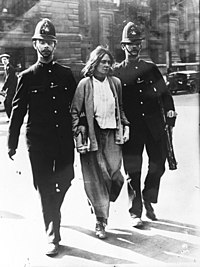
A suffragette arrested in the street by two police officers in London in 1914
Another significant change in the mid-20th century was the development of a permissive society. A permissive society can be defined as one in which social norms become increasingly liberal. Particular emphasis is placed on sexual freedom and (re)defining what is considered deviant.
Note
- The death penalty was abolished
- Homosexuality decriminalised
- Drug use was not frowned upon
A permissive society follows an attitude of "do not harm others" and is rooted in morals. It goes hand in hand with a free society. A free society is based on political and philosophical liberalism. A permissive society decriminalises things like homosexuality.
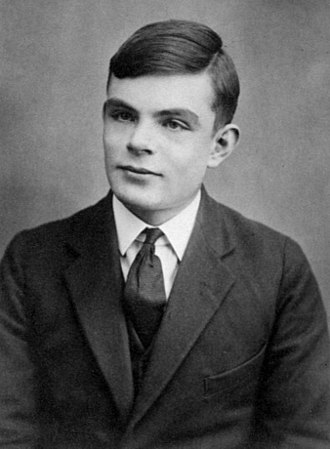
Alan Turing was pardoned posthumously in 2009 for being prosecuted for being gay
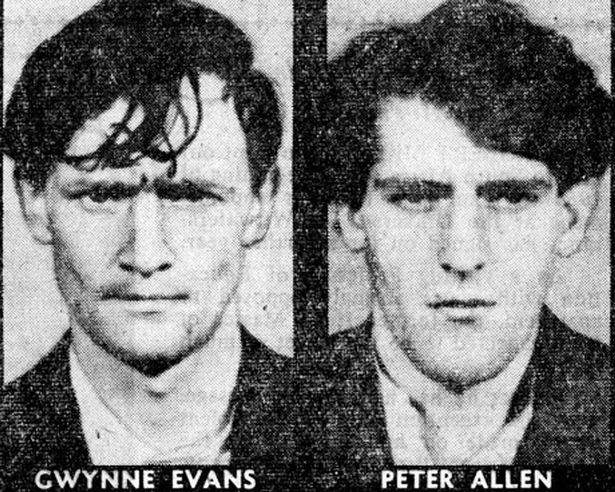
Evans and Allen were the last English convicts executed on 13 August 1964 for murder
In 1958, the Homosexual Law Reform Society was formed due to a report made by Lord Wolfenden. He suggested decriminalising homosexual men over the age of twenty-one, unless they resided in Northern Ireland or Scotland and if they served in the armed forces.
By 1967, the Sexual Offences Act was passed by Parliament. It decriminalised homosexual acts in private between two consenting men over the age of twenty-one (21).