The enlightenment, urbanisation and political change: an overview (OCR GCSE History A (Explaining the Modern World)): Revision Notes
📚Revision Notes
The enlightenment, urbanisation and political change: an overview
Note
From 7 million in 1750, the population of England and Wales increased to 40 million in 1900. About 80% of the population lived and worked in urban areas which swelled cities like Manchester and Merthyr Tydfil.
As England and Wales reached the height of industrialisation, most people populated urban towns which resulted in overcrowding. Poor urban planning and crowded urban centres led to unsanitary living conditions which made the spread of disease easy.
Most accommodation in urban towns were rookeries. A rookery was a slum area with high rates of poverty and crime. Streets and alleyways in these rookeries were very narrow, which made them perfect places for petty crimes such as theft.
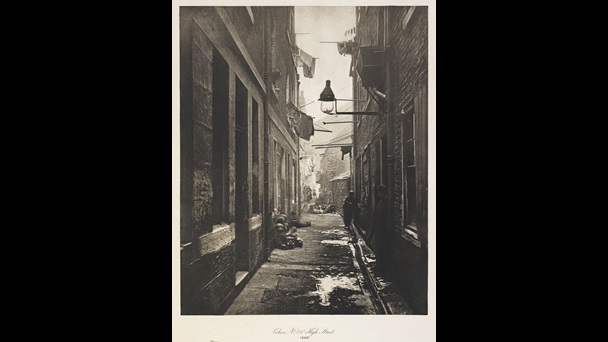
1868 streets of Glasgow and overcrowded housing in London, 1872
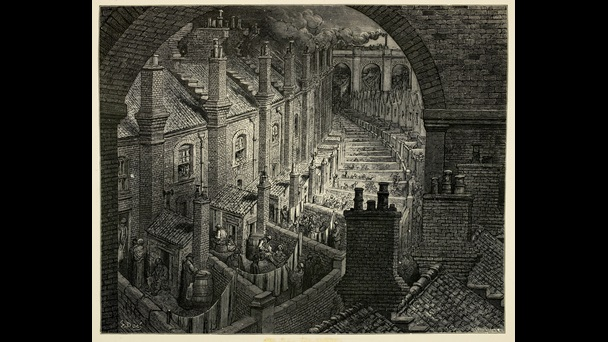
- As a consequence of poor urban planning and overcrowding, many lived and worked in squalid conditions, which became breeding grounds for petty crime.
- Following the Napoleonic Wars and agricultural depression, many were pushed to poverty which led them to commit crimes.
- Poverty also led people to political discontent and protest.
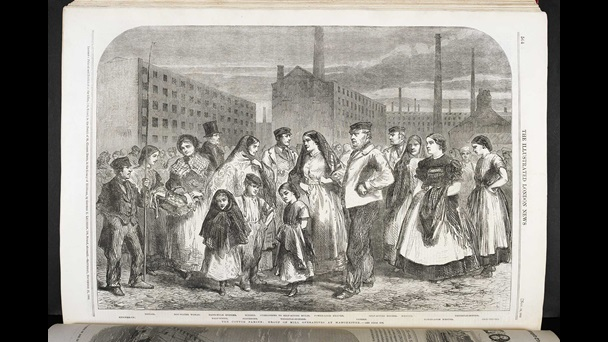
Manchester during the cotton famine
Towns and Travel
The population increased quickly, and more people lived in towns and cities. Transport also improved, as railways developed.
Poverty and Wealth
Industrialisation and trade and the Empire allowed Britain to become the richest country in the world. The government raised more money from taxation and could afford to do things to improve people's lives. However, poverty remained for many.
Attitudes in Society
Attitudes about human nature and society's responsibility towards people changed at this time. Some people believed that better conditions would make crime less likely, and that people could be reformed.
Government
During the 19th century, people became more willing to accept government interference in their lives. This meant they were willing to support changes such as the introduction of the police force.
In addition to the increase in criminal activities, the Industrial Revolution also brought social and political protests. Due to poverty and poor living conditions, many ordinary people resorted to protests and violence.
Notable protests:
1812-1813: Luddism (Industrial towns in northern England)
Handloom weavers attacked factory machines in protest against new machine-woven cloth
1816: Spa Fields Riot (London)
An electoral reform meeting which turned into a violent riot
1819: Peterloo Massacre (Manchester)
Another electoral reform meeting which turned into a violent riot, the death of 11 people and multiple arrests
1830-1831: Swing Riots (Southeast England)
Attack and arson of farm machines by agricultural labourers due to introduction of new machinery
1839-1843: Rebecca Riots (Southwest Wales)
Farmers disguised as women attacked toll gates in protest of increased rent and tolls
1839-1848: Chartism (National)
Series of campaigns for working people's right to vote and fair elections
TOLPUDDLE MARTYRS
The French Revolution, which began in 1780, had led to the fear of similar political and social upheaval happening in Britain. Outbreaks of violence in Britain, such as the Swing Riots of the 1830s, led members of the upper classes to view any organisation or demands on the part of the working class with suspicion.
In 1833, six farm labourers from Tolpuddle in Dorset - George Loveless, his brother James, James Hammett, James Brine, Thomas Standfield and Thomas' son John - took an oath, promising to join together in a union to try and persuade their employer to increase their wages.
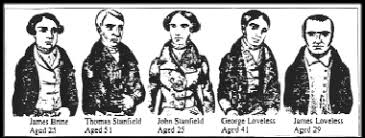
Contemporary sketch of some of the Tolpuddle Martyrs
The men's employer, James Frampton, found out what they were doing and reported them to the authorities, who wished to take action against people establishing trade unions. The men were charged with taking an illegal oath, and sentenced to transportation to Australia. Joining a union was not illegal, and the men had not threatened to go on strike, but they were still arrested.
Note
- The government used an old law, intended to prevent members of the navy from taking secret oaths, to prosecute the men.
- They were found guilty and sentenced to seven years transportation.
- The case led to an outcry, with both the decision to charge the men and their sentence criticised.
- The men from Tolpuddle became seen as martyrs for the right of the working class to form unions to campaign for better working conditions.
- A campaign was organised to defend them and support their families. 250,000 signed a petition and 25,000 people marched to London to protest.
- Eventually, in March 1836, the men were pardoned. Even then, it was another two years before they were all able to return home at their own expense.
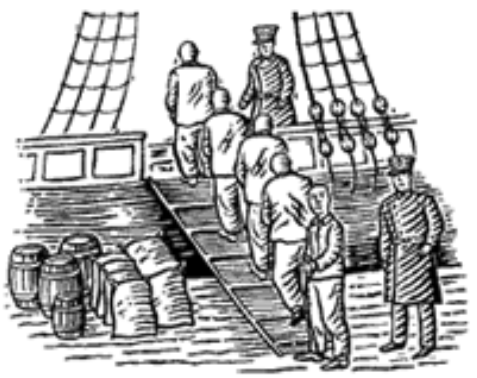
A depiction of the Tolpuddle Martyrs boarding the boat that would take them to Australia