The introduction and development of the police force (OCR GCSE History A (Explaining the Modern World)): Revision Notes
📚Revision Notes
The introduction and development of the police force
The Police Force
Note
Although more popular than models that preceded it, the Metropolitan Police in London was not the first state-sponsored police force in Britain. In 1800, organised and paid constables and watchmen were created in Glasgow.
Prior to the Fielding brothers, civilian policing was set up by Thomas de Veil in Bow Street. This organised policing scheme was made popular and effective by the Fieldings in 1748. Henry Fielding replaced Thomas de Veil as chief magistrate at Bow Street and improved the police force. Prior to being known as the Bow Street Runners, they were called Mr. Fielding's People.
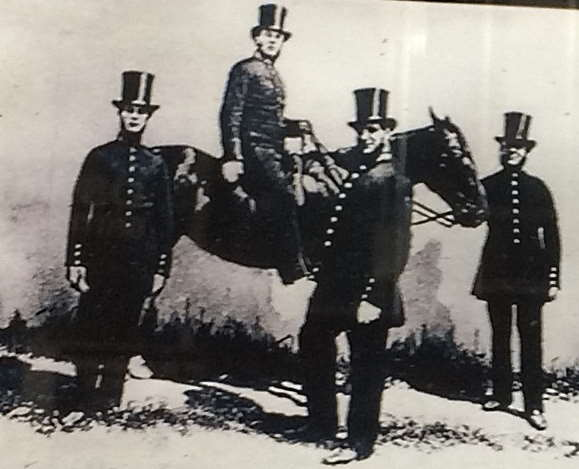
1800 Bow Street Runners
In 1700, the responsibility for law enforcement was still seen as belonging to the local community. This view changed during the 18th and 19th centuries. Towns and cities grew rapidly in this period and could not be policed using a system which relied on people in the local community knowing their neighbour well. People began to look for alternative forms of law enforcement.
THE FIELDING BROTHERS
Henry and John Fielding, half-brothers who were both London magistrates, realised that more men were needed on London's streets to control crime. They introduced mounted patrols on the outskirts of the city to stop highwaymen. They made the Bow Street Runners popular, a private police force who would arrest suspected criminals and deliver them to magistrates. As well as this, they gave evidence in court and investigated crimes.
BOW STREET RUNNERS
Organised in London in 1749, the Bow Street Runners were the first professional police force. Between 1749 and 1839, they set the foundation of modern-day policing.
In 1751, Bow Street Court magistrate Henry Fielding published his report on the rapidly growing crime rate in London. In his findings, Fielding identified the following reasons behind the increase in crime:
- Migration of people to London who were looking for an easy life
- Corruption in the government
- Easy escapes after committing crime His findings suggested that changes should be made in law enforcement.
Note
- The initial recruitment was publicised through adverts and pamphlets.
- The first force was composed of six paid constables who were tasked with patrolling the streets of London and preventing any commitment of crime.
- These constables were trained and paid using government grants.
- In 1800, there were about 68 Bow Street Runners in London. They arrested offenders and travelled across Britain in pursuit of criminals.
- When Henry died in 1754, his brother John succeeded him.
Under John Fielding, the government granted the Bow Street Runners horse patrols to address highway robberies. Through their grants, the government had increasing participation in law enforcement. Moreover, John introduced the concept of the public having the power to prevent crimes. In his The Quarterly Pursuit, he began to share descriptions of criminals.
In 1820, they uncovered the attempt of Cato Street Conspirators to murder the Prime Minister and cabinet members. Thirteen men were arrested in a trap set up by the Bow Street Runners.
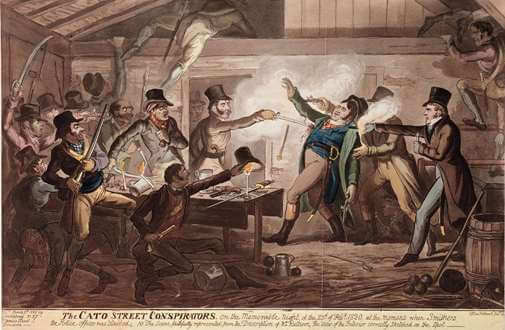
Image depicting the arrest of the Cato Street Conspirators
PEEL AND THE METROPOLITAN POLICE
Note
The work of the Bow Street Runners made it clear that there was a need for the government to take a more active role in law enforcement. In 1829, the Metropolitan Police Force was set up. This was Britain's first official police force and was established to police London.
- The Metropolitan Police Act replaced the system of watchmen and parish constables. It also made private police forces such as the Bow Street Runners unnecessary.
- When it began in 1829, the Met, as it became known, was made up of 3,200 uniformed officers.
- Many British people had been against the idea of a government-run police force for a long time because they believed it would be an attack on their personal freedom. Many also believed the police would perform a similar role to the army and would use brutal measures to keep people in line.
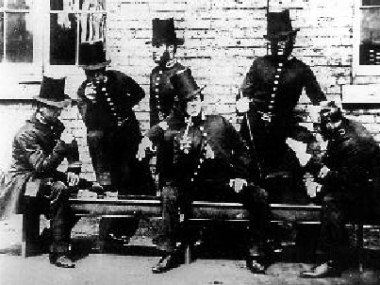
19th-century image of the Peelersw
The Home Secretary of the time, Robert Peel, tried to reassure people that this would not be the case. As he was keen to show the difference between soldiers and the police, he ensured they wore a very different uniform and did not carry firearms.
After the passage of the Metropolitan Police Act in 1829, an official police force was created. Initially, they were called Peelers, then Bobbies.
Note
Compared to red-coated soldiers, the Peelers wore blue tailcoats and top hats. They were armed with a wooden truncheon, rattle and a pair of handcuffs.
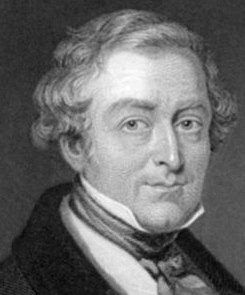
Sir Robert Peel
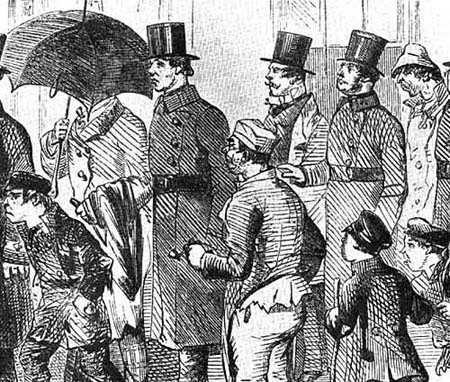
Illustration of Peelers along with common people
A peeler should be aged 20 to 27, at least 5'7'' in height, literate, fit and clear from any wrong-doings. In 1839, the passing of the Police Act enabled the creation of provincial forces similar to the Metropolitan Police.
19TH CENTURY DEVELOPMENT OF THE POLICE FORCE
Note
From the original six members in 1829, members of the Metropolitan Police grew to 11,700. A decade after its creation, an Act was passed which extended the scope of MPs up to a 15 mile radius from the centre of London.
1835: Municipal Corporations Act
New law allowed all local areas to set up their own police forces.
1839: Rural Police Act:
Setting up of police force in rural areas
1842: Detective Branch
A detective branch of the Metropolitan Police Force was set up.
1856: Country and Borough Police Act
Compulsory for all parts of the country to have a police force.
1878: The CID
The Detective Branch of the Met became known as the Criminal Intelligence Division (CID).
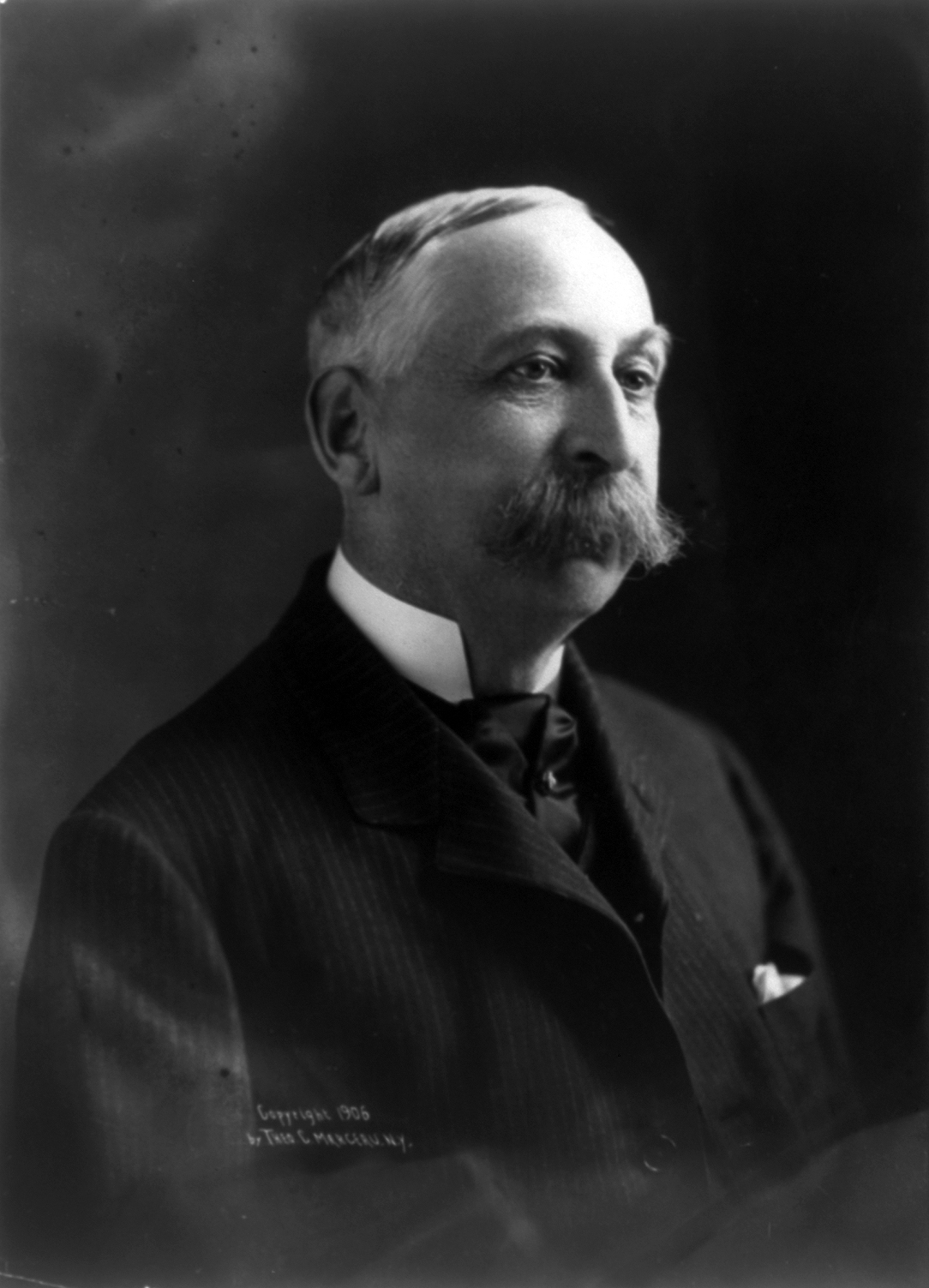
C.E. Howard Vincent, founder of the Detective Branch of the Met. It had 8 plain-clothes detectives when set up in 1842.
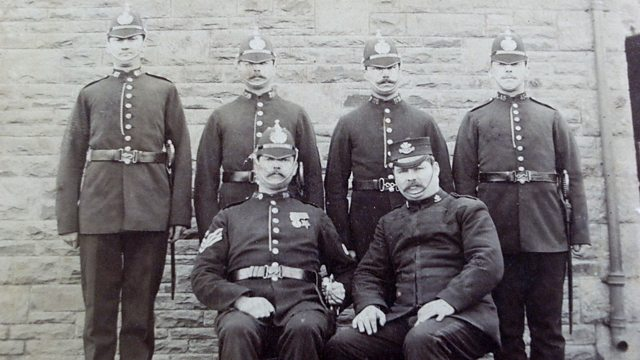
A 1901 photograph of Glamorgan Constabulary.
Modern developments in policing has its roots in the 19th century. Following the introduction of a more organised police force in rural areas and boroughs, specialised mechanisms soon emerged.
- In 1842, the Detective Branch was created. Police were specifically tasked with investigating crimes. The CID or Criminal Investigation Department replaced it in 1878.
- The Special Branch set up in 1883 was meant to deal with Irish terrorism. This goal was later expanded to all potential terrorist threats in Britain.
- Since the 1850s, photography utilised visual images of criminals in newspapers and other printed public materials.
- In 1867, one of the significant improvements in communication was the use of telegraph at Scotland Yard.
- In 1901, Sir Edward Henry pioneered fingerprinting in a criminal case. A national register was created, which increased crime detection by 400%.
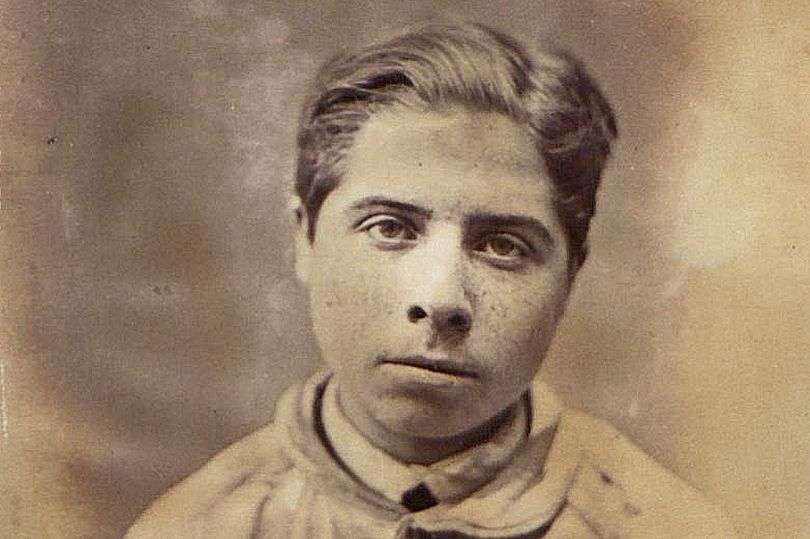
Mugshot of 13-year-old Jim Westbury who was caught stealing corn and hay, 1873