The characteristic features of medieval Britain: an overview (OCR GCSE History A (Explaining the Modern World)): Revision Notes
📚Revision Notes
The characteristic features of mediaeval Britain: an overview
Note
Society and government in mediaeval England influenced the system of law and order, and in particular the issue of law enforcement and the nature of punishments.
The nature of society
The majority of people were peasants who lived in small rural communities. This influenced both the nature of crime and how it was dealt with.
The monarchy
The institution of the monarchy grew in strength during this period and the king sought to increase his control over law and order.
The Church
The Church was a very powerful and influential institution. As such, they influenced the system of justice to a great extent.
Note
Crimes in the Saxon and mediaeval times were largely connected with poverty. While the majority of the population was composed of the peasantry, constant poverty led many to live short and brutal lives. Historians accounted that famine, diseases, taxation and warfare caused poverty, therefore resulted in criminal activities.
FAMINE AND DISEASE
The mediaeval period was characterised by famine, particularly a century before the Black Death. In addition to poor harvests, increases in population further worsened food shortages. In the years 1321, 1351 and 1369, England was affected by the Great Famine. With agricultural shortages, prices of food, particularly bread doubled. As a result, peasants could not afford this basic need, many resorted to burglary and violence.
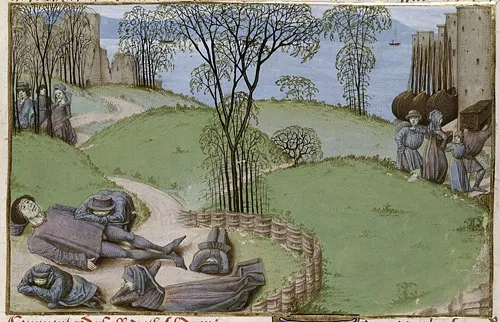
Miniature of deaths from famine
THE BLACK DEATH
The Black Death was a devastating pandemic of bubonic plague that arrived in Europe in October 1347 and killed millions of people. War, famine and weather contributed to its severity. In 1348, the Black Death arrived in England through Bristol, one of the busiest ports in Europe. By the time the plague reached Bristol, London was inhabited by around 70,000. According to historians, poor hygiene and living conditions in London led to the spread of the plague to the rest of England.
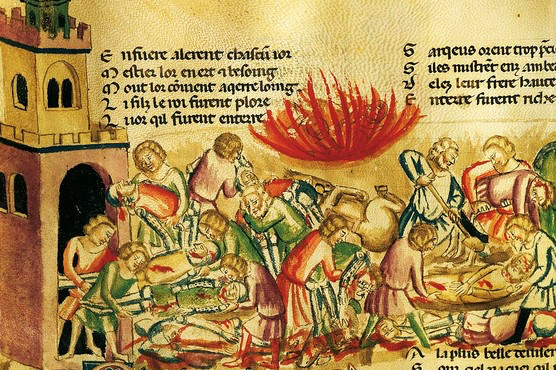
Medieval people's response to the plague
For two years, the plague killed 30 to 40% of the English population. The Black Death literally wiped out villages and towns. Aside from the plague, famine killed many.
The great economic loss was the second impact of the plague. Most trading ports were closed, as merchants feared being infected. The same happened with farmers in rural England.
WARFARE
In addition to devastating plague and famine, costly wars such as the Norman Conquest after 1066, the Hundred Years War from 1337 to 1453, and the Wars of the Roses from 1455 to 1485, depleted resources and money of communities. During wars, trade was affected, peasants were heavily taxed and social unrest like rebellions emerged. In addition to loss of lives, economic failure succeeded wars. For instance, King Edward III taxed the people 27 times during his reign.
... all went ill with the kingdom and the State was undone. Thieves and robbers rose up everywhere in the land. The Nobles despised and hated all others and took no thought for usefulness and profit of lord and men. They subjected and despoiled the peasants and the men of the villages. In no wise did they defend their country from its enemies; rather did they trample it underfoot, robbing and pillaging the peasants' goods …
— France after the Battle of Poitiers during the Hundred Years War, from the Chronicles of Jean de Venette
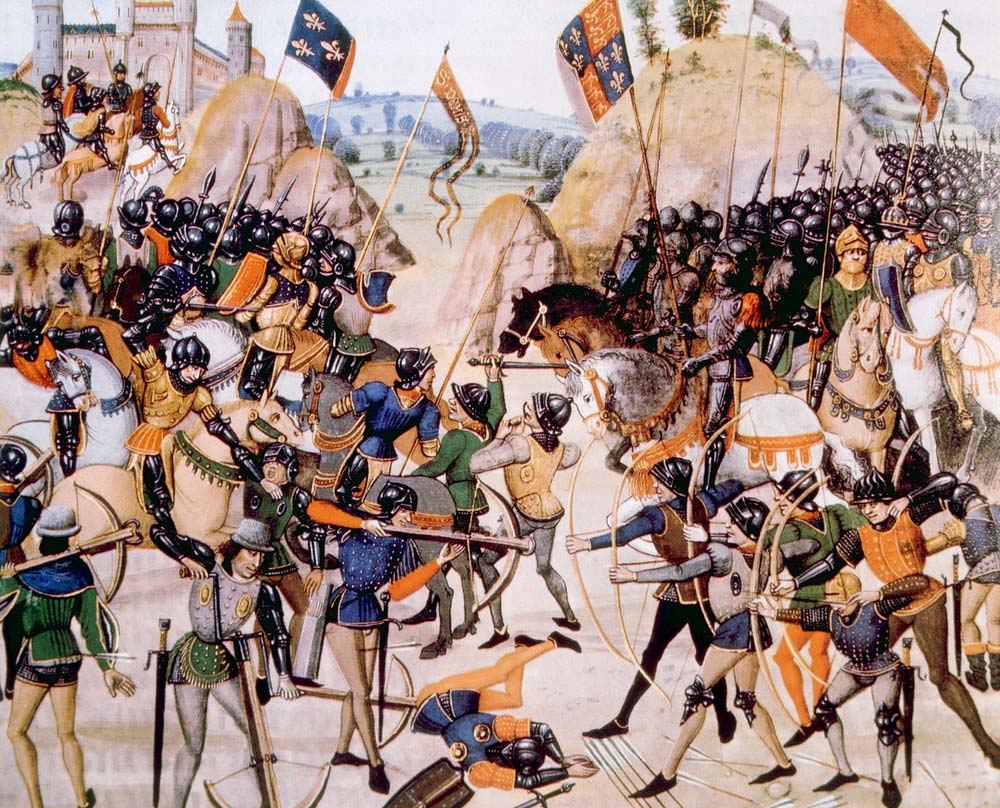
Depicting the Battle of Crecy
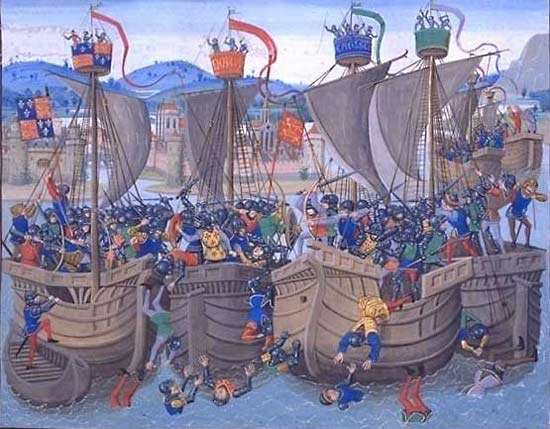
Battle of Sluis