Economic migrants, refugees and asylum-seekers since the 1980s (OCR GCSE History A (Explaining the Modern World)): Revision Notes
📚Revision Notes
Economic migrants, refugees and asylum-seekers since the 1980s
Note
In 1951, Britain signed the United Nations Convention on Refugees. This meant that Britain was responsible for providing a place of safety to foreign asylum seekers who asked for it. In the years since, many thousands of people have arrived in Britain fleeing religious, racial and political persecution.
In the 1990s, the number of refugees rose suddenly due to conflict in Europe, the Middle East and Africa. Sadly, a lot of ignorance surrounded the process of seeking asylum and sentiment began to spread in Britain that asylum seekers were faking their circumstances in order to get into Britain. Lack of education by the government worsened the situation.
EXAMPLE OF MISINFORMATION
From an Ipsos MORI survey of the British public in 2000:
| BELIEF | REALITY |
|---|---|
| Given £113/week | Given £36.54/week |
| 20% of the population are immigrants | 4% of the population are immigrants |
| 25% of the world's refugees taken in | 2% of the world's refugees taken in |
Note
As such, five laws were passed between 1996 and 2007 to make it harder for those seeking asylum in Britain. Restrictions included:
- Could not be employed until they were officially allowed to stay
- Had no say in where in Britain they lived
- Had very limited rights to appeal if the government refused asylum
- Had little to no support from local and national government
Note
Glossary of key terms:
Immigration
The movement of people from one country to another usually for work
Alien
The name given to migrants from foreign countries in mediaeval England.
Race relations
Sociological concept explaining how racial groups relate to each other.
Commonwealth
The international association of the UK and states that previously belonged to the British Empire.
Discrimination
The unfair and prejudicial treatment of people based on the grounds of race, age or sex.
Note
Assessment #1
SOURCE A:
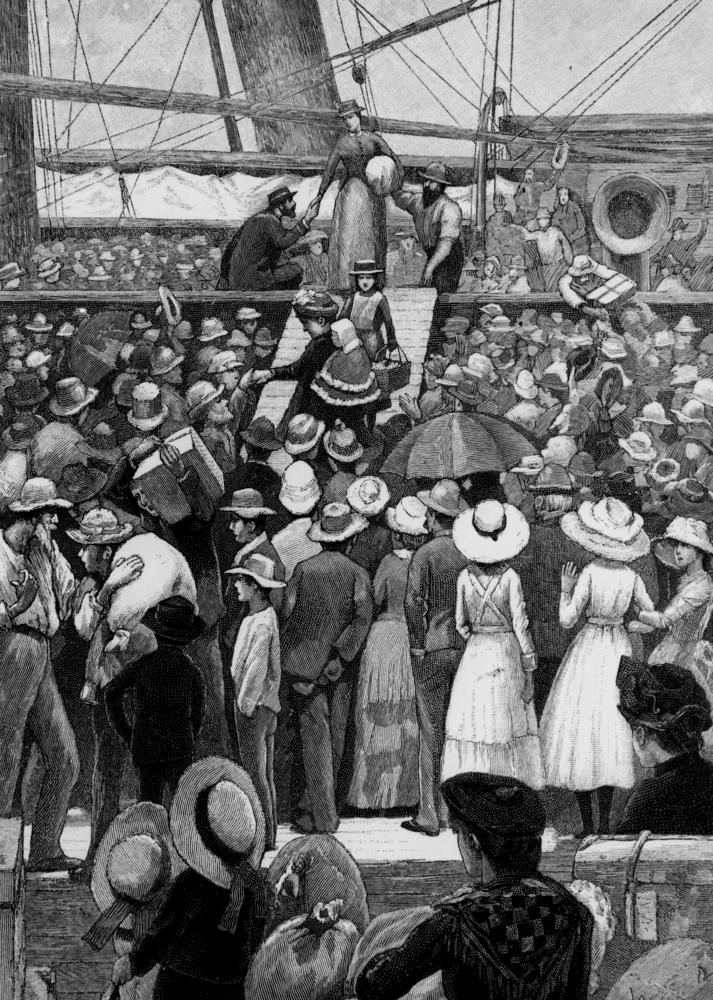
Study the source then answer the questions below.
How did the Commonwealth immigrants travel to their destination?
How would you describe the travelling conditions of immigrants?
What was the main reason for migration to Britain in the early modern period?
Note
Assessment #2
SOURCE B
Leaflet issued by the Afro-Asian West Indian Union following the Notting Hill Race Riots
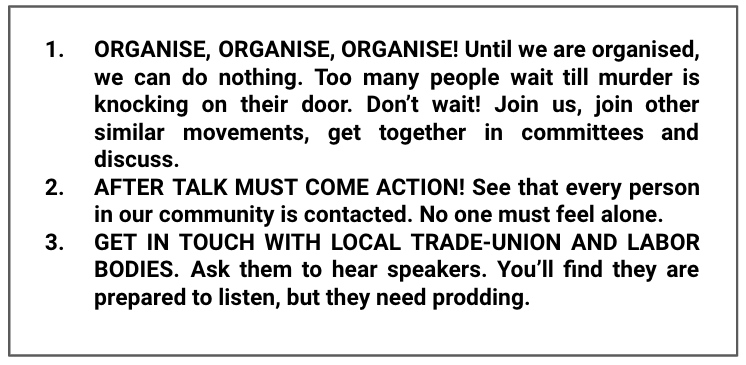
[From the archive of Jimmy Deane; document references: MSS.325/44/NMisc(10-11)]
Study the source and then answer the following questions.
Does this action plan apply to present-day situations? Why or why not?
How important was organisation in addressing race relations issues in the 1970s?