Protestant refugees including Huguenots and Palatines (OCR GCSE History A (Explaining the Modern World)): Revision Notes
📚Revision Notes
Protestant refugees including Huguenots and Palatines
Note
The growth of trade in Europe saw increasing mobility of people, particularly labourers and merchants. The following are just a snapshot of some of the people travelling to England in the early modern period.
HUGUENOTS
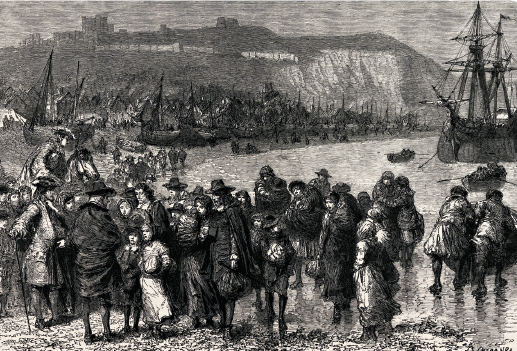
Artist's impression of Huguenots arriving in Dover, 1685
Who were they?
They were Protestants living in Catholic France in the 17th century. Louis XIV made Protestantism illegal in 1685 and the Edict of Nantes saw them expelled from France if they refused to convert to Catholicism. Many took refuge in England.
Were they liked in England?
By and large, yes. They were wealthy, helping establish the Bank of England, and skilled, bringing new crafting techniques. They were even offered denizen status by Charles II and the Anglican Church raised funds to help the refugees.
POOR PALATINES
Who were they?
They were poor German migrants known as the Poor Palatines. They belonged to a number of churches, all of which were Protestant. They fled to England in the early 1700s to escape religious persecution, warfare and hunger from poor harvests.
Their stay in England was generally temporary as they were invited to go to British America.
Were they liked in England?
As Protestants, they were received kindly. In 1709, an influx of 13,000 Palatines to London caused tension for food as England also experienced a bad harvest. Taxes were raised to help fund the war with Spain. Queen Anne then suspended the government's sponsorship of Palatines migrating to America, meaning many were stuck in England for good. When a census revealed 33% of Palatines were Catholics in disguise, opinion soured quickly and many were deported to Ireland
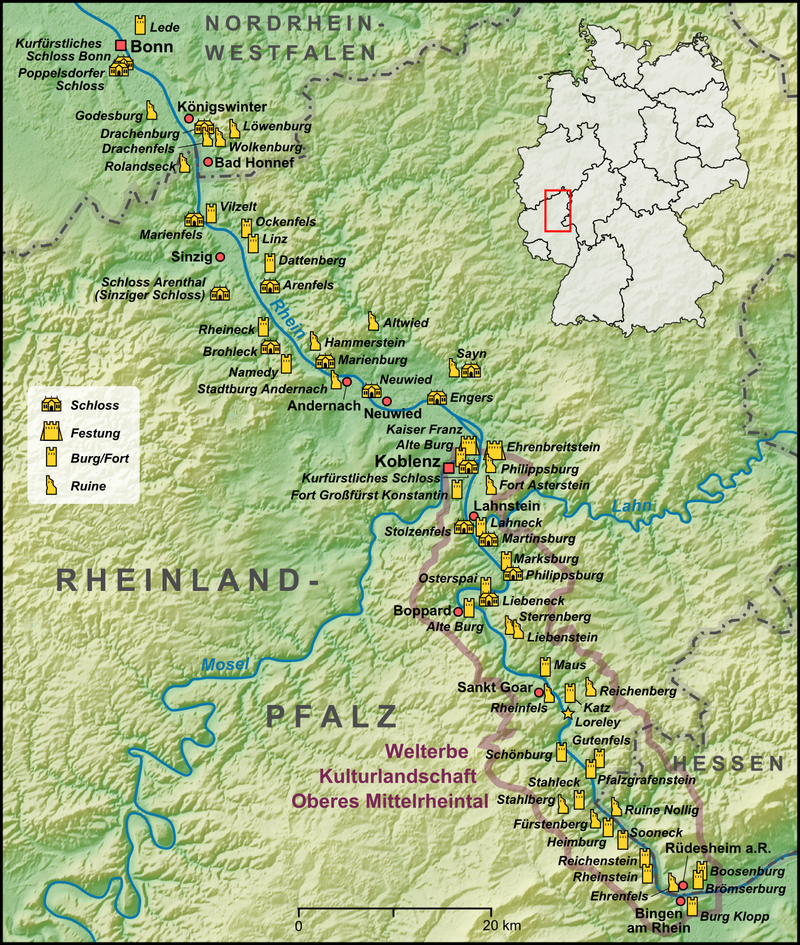
Map of the Middle Rhine region in Germany