Jewish communities and their expulsion from England in 1290 (OCR GCSE History A (Explaining the Modern World)): Revision Notes
📚Revision Notes
Jewish communities and their expulsion from England in 1290
BACKGROUND
In 1066, French-speaking Jews from Rouen in France began to populate England. Since the start of the migration, Norman kings protected Jews due to money lending which was forbidden for Christians at that time. The Crown needed money to build castles and provide security for the kingdom. By the 12th century, a Jewish community was established in York.
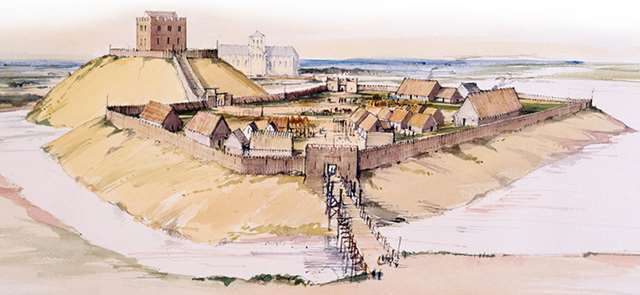
A reconstruction of York Castle with a timber tower on its motte, as it may have looked from the late 11th century until 1190
At the time of King John's reign, about 5,000 Jews lived in the towns of England, particularly in London and York. They contributed much to England's economy, but lived in fear due to religious beliefs.
Note
Jews were the only non-Christians who were then allowed to settle in England under the protection of the king.

Jews were allowed to travel anywhere they wanted and most were exempted from several travel tolls.

They were allowed to trade and inherit properties. However, they along with their possessions remained property of the king and were taxable as well.

Jews were not allowed to join guilds which restricted them from getting jobs as skilled tradesmen.
JEWS AND MONEY LENDING
Jews emerged as moneylenders in England because:
- The Catholic Church did not allow Christians to charge interest for lending money.
- Money lending was made available to them, as Jews were barred from many occupations. Jews became a vital element in mediaeval England as they lent money to barons and knights who wanted to purchase land and position.
Thanks to the archa, we have an indication of where many Jews lived.
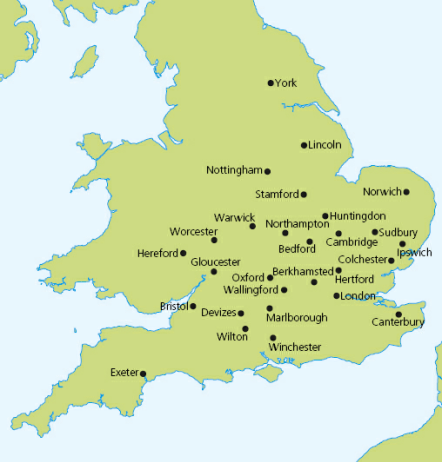
Map of the main Jewish communities in 1250
- Areas where Jews lived were called Jewries.
- Even though they were not required to live in specific areas, since they weren't Christian they tended to stick together.
- In each Jewish community there was a council (kehila), a synagogue, cemetery, teaching facilities, and facilities for preparing kosher food.
- They observed traditional, ritual washing at bath houses.
- Jews were largely accepted by their Christian neighbours and communities.
- As moneylenders, they enabled small businesses to thrive, which meant more taxes for the king.
- There were tensions lying under the surface, however...
PRIVILEGES
Note
Since Jews in England were there by invitation of William the Conqueror, they had a different status to the people of England - they were royal property. In times of danger or crisis, Jews were allowed to seek refuge in any of the king's castles. Like everything in mediaeval times, this came at a price: higher taxes for Jews and resentment by English people. Other areas of tension were:
RELIGION
Mediaeval Christians believed Jews had caused the crucifixion of Jesus. In 1095, thousands of French and German Jews were massacred as part of the Crusades against the Muslims.
SUPERSTITION
Jews had better hygiene through ritual washing, which meant they were less affected by outbreaks of disease. This drew suspicion and persecution. Jews were also accused of blood libel: using Christian blood in religious rituals.

Artefacts from a Jewish household in mediaeval London
ROYAL EXPLOITATION
At the time of Richard I and John I, Jews experienced exploitation in England through excessive taxes. They were forced to pay tallages. After 1194, the king collected all debts owed to a Jew who died without a will. Heavy taxes levied to Jewish communities in England were used to fund Christian crusades and construction of churches including Westminster Abbey in London.
By the 12th and 13th century, only about 0.25 per cent of England's population were Jews but they provided 8% of the royal treasury's income.
In 1210, after a disastrous campaign against the French, King John I heavily taxed the Jewish community. In addition to taxes, severe fines and confiscation of property were imposed.
Note
Anti-semitism or hatred and discrimination against Jews grew in Europe during the 12th century because many accused them of killing Jesus Christ and jealousy over economic success.
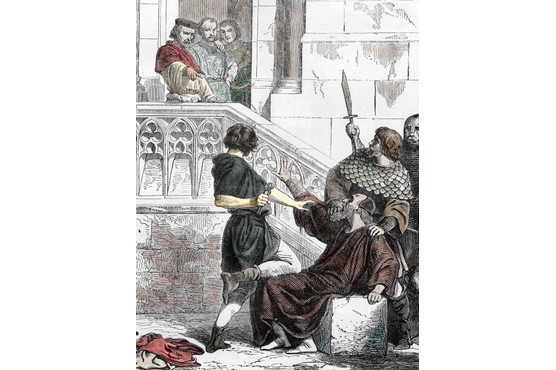
King John of England imposed crushing taxes on his Jewish wards, says Abrams. Engraving from 'Histoire de France' by Lahure, 1866
THE POGROMS OF 1189-90
Note
A pogrom is a riot orchestrated against a particular group of people. In this case, the Jews.
From 1189 until 1190, Christians began pogroms on Jewish homes and property. Some Jews were attacked physically and others were even killed. The pogroms began when Christians thought that the Jews disrespected King Richard I during his coronation. In response, the king ordered his people to leave Jews in peace.
September 1189
Anti-Jewish riots were sparked by Christians in London.
February 1190
Riots in King's Lynn and Norwich broke out.
March 1190
Riots in Stamford, Bury St. Edmunds, Lincoln and York. About 150 Jews took refuge at Clifford's Tower in York Castle, however it was attacked.
On 3 September 1189, King Richard I's coronation triggered a pogrom of English Jewry.
Despite the king's order, violence against Jews spread in England, which later led to the massacre of Jews at York Castle.
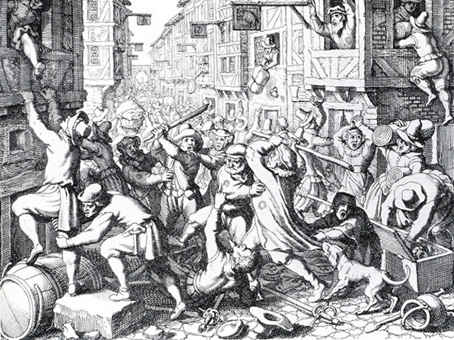
Illustration of a pogrom against English Jewry after the coronation of King Richard I
JEWS UNDER HENRY III
Henry's reign was marked by financial instability as a consequence of wars with France, dealing with his own rebelling lords, and rebuilding Westminster Abbey, the Tower of London and Windsor Castle.
To fund all this, he relied on taxes but believed that the Jews, many being wealthy, should pay a larger percentage. This forced Jewish lenders to recall money lent to borrowers. This made them very unpopular and many lost their wealth.
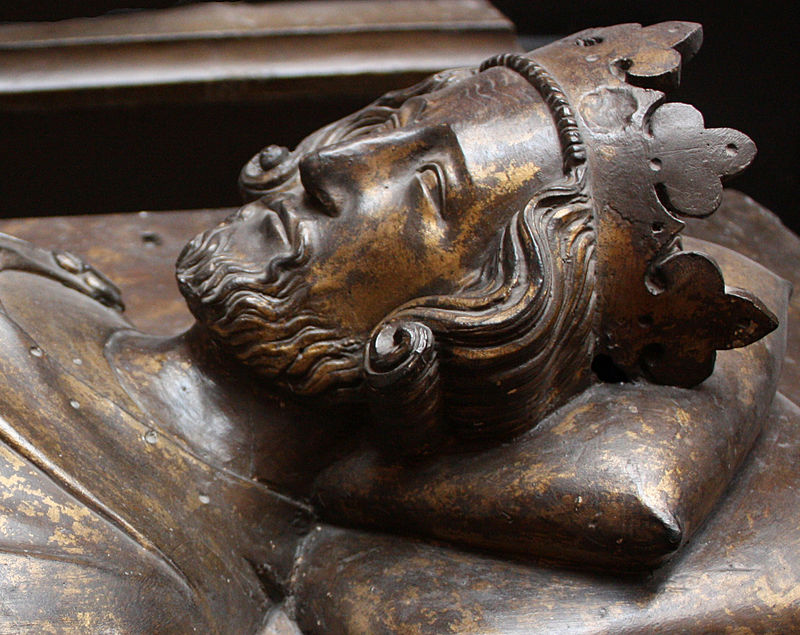
Henry III was King of England between 1216-72. He is regarded by historians as a weak and incompetent king.
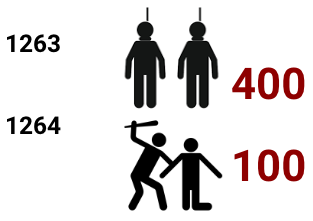
In 1250, rumours of blood libels saw many Jewish people arrested, tortured and executed on false accusations. Their wealth and property went to the king.
LINCOLN BLOOD LIBEL
London, Palm Sunday
JEWS IN ENGLAND AFTER 1265
- In the years prior to Henry III's rule, Jews were property of the king.
- In exchange for a large loan, Henry III gave royal rights over the Jews to his brother, Richard, Earl of Cornwall.
- After the Lincoln Libels, where they'd received no protection from the king, the rights were transferred back to Henry III.
- Then, one of the biggest changes of all happened.
Remember, up until now Christian Popes had said making money from loans was a sin.
The Italians had come up with a way to offer loans without directly charging interest, which allowed them to get around the Pope's restrictions.
The Pope conceded that the Bible did not forbid the new methods of earning money.
This meant that Jewish moneylenders were no longer as important as they used to be!
JEWS IN ENGLAND AFTER 1265
Faced with an unfair tax burden, xenophobia and lack of protection from the king, they had the option to convert to Christianity….
DOMUS CONVERSORUM
Henry III set up these special homes, usually inhabited by single Jewish women and children.

Jews were able to live at the Domus Conversorum for two years.
They were taught about Christianity and converted.
They were paid a small wage but had to hand over all their assets, including property.
When Edward I became king, he forced all Jews to attend weekly sermons to try to convert them.
JEWS UNDER EDWARD I
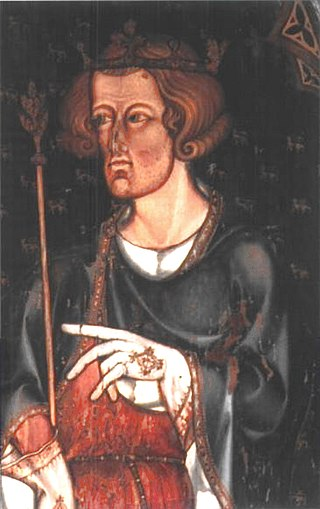
Edward I reigned from 1272-1307. He too had many costly battles that needed financing.
Note
Edward I's reign was marked by the Second Barons' war, crusades and Welsh wars, all of which took a heavy financial toll. He met these demands through customs duties, money lending and lay subsidies. Another source of income was heavily taxing the Jews who, as royal property, he was free to exploit to the point of ruin.
As many Jews were very poor by this point, some resorted to clipping coins.
In 1278, Edward arrested 680 for coin clipping and executed 293 of them.
Note
STATUTE OF JEWRY

In 1275, Edward I passed this statute, which achieved the following:
- Jews could no longer collect interest on loans
- People who owed money to Jews didn't have to repay them
- Jews had to wear large yellow badges on their outer clothes
- Jews could only live in certain towns
- Jews were now allowed to buy farms and become farmers
JEWISH EXPULSION
By 1290, there were still a number of Jews who refused to convert or become farmers. Edward's response was to expel all 3,000 Jews living in England.
Note
THE EDICT OF EXPULSION
A royal decree issued by Edward I on 18 July 1290, it expelled all Jews from the Kingdom of England. County sheriffs were given until All Saints' Day, 1 November, to make it happen. Jewish people were forced to abandon their houses, possessions and wealth and go back to France. Even during their eviction they were subjected to persecution - some were thrown overboard ships, others were abandoned on tidal flats and river estuaries and left to drown.