Quantitative Data in PE (OCR GCSE Physical Education): Revision Notes
📚Revision Notes
Quantitative Data In PE
What is Quantitative Data?
Note
Quantitative data is numerical information that can be measured and analysed statistically. In Physical Education (PE), it helps objectively evaluate performance, fitness levels, and progress.
Uses of Quantitative Data in PE
Performance Measurement:
-
Timing and Scoring: Recording times, distances, scores, and other measurable performance metrics.
-
Statistics: Analysing win/loss records, shooting percentages, and other game statistics. Fitness Assessment:
-
Fitness Tests: Conduct tests such as the beep test, 12-minute run, or strength assessments to measure physical fitness components.
-
Body Measurements: Recording data such as BMI, body fat percentage, and muscle mass. Training and Progress Tracking:
-
Workout Logs: Tracking sets, reps, weights, and other training variables.
-
Progress Charts: Visualising improvements over time in various fitness parameters. Injury and Health Monitoring:
-
Injury Reports: Collecting data on injury frequency, type, and recovery times.
-
Health Metrics: Monitoring heart rate, blood pressure, and other health indicators.
Benefits of Quantitative Data
- Objective Evaluation: Provides clear, unbiased measurements of performance and fitness.
- Progress Tracking: Enables precise tracking of improvements and goal attainment.
- Data-Driven Decisions: Facilitates informed decisions in training, coaching, and programme development.
Practical Application
- Performance Analysis: Use quantitative data to identify strengths and areas for improvement.
- Personalized Training: Develop tailored training programmes based on individual fitness assessments.
- Goal Setting: Set specific, measurable goals and track progress quantitatively.
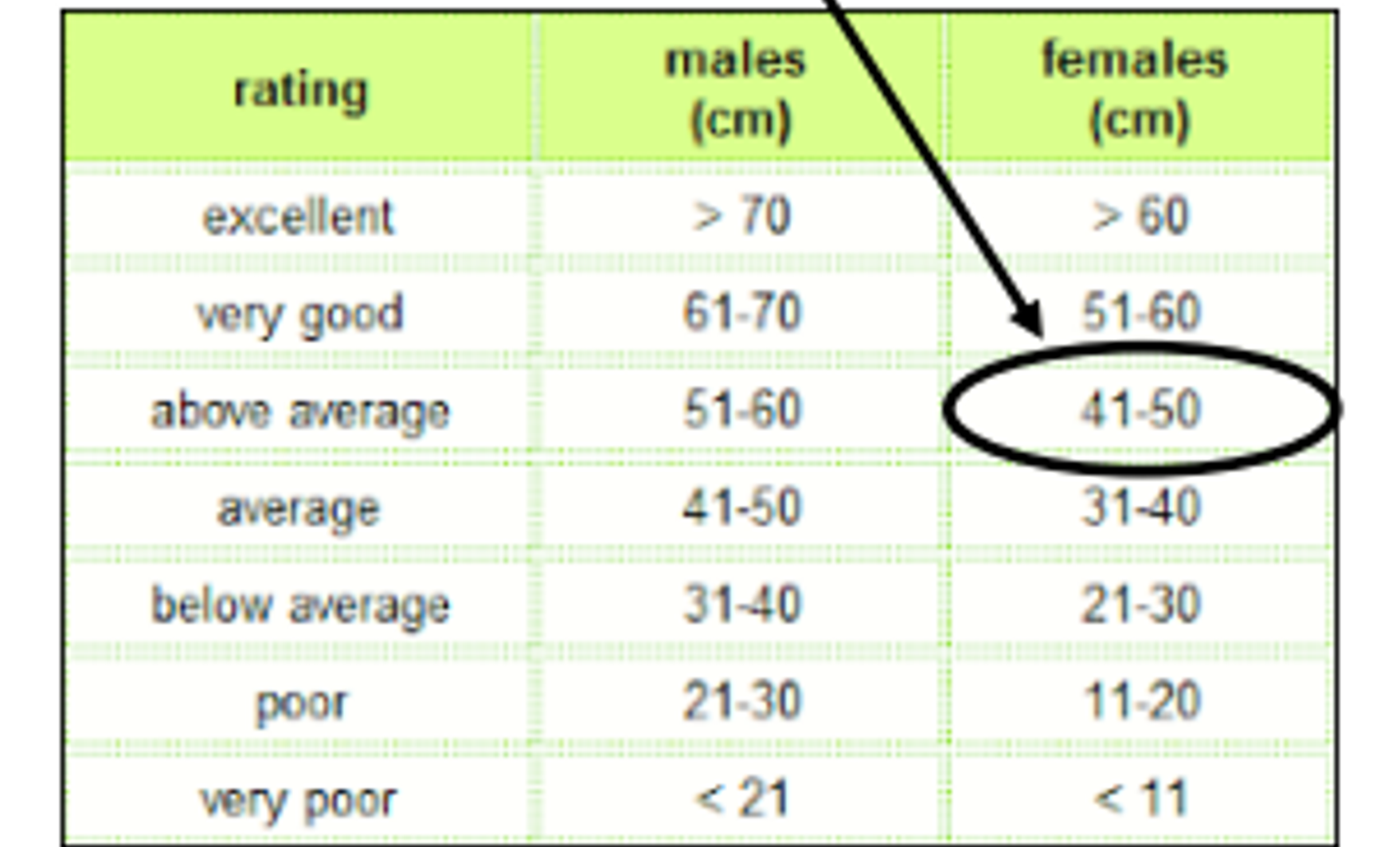
Examples: This table shows lots of data in the normative table for the vertical jump test. There are lots of numbers but all you have to do is locate the age group and the score. For example, a female scored 44 cm
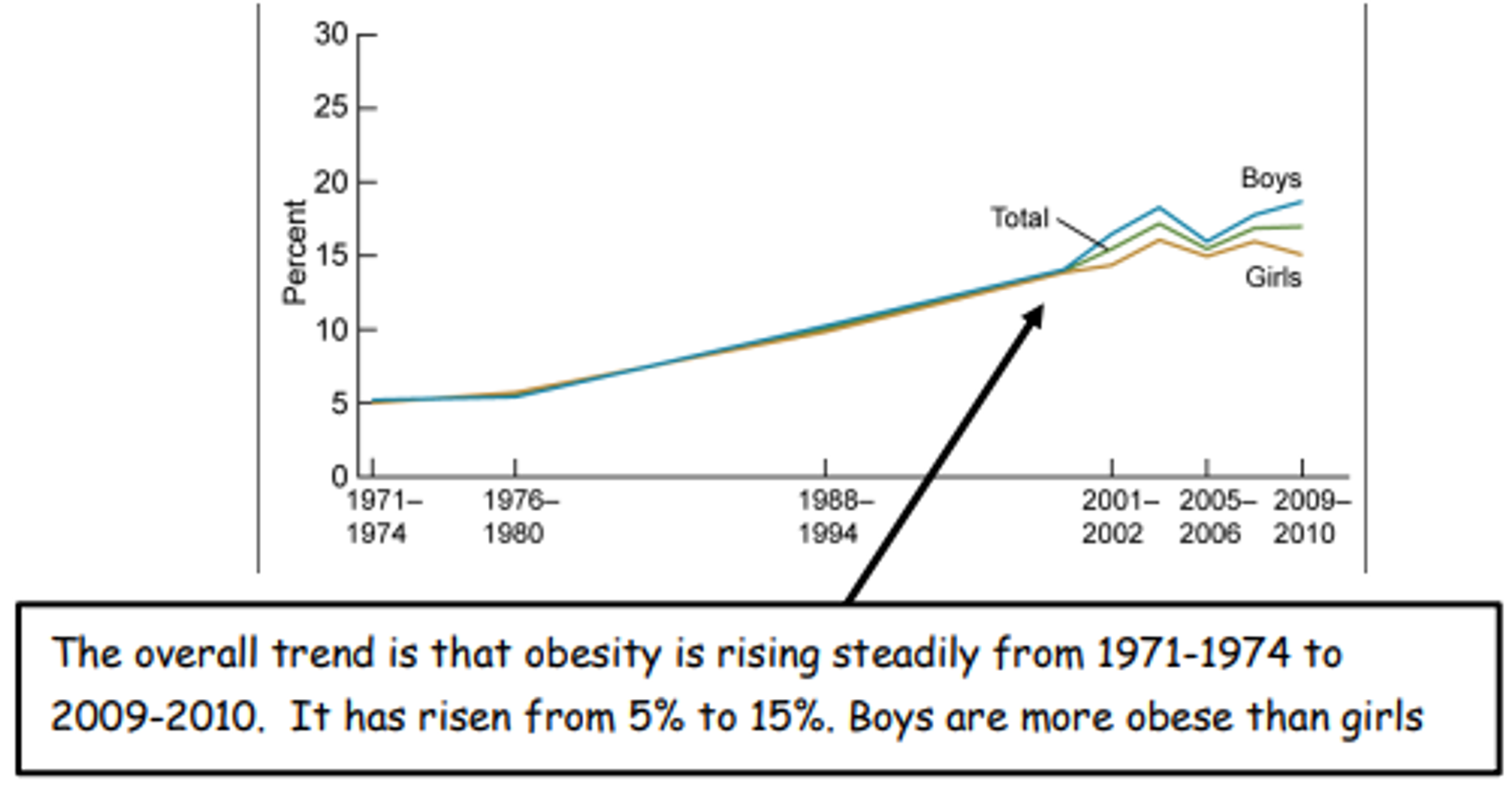
Trends Below is a graph showing trends in obesity among young children aged 2-19. You will need to analyse the data and identify the trends in data