Buddhism: Methods of Worship (OCR GCSE Religious Studies): Revision Notes
📚Revision Notes
3.3.1 Buddhism: Methods of Worship
Puja: Devotional Practice
Puja is a central aspect of Buddhist worship, involving ceremonies where offerings or gifts are presented, alongside meditation and prayer. The primary purpose of Puja is for Buddhists to express gratitude to the Buddha for his teachings, showing respect and devotion.
Significance:
Puja helps Buddhists connect with the Buddha, aiding them in their journey to overcome suffering. This is aligned with the Three Refuges, one of which is "to the Buddha for refuge I go." Through Puja, Buddhists draw closer to the Buddha, finding guidance and solace in his teachings.
Practice Locations:
Puja is practised both at home and in temples, making it an integral part of daily life for Buddhists.
Methods of Devotional Practice
Buddhists use various methods during their worship, each with its own significance:
Mantras:
Chanting mantras repetitively is a form of meditation that helps Buddhists focus their minds and cultivate concentration.
Chanting:
Singing the scriptures is a traditional way to internalise the Buddha's teachings and create a spiritual atmosphere during worship.
Mala:
A string of beads used to help Buddhists keep track of their prayers or mantras. It aids in maintaining focus and can be carried throughout the day for continuous mindfulness.
Meditation:
Meditation is central to Buddhist practice. It opens the mind to higher states of awareness, aiding in the pursuit of enlightenment. There are two main types of meditation:
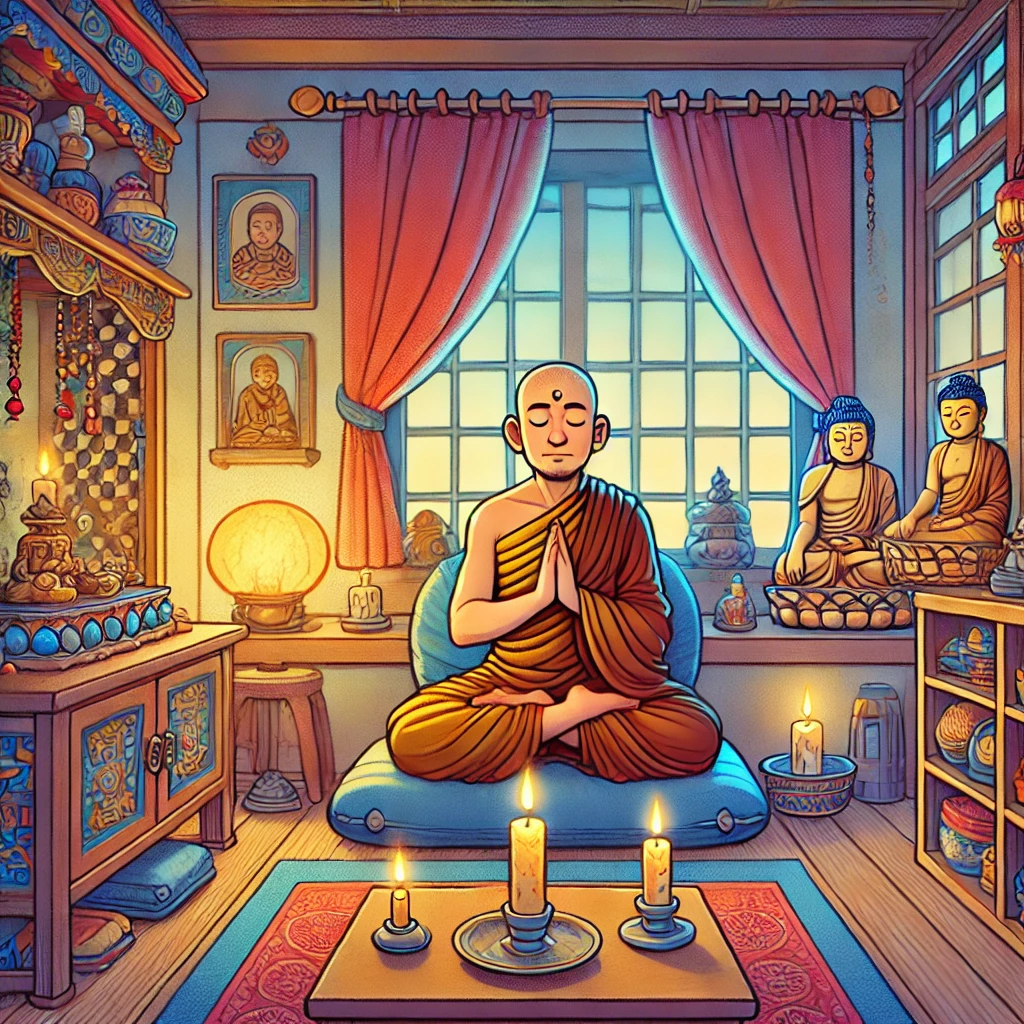
Samatha Meditation:
Also known as calming meditation, it focuses on mindfulness of breathing and leads to deeper concentration. This type of meditation helps Buddhists let go of cravings and move towards achieving nibbana (nirvana).
Vipassana Meditation:
Known as insight meditation, it allows Buddhists to see things as they really are, leading to an understanding of the impermanence of life and the nature of reality. Vipassana involves not just breathing but also exploration and can even be practised while walking.
Bowing:
In Mahayana Buddhism, bowing is a sign of respect towards the Buddha and his teachings.
Offerings:
Buddhists often leave gifts such as flowers or candles during Puja. Flowers symbolise the impermanence of life, as they fade and wither, while candles represent light and wisdom, guiding the way to enlightenment.
Visualization:
Particularly in Tibetan Buddhism, visualisation is an important meditation technique where Buddhists imagine the Buddha to deepen their understanding of his teachings and the nature of existence.
Meditation: The Path to Enlightenment
- Importance of Meditation: Meditation is crucial in Buddhism for attaining enlightenment. Both Samatha and Vipassana meditation were practised by the Buddha himself, and Buddhists today follow these practices to achieve deeper understanding and concentration.
- Visualization in Meditation: Tibetan Buddhists often use visualisation during meditation, imagining the Buddha as a means to grasp the true nature of existence. This practice is seen as vital for progressing towards enlightenment.
Death and Mourning in Buddhism
Samsara and Rebirth:
Buddhists believe in the cycle of samsara, which is the continuous cycle of birth, death, and rebirth. Until a Buddhist reaches nibbana, they remain in this cycle. Thus, death is not viewed as an end but as a transition within the larger cycle of existence.
Death Ceremonies:
Different Buddhist traditions have varying approaches to death and mourning:
Tibetan Death Ceremonies:
May involve a sky burial, where the body is left in a high place to be consumed by vultures. This is believed to help the process of rebirth.
Pure Land Death Ceremonies:
Often include a funeral service with Buddhist scripture readings, similar to other religious traditions.
Theravada Death Ceremonies:
Focus on charitable giving rather than formal mourning, with the belief in 'transfer of merit' – that good deeds can positively influence the deceased's next life.