Strength (Junior Cert Applied Technology): Revision Notes
📚Revision Notes
Material Strength Overview
- Material strength means how well a material can handle forces without breaking or changing shape. These forces include tension (pulling), compression (squeezing), and torsion (twisting).
- It is crucial in engineering and construction to make sure structures are safe and work well.
- Choosing the correct material strength is necessary for the safety and efficiency of engineering structures.
Definitions
- Material Strength: The ability of a material to resist tension, compression, and torsion to ensure safety and performance.
- Tensile Strength: The greatest stress a material can bear while being stretched or pulled. It shows how well a material can resist tension.
- Compressive Strength: The ability of a material to resist forces that try to make it smaller. It shows how well a material can resist compression.
- Torsional Strength: The ability of a material to resist twisting forces.
Types of Strength
Tensile Strength Test
- Process: Pull a material sample until it breaks, checking the maximum stress it can bear.
- Application: Helps to see how well materials perform under tension.
- Diagram:
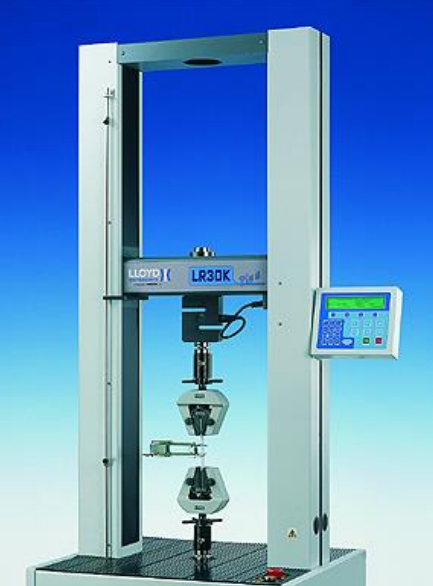
- Description: The image shows a machine for tensile tests, with digital displays and clamps to hold samples.
- Relevant for materials like steel, which are good at resisting tension.
Compressive Strength Test
- Conducted by pressing the material until it compresses or crushes.
-
Important
Essential for knowing how materials behave under pressure.
- Important for materials like concrete, used in foundations.
Torsional Strength Test
- Measures how well a material can resist twisting.
- Important for materials facing rotational forces.
Examples of Materials
- Concrete
- High compressive strength, low tensile strength.
- Used where compression strength is needed, like in building foundations.
- Steel
- High tensile and torsional strengths.
- Ideal for structures like bridges, which handle tension and twisting.
- Titanium
- Excellent strength-to-weight ratio.
- Useful in aerospace for its lightness and strength, balancing load and weight.
Importance in Application
- Bridges: Need tensile and compressive strengths to bear different loads.
- Aircraft Components: Must be light yet strong for better performance and efficiency.
- Skyscrapers: Need to support various forces for all-around strength and stability.
Note
Understanding tensile, compressive, and torsional strengths is vital in engineering design, ensuring materials match specific needs.
Summary
- Material strength dictates a material's use.
- Tensile, compressive, and torsional strengths are crucial.
- Materials are selected based on strength for specific engineering tasks.
- Knowing these strengths enables safe, efficient, and economical solutions.
Note
- A good understanding of material strength ensures the best materials, like steel for bridges or titanium for aircraft, leading to safe outcomes.