Using a Sewing Machine (Junior Cert Home Economics): Revision Notes
📚Revision Notes
Using a Sewing Machine
Using a Sewing Machine
Start Sewing:
- Lower the presser foot and needle into the fabric.
- Hold the threads to avoid tangling.
- Use the foot pedal to control speed.
Tips for Neat Sewing:
- Guide the fabric carefully; do not push or pull.
- Use the reverse stitch for securing the start and end of a seam.
- Check the tension of both threads to avoid puckering.
Stitch Tension
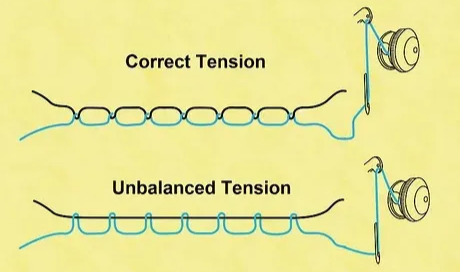
Stitch tension is important as it helps you create even and secure stitches.
Two threads (top thread and bobbin thread) interlock to form a machine stitch:
Note
- Too tight: The fabric puckers.
- Too loose: The thread loops or the stitches do not hold.
Adjust the tension using:
- Tension wheel (top thread).
- Tension screw on the bobbin case (bottom thread).
- Aim for balanced tension where the threads interlock neatly in the middle of the fabric.
Common Sewing Machine Faults and Causes
- Needle Breaks:
- Needle inserted incorrectly (back to front).
- Blunt needle.
- Fabric too thick for needle size.
- Sewing over zips or pins.
- Loose presser foot causing needle to hit and break.
- Thread Breaks:
- Machine not threaded correctly.
- Poor-quality or too fine thread.
- Needle inserted back to front.
- Looped Stitches (Underneath):
- Top tension too loose.
- Uneven top and bobbin thread tension.
- Presser foot not lowered.
- Machine not threaded properly.
- Slipped Stitches:
- Blunt needle.
- Needle inserted incorrectly (back to front).
- Pushing or pulling fabric while sewing.
- Puckered Seams:
- Tension too tight (top or bobbin).
- Blunt needle.
- Top and bottom threads have uneven tension.
- Stitch length too long for fine fabrics like satin.
Prevention Tips:
- Use the correct needle and thread for the fabric.
- Thread the machine correctly and check tension settings.
- Avoid sewing over thick seams, zips, or pins.
- Replace blunt needles regularly.