Rhythmic Features (Junior Cert Music): Revision Notes
📚Revision Notes
Rhythmic Features
Note
A rhythmic feature is any element that describes how the rhythm works in a piece of music. It includes what kind of beats, note values, patterns, or effects are used to create the rhythm.
Note
Exam Tip:
Learning to identify the rhythmic features helps you to describe a piece of music.
In the listening paper, you may be asked to identify or describe the rhythmic features you hear in an excerpt.
1. Beat and Pulse
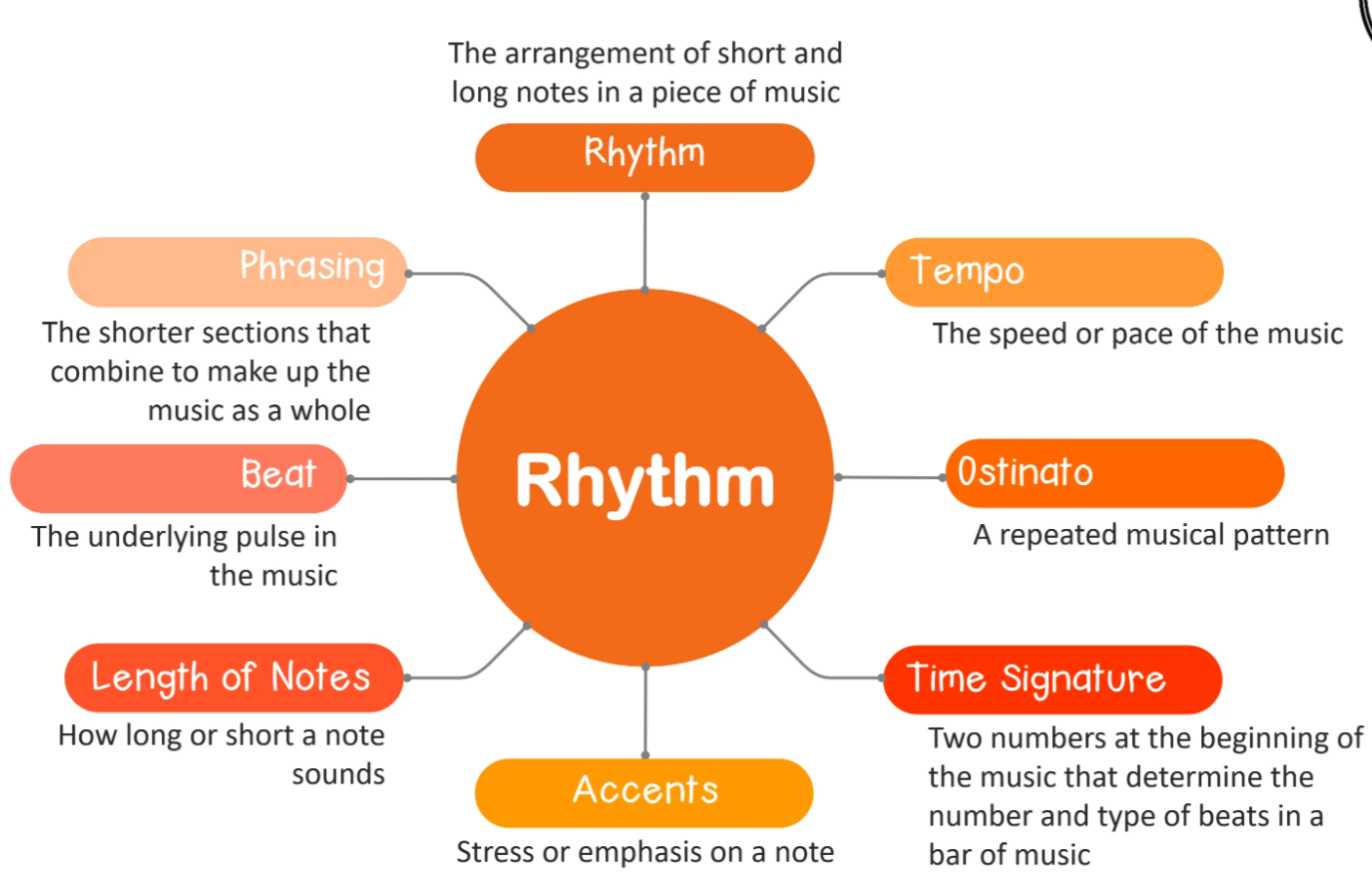
- The beat is the steady pulse of a piece of music.
- It is what you tap your foot or clap along to.
- The beat is usually steady and regular, but some beats may feel stronger (accented) than others.
- Pulse – The steady beat of music, like a ticking clock or a heartbeat.
2. Tempo
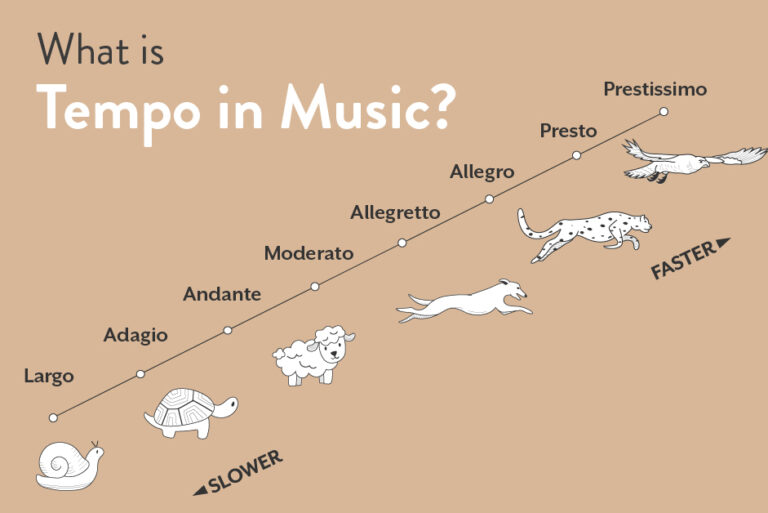
- Tempo is the speed of the music.
- It can be described using Italian terms:
- Allegro = Fast
- Moderato = Medium
- Adagio = Slow
3. Accents
- An accent is when extra pressure is put on one particular beat.
- In 4/4 time, the first beat is often the strongest.
4. Ostinato
- An ostinato is a repeated musical pattern.
- It can be rhythmic, melodic, or harmonic and may be heard in the background or foreground of a piece.
- Used in classical, pop, and electronic music.
- Examples:
- 🎵 Boléro (Ravel) – repeated rhythm throughout.
- 🎵 Seven Nation Army (White Stripes) – repeating bass riff.
- 🎵 Canon in D (Pachelbel) – repeating chord progression.
5. Syncopation
- Syncopation happens when the emphasis is placed on weak beats or off-beats.
- This makes the rhythm sound unexpected or exciting.
- Common in jazz, funk, and pop music.
6. Dotted Rhythms
- A dotted note increases its value by half.
- Example:
- A dotted crotchet (1½ beats) is a crotchet (1 beat) plus a quaver (½ beat).
- Dotted rhythms are used in genres like classical, jazz, and pop to create momentum and variation.
7. Quavers and Semiquavers
- Quaver: Lasts ½ a beat.
- Semiquaver: Lasts ¼ of a beat.
- Quavers are often beamed together in pairs.
8. Rests
- Rests show silence in music.
- Examples:
- Crotchet rest (𝄽) = 1 beat of silence.
- Quaver rest = ½ beat of silence.
9. Anacrusis (Upbeat)
- An anacrusis is a note or group of notes that appear before the first full bar.
- As the first bar is incomplete due to the anacrusis, the missing beats are removed from the final bar to ensure the total beats match the time signature.
- It's also called an upbeat.
- Happy Birthday is an example – the word Happy appears before the first beat of the bar, and then 'Birthday' is the first proper beat of the song.
- It gives the music a sense of momentum and flow.
10. Tied Notes
- A tie is a curved line joining two or more notes of the same pitch.
- It tells the musician to hold the note for the full value of all tied notes.
- Example: If we tie a quarter note (crotchet) to a half note (minim), we get a note that lasts three beats.
11. Triplets
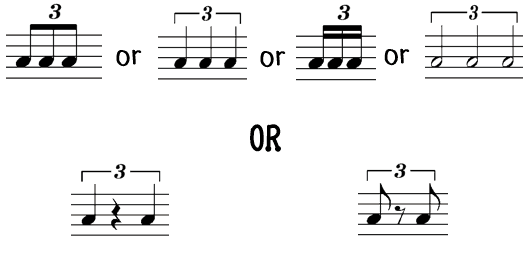
- A triplet is a group of three notes played in the time of two notes of the same value.
- Triplets are marked with a small number 3 above or below the group of notes.
- A bracket may also be used to connect the three notes.
- Any note value (e.g. crotchets, quavers) can be grouped as a triplet.
- Triplets create a bouncy or flowing feel.