String Family (Junior Cert Music): Revision Notes
📚Revision Notes
String Family
- The string family is one of the four main families of the orchestra.
- These instruments produce sound by vibrating strings, either by
- bowing (arco) or
- plucking (pizzicato).
1. Characteristics of String Instruments
- Played with a bow (arco) or plucked (pizzicato).
- Made of wood, with strings stretched over a hollow body to amplify sound.
- The pitch is changed by pressing the strings against the fingerboard.
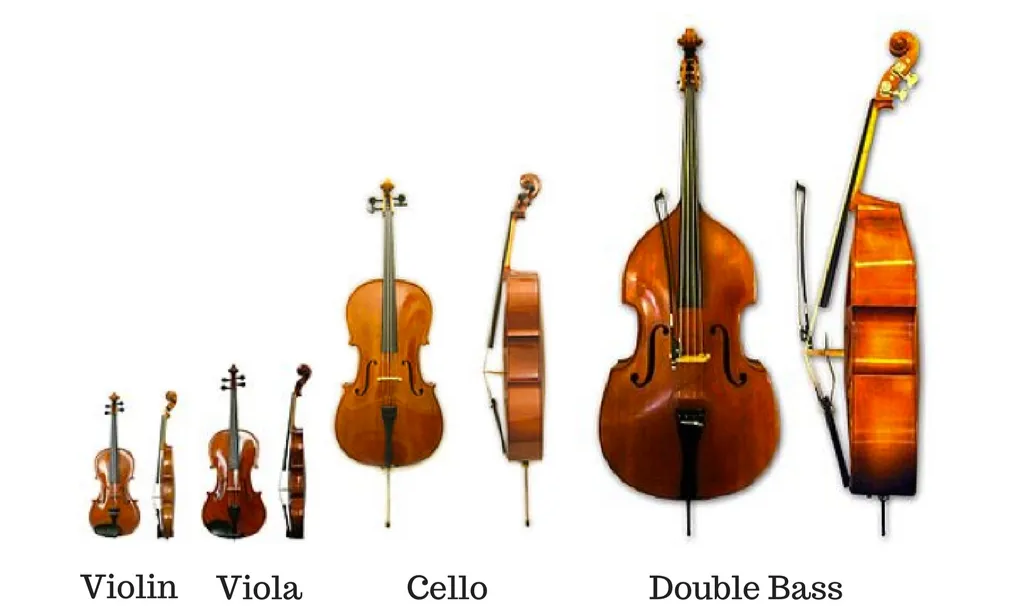
- The larger the instrument, the lower the pitch.
2. Instruments of the String Family
Violin
- The smallest and highest-pitched instrument in the string family.
- Played on the left shoulder with a bow or by plucking the strings.
- Often plays the melody in orchestral music.
- Has four strings tuned to G, D, A, and E.
- Common in classical, folk, jazz and pop music.
Viola
- Slightly larger than the violin.
- Has a warmer, deeper sound due to its lower pitch.
- Often plays harmony or inner voices in the orchestra.
- Has four strings tuned to C, G, D, and A.
- Played the same way as the violin but requires larger finger spacing.
Cello (Violoncello)
- Much larger than the violin and viola.
- Played while sitting down, with the instrument resting between the knees.
- Has a rich, deep, and warm sound.
- Often plays bass lines or melodies in orchestral and solo music.
- Has four strings tuned to C, G, D, and A (one octave lower than the viola).
Double Bass
- The largest and lowest-pitched instrument in the string family.
- Played while standing or sitting on a tall stool.
- Produces a deep, resonant sound that supports the harmony.
- Has four strings tuned to E, A, D, and G (one octave lower than the cello).
- Commonly used in classical, jazz, and pop music.
3. Techniques of Playing String Instruments
- Arco – Playing with a bow.
- Pizzicato – Plucking the strings with fingers.
- Vibrato – Slightly shaking the finger on the string to create a richer sound.
- Tremolo – Rapidly moving the bow back and forth for a trembling effect.
- Harmonics – Lightly touching the string to produce a high, glassy tone.
- Col legno – Tapping the string with the wooden part of the bow for a percussive effect.
4. Role of the String Family in the Orchestra
- Strings form the largest section of the orchestra.
- They are divided into five main sections:
- First Violins – Play the main melody.
- Second Violins – Support the first violins with harmonies and counter-melodies.
- Violas – Provide depth and warmth, often playing inner harmonies.
- Cellos – Play basslines or lyrical melodies, bridging between high and low sounds.
- Double Basses – Provide a strong foundation with deep, resonant bass
5. Famous String Composers & Pieces
- Antonio Vivaldi – The Four Seasons (violin solo and orchestra)
- Johann Sebastian Bach – Cello Suites (solo cello)
- Ludwig van Beethoven – String Quartets (violin, viola, cello)
- Pyotr Ilyich Tchaikovsky – Swan Lake (orchestral strings)
- John Williams – Star Wars Theme (film music featuring string sections)