Space and the Origin of the Universe (Junior Cert Science): Revision Notes
📚Revision Notes
Space and the Origin of the Universe
Introduction to astronomy
Astronomy is the branch of science that explores the universe beyond Earth's atmosphere. When we look up at the night sky, we're observing what astronomers study every day.
The universe encompasses everything that exists in space. This includes all naturally occurring objects beyond Earth's atmosphere, from tiny specks of dust to enormous galaxies spanning billions of light-years.
A celestial body is any natural object found outside Earth's atmosphere. These objects include stars, planets, moons, asteroids, and comets.
Note
The word "celestial" comes from the Latin word meaning "heavenly" or "of the sky." This reminds us that ancient civilizations viewed these objects as divine or supernatural before we understood their scientific nature.
Types of celestial bodies
Understanding the different types of celestial bodies helps us make sense of what we observe in space. There are five main categories you need to know.
Stars
A star is a celestial object that produces its own light and heat. Stars are massive spheres of gas held together by their own gravity. Deep within a star's core, nuclear fusion reactions occur, converting hydrogen into helium. This process releases enormous amounts of energy, which we see as light and feel as heat.
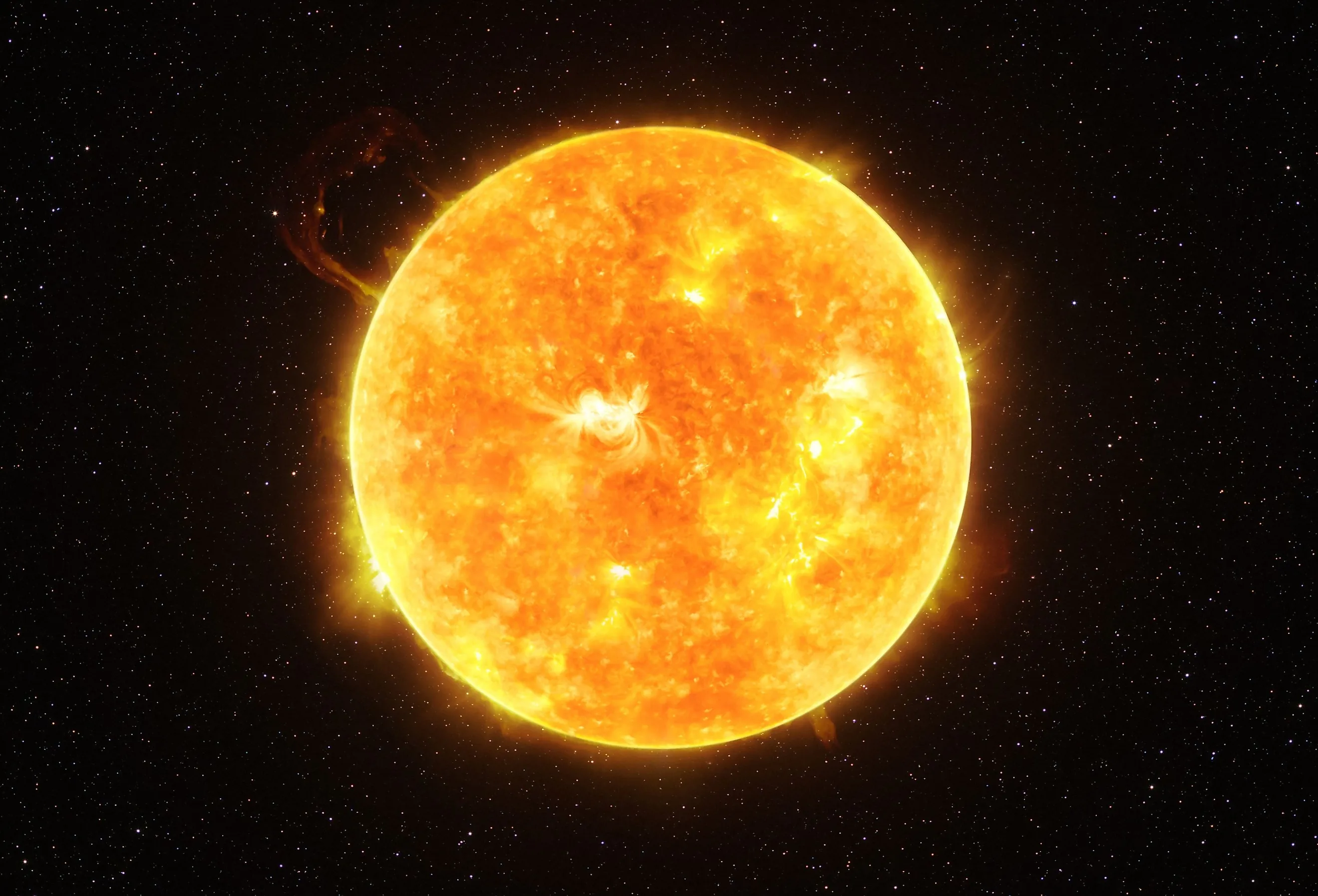
The Sun is the star at the centre of our solar system and the brightest object in Earth's sky. It's the most important source of energy for life on Earth. Through nuclear fusion, hydrogen atoms in the Sun's core are constantly being converted into helium. The Sun is so bright that objects visible in the night sky are actually distant stars. Proxima Centauri, the nearest star to Earth after the Sun, is located light-years away. This means light takes years to travel from that star to Earth.
Note
Light-years as distance: A light-year is a measure of distance, not time. It represents how far light travels in one year, which is approximately trillion kilometres!
Planets
A planet is a celestial body that orbits around a star. For an object to be classified as a planet, it must meet three specific criteria:
- It must be in orbit around a star
- It must have enough mass to form an almost round shape due to its own gravity
- It must have cleared the region around its orbit of other celestial bodies
You might sometimes see a planet in the night sky because planets reflect light from the Sun.
Important
What makes Pluto a dwarf planet?
If a celestial body meets the first two criteria but hasn't cleared its orbital region of other objects, it's classified as a dwarf planet. Pluto is no longer considered a planet because it shares its orbital region with thousands of other objects, similar in size to Pluto itself.
Moons (natural satellites)
A moon is a natural satellite of a planet. The term satellite refers to any object that orbits a celestial body of larger mass while revolving around it.
We're all familiar with Earth's Moon, the only natural satellite of our planet. However, other planets have their own moons too. Jupiter holds the record with more than moons, whilst Saturn has more than moons. Uranus has more than moons, and Neptune has more than moons. These numbers continue to change as astronomers carry out further studies and discover additional moons.
Note
Earth's Moon is actually a natural satellite of Earth. This means it's an object orbiting our planet. The word "Moon" with a capital M refers specifically to Earth's natural satellite, while "moon" with a lowercase m refers to any natural satellite of a planet.
Asteroids
An asteroid is a small rocky body in space. Most asteroids are made of rock that was left over after the planets formed about billion years ago. Their diameters range from a few metres to a few hundred kilometres.
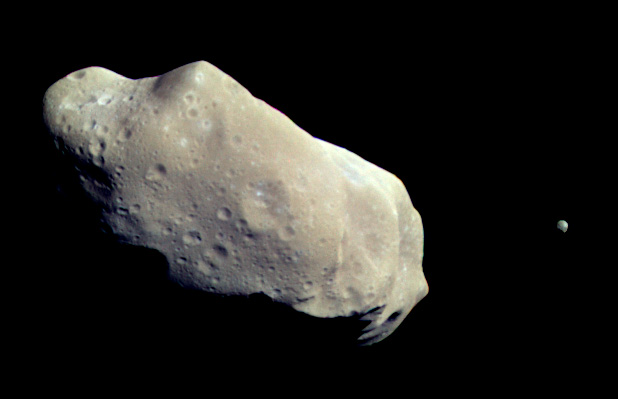
Sometimes asteroids can be knocked out of their orbit due to a collision with another asteroid or a planet. If they travel through space and come close to another celestial body, such as a planet, that planet's gravity can pull them towards it, potentially causing a high-energy collision.
Important
Asteroid collision threats:
A collision between a rogue asteroid and Earth is thought to be responsible for the extinction of the dinosaurs millions of years ago. This demonstrates the potentially catastrophic effects of asteroid impacts on our planet.
Comets
A comet is a dusty snowball made of ice and dust that orbits a star. Comets orbit the Sun, but unlike planets, their orbital path isn't circular. They spend most of their time in the outer regions of the solar system, far from the Sun. When comets come close to the Sun, some of the ice and dust particles are released, creating a tail pointing away from the Sun. This tail makes comets visible in the night sky.
Note
Understanding comet tails:
The tail of a comet always points away from the Sun, regardless of the comet's direction of travel. This happens because the solar wind (charged particles from the Sun) pushes the ice and dust particles away from the Sun.
The most famous comet is Halley's Comet, which has orbited around the Sun for thousands of years. It revolves around the Sun every years. You may have seen the comet Neowise, which was very clear in the night sky in July 2020.
Our solar system
Let's first discuss what we mean by the term "solar system."
A solar system is a group of planets, asteroids, comets, and other celestial bodies that orbit around a star. Our solar system is only one of many millions of planetary systems in the universe. The size of any solar system is limited by the distance at which the gravity of the star can attract other celestial bodies.
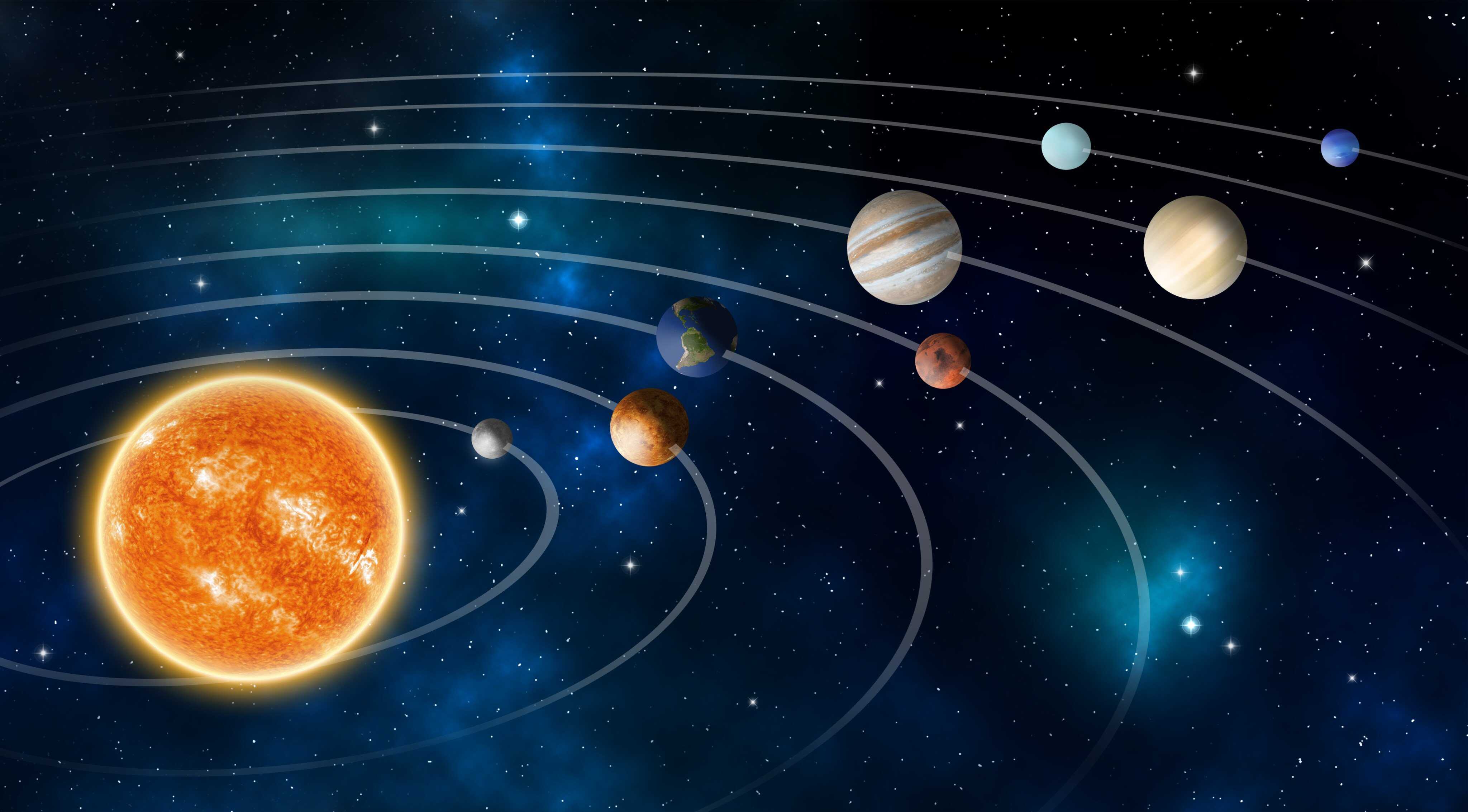
Our solar system consists of the Sun, planets, moons, comets, asteroids, and other celestial bodies, all under the influence of the Sun's gravity. Gravity is often referred to as the "glue" of the universe because it holds everything together.
The Sun is a huge celestial body – a star at the centre of a system of eight planets. Our Sun contains per cent of the mass of the solar system. As we've already mentioned, it generates its own heat and light through nuclear reactions. Due to its huge mass, the gravity of the Sun attracts all other objects in the solar system.
Important
The eight planets in order:
The eight planets, in order of distance from the Sun, are:
- Mercury
- Venus
- Earth
- Mars
- Jupiter
- Saturn
- Uranus
- Neptune
Use this mnemonic to help you remember the order: "My Very Exhausted Mother Just Served Us Noodles" (Mercury, Venus, Earth, Mars, Jupiter, Saturn, Uranus, Neptune).
The planets revolve around the Sun in a nearly circular pathway called an orbit. The force of gravity between each planet and the Sun helps the planets remain in orbit.
Due to the fact that the planets are orbiting around the Sun, astronomers have discovered a large number of rocky objects between Mars and Jupiter. These are asteroids. Most of the asteroids in the solar system are clustered between Mars and Jupiter. This region is known as the asteroid belt. However, some wander out of this region and are in danger of striking other planets.
At the edges of the solar system, there exists a region of gas clouds called the Kuiper belt. It contains occasional lumps of rocky ice up to km in diameter in orbit around the Sun. They are called comets. Occasionally, the orbits of comets around the Sun may be disturbed. They may begin to move towards the Sun and may orbit the Sun in a different orbit to the Kuiper belt. The Sun melts some of the ice and a tail of gas, ice, and dust is formed. The sunlight reflects off the tail when we see a comet.
Note
The most famous is Halley's Comet, which has settled in orbit around the Sun. It revolves around the Sun every years, meaning if you're lucky, you might see it twice in your lifetime!
Galaxies and space
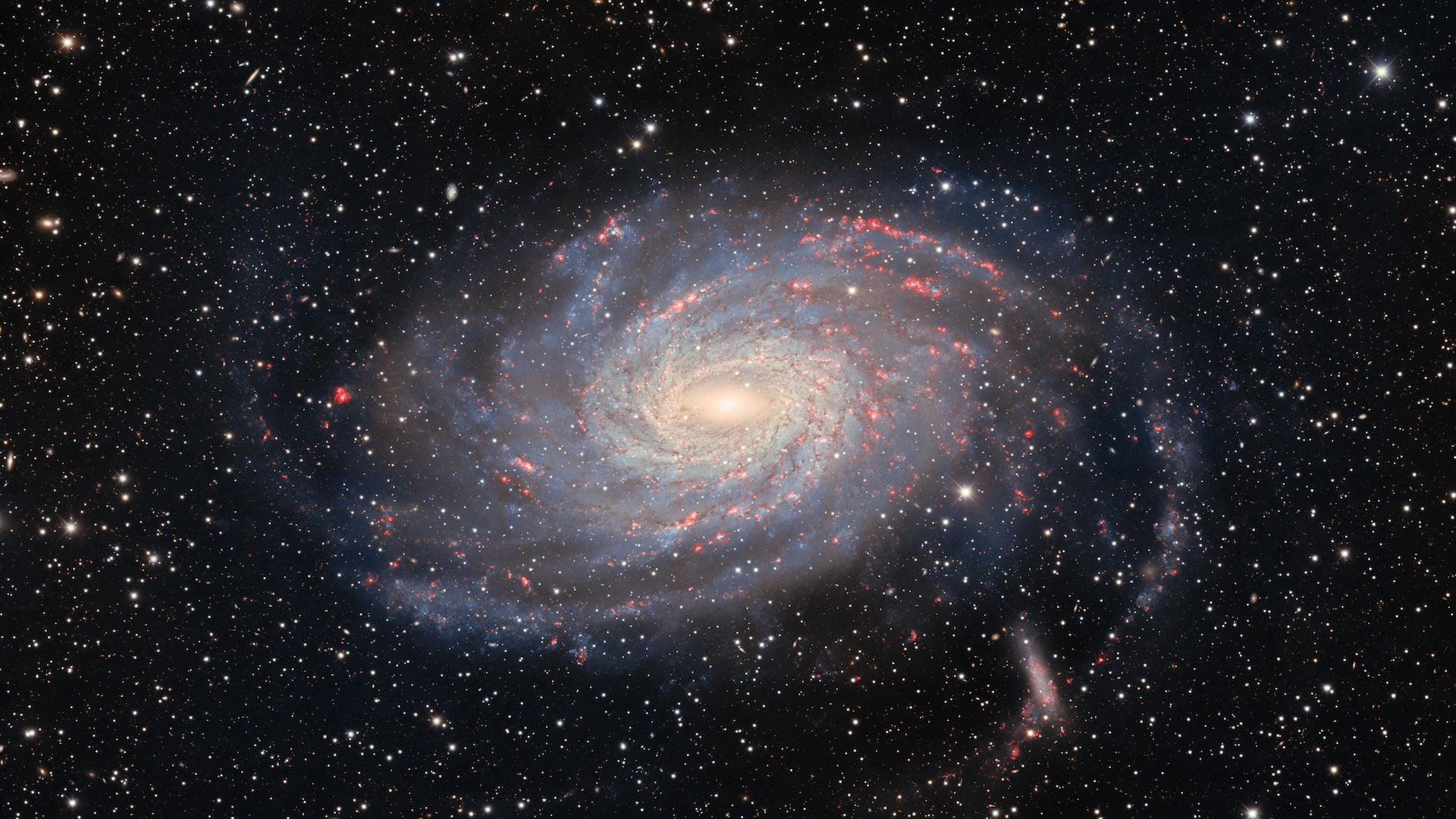
A galaxy is a large system of stars held together by their gravity.
Our solar system is part of the Milky Way Galaxy. Galaxies are isolated from similar systems by vast regions of empty space. Our Sun is just one of billion stars in the Milky Way Galaxy. Many of these stars have their own planetary systems. Our nearest neighbouring large galaxy is called Andromeda.
Outer space, or simply space, is the empty volume that exists between celestial bodies. It is not completely empty but consists of a vacuum containing mostly hydrogen and helium, as well as radiation.
Note
Explore the night sky:
There are many free apps available to observe the night sky and to identify some of the stars and planets. Try using one on a clear night. It will bring astronomy to life for you!
Historical models of the universe
For centuries, people have wondered how the Sun and planets are organised. Were we right about the way we've come to understand it? Several historical models were proposed.
One such model was put forward by Ptolemy, an Egyptian astronomer, about years ago. His model is called the geocentric model of the universe. In this model, he proposed that the Earth was at the centre of the universe and that the Sun, Moon, and planets were in orbit around Earth.

For years, this model was accepted as an explanation for how the universe worked.
However, in 1543, a Polish priest and astronomer named Nicolaus Copernicus proposed an alternative model of the universe. He called it the heliocentric model (the word "Helios" comes from the Greek word for Sun). In this model, the Sun is at the centre of the solar system and the planets are in orbit around it. This model was supported by the work of Greek mathematicians who came before him.
Note
Understanding the names:
- Geocentric: "Geo" = Earth (Earth-centred)
- Heliocentric: "Helios" = Sun (Sun-centred)
These names come from Greek mythology, where Helios was the sun god.
He knew that his findings would go against the teachings of the Catholic Church, and only published his theory just before he died. The Church resisted the findings of Copernicus. It was not until almost years later that Galileo Galilei read the works of Copernicus and sought to prove Copernicus's theory.

Important
Galileo's evidence and persecution:
Galileo Galilei was an Italian scientist. Using an improved telescope (an astronomical telescope), he observed that the moons of Jupiter were in orbit around it. This gave him evidence for the heliocentric model of the universe as proposed by Copernicus, where the planets are in orbit around the Sun.
His theory went against the teachings of the Catholic Church, and he was placed under house arrest for the last eight years of his life. He was pardoned by the Church years later, in 1992.
Gravity – the glue of the universe
Let's revise what we learned about gravity in an earlier chapter.
If any two masses are placed near each other, they will be attracted to each other by a force of gravity. If one of the masses is very large, for example, a moon, a planet, or a star, the force of gravity is much larger. In essence, gravity is the force of attraction for large masses in the universe. The smaller the distance between two masses, the greater the force of attraction.
Note
Neutron stars – extreme gravity:
The force of gravity had a huge mass and was compressed into a very small volume with a small radius (very dense). An example of such an object is a neutron star. A neutron star is what is left over after a large bright star collapses. They have a mass comparable to that of our Sun but compressed into a sphere with a diameter of only km. The density of material in a neutron star would be millions of times per centimetre cubed!
Important
Mass vs Weight:
The mass of a body does not depend on where it is located. The weight of a body can change by moving it further away from Earth or by moving it to a different celestial body.
Comparing the Earth to other celestial bodies
For your examination, you will be expected to be able to interpret data to compare Earth with other planets and moons in the solar system with respect to properties including mass, gravity, size, and composition. You do not have to memorise any data on the planets or moons, as it will be presented to you in the exam as a table.
The gravity on the surface of a celestial body (surface gravity) can be calculated using information about the body's mass and radius.
In tables comparing celestial bodies, the gravity on other celestial bodies is compared to the surface gravity on the Earth. This is called relative surface gravity (relative means "compared to"). In this case, we are comparing gravity to that on Earth.
Example
Understanding relative surface gravity:
If the surface gravity of a planet is , that means that the gravity of the body is twice that of Earth.
This means that if you weigh kg on Earth, you would weigh kg on that planet!
If you compare the relative mass to the surface gravity, you should notice that the greater the mass of the planet, the greater the surface gravity.
The composition of all the planets (what they are made of) is not the same. The first four planets from the Sun (Mercury, Venus, Earth, and Mars) are mostly made of rock. The next two (Jupiter and Saturn), called the gas giants, are mostly made of the gases hydrogen and helium. Finally, the last two (Neptune and Uranus) are known as the ice giants.
Note
Patterns in our solar system:
In general, the further away a planet is from the Sun, the lower the average temperature. A year is the time it takes a planet to make a full revolution of the Sun. In general, the further from the Sun a planet is, the longer the length of its year. A year on Mercury is about of an Earth year, whereas a year on Neptune is approximately Earth years.
Here is a table comparing some of the largest objects in our solar system, including the Sun, the planets, some dwarf planets, and some moons:
| Object | Type of object | Relative mass | Relative radius | Surface gravity |
|---|---|---|---|---|
| Sun | Star | |||
| Jupiter | Planet | |||
| Saturn | Planet | |||
| Uranus | Planet | |||
| Neptune | Planet | |||
| Earth | Planet | |||
| Venus | Planet | |||
| Mars | Planet | |||
| Ganymede | Moon of Jupiter | |||
| Titan | Moon of Saturn | |||
| Mercury | Planet | |||
| Callisto | Moon of Jupiter | |||
| Io | Moon of Jupiter | |||
| Moon | Moon of Earth |
The size of the planets of our solar system varies greatly from planet to planet. This is shown in the table by the relative radius.
Example
Reading relative radius:
The relative radius of Jupiter is . This means that the radius of Jupiter is times larger than the Earth.
If Earth's radius is approximately km, then Jupiter's radius is approximately km!
In the table, the mass of the celestial bodies is compared to Earth. A relative mass of means a body has half the mass of Earth.
The Big Bang theory and the formation of the universe
The branch of astronomy that deals with the formation of the universe is called cosmology.
Astronomers believe that the universe began about billion years ago in a Big Bang. At that time, the entire universe was inside a bubble that was much smaller than the size of a pinhead. This was extremely hot and dense, and suddenly exploded. The universe began to be formed. Time, space, and matter all began with the Big Bang.
In a fraction of a second, the universe grew from the size of a single atom to bigger than the size of a galaxy. It kept on expanding at an ever-decreasing rate.
Note
Timeline of the universe's formation:
Within the first few seconds, protons, neutrons, and electrons were made. However, it was too hot for these to combine to form atoms.
After years, the temperature had dropped enough to allow atoms of smaller elements, for example hydrogen and helium, to form.
After billion years, these giant clouds of atoms were pulled together by gravity to make the first stars and galaxies.
After billion years, these first stars ran out of fuel and died. They exploded and forced new heavier elements into space. These gathered together and formed new stars, planets, planetary systems, and galaxies.
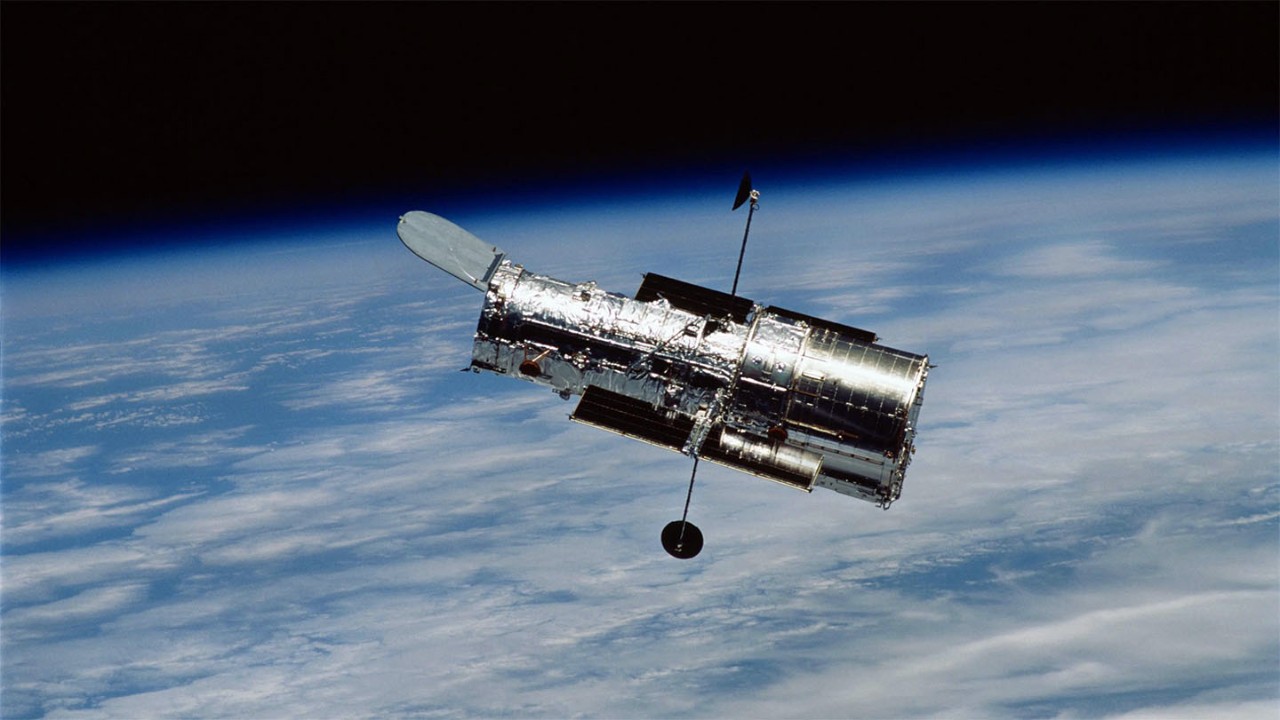
Edwin Hubble (–) was one of the leading cosmologists of the twentieth century. He discovered that there are more galaxies outside of our own galaxy, the Milky Way. He also discovered that the further away a galaxy is, the faster it is moving away from Earth. This was later used as evidence for his theory. In 1990, NASA placed a very powerful telescope in space, which has made many new discoveries. It is named the Hubble Space Telescope in his honour.
Evidence for the Big Bang
Evidence for the Big Bang comes from the following observations:
Important
Three key pieces of evidence:
1. Energy (cosmic background radiation) remains everywhere in space
Scientists predicted that if the Big Bang had taken place, cosmic background radiation would be left over from it everywhere in space. It was detected in 1964, and this strongly supported the theory.
2. Edwin Hubble discovered that the universe is continuously expanding
They noticed that distant galaxies are moving away faster than nearby ones. This would suggest that all the galaxies started from the same point, but the faster runners will move further away from the starting position. This is the same for galaxies.
3. When we look at stars in the night sky, the light we see is from distant galaxies that has taken millions of years to get here
Using an improved telescope is like looking back in time to what our galaxy was like a long time ago. They are the same age as our galaxy, but the light from what happened billions of years ago is only getting here now! This gives us information about what happened to distant galaxies billions of years ago.
Note
Since this is still a theory, there is still debate over the timing of these events. All you need to learn is the sequence of events.
Remember!
Summary
Key Points to Remember:
- Astronomy is the science that deals with the universe beyond Earth's atmosphere
- A celestial body is any object made naturally outside Earth's atmosphere
- A star is a celestial body that generates its own light and heat and consists of a mass of gas held together by its own gravity
- A planet is a celestial body that is in orbit around a star
- A moon is a natural satellite of a planet
- An asteroid is a small rocky body in space
- A comet is a dusty snowball that orbits a star
- A solar system is a group of planets, asteroids, comets, and other celestial bodies that are in orbit around a star
- A galaxy is a large system of stars held together by their gravity
- Gravity is the force of attraction between celestial bodies that keeps them in place. It is described as the "glue" of the universe
- It is believed that the universe was created during the Big Bang
- Evidence for the Big Bang comes from the presence of cosmic background radiation left over from it, the continuous expansion of the universe, and observations of distant galaxies showing us what happened billions of years ago