Solutions, Crystals, and Solubility Curves (Junior Cert Science): Revision Notes
📚Revision Notes
Solutions, Crystals, and Solubility Curves
Introduction
When you add sugar to your tea or dissolve salt in water, you're making a solution. Solutions are an important part of everyday life and chemistry. Let's learn about how substances dissolve, what makes solutions different in concentration, how beautiful crystals form, and how temperature affects the dissolving process.
Note
Solutions are everywhere in daily life - from the salt water in the ocean to the drinks we consume, from the air we breathe (a solution of gases) to the cleaning products we use. Understanding solutions helps us explain many natural and industrial processes.
Water as a solvent
Water is one of the most important substances on Earth. One reason for this is that many different materials dissolve in it. We say that water is an excellent solvent.
Understanding key terms
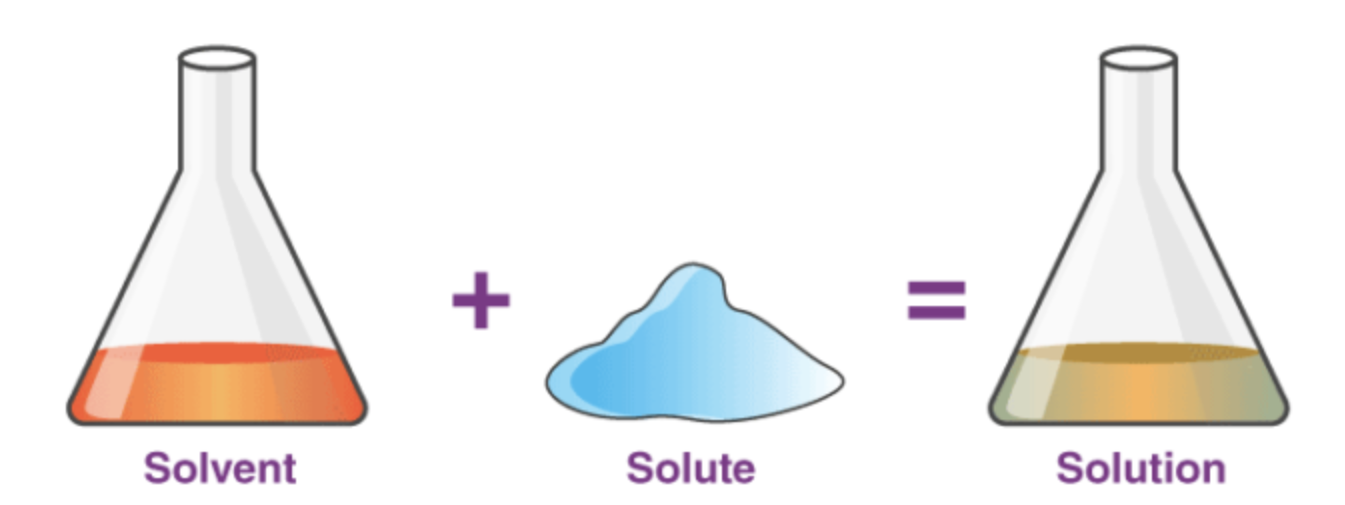
A solvent is a substance that dissolves other materials to form a solution. Water is the most common solvent, but others exist too (like alcohol).
A solute is the substance that dissolves in the solvent. For example, when you add sugar to water, sugar is the solute.
A solution forms when a solute dissolves in a solvent. It is a perfect mixture where the solute and solvent particles are evenly spread throughout. When you look at a solution, you cannot see the individual solute and solvent particles - they appear completely mixed together and clear.
Important
The diagram above shows what happens at the particle level when a solute dissolves. The solute particles (shown in green) spread out and mix evenly with the solvent particles (shown in blue). The result is a solution where everything is uniformly distributed. This even distribution is what makes a solution different from other types of mixtures.
Soluble and insoluble substances
When a substance dissolves in water, we say it is soluble in water. Common examples include:
- Sugar (a solid)
- Salt (a solid)
- Alcohol (a liquid)
- Oxygen (a gas)
When a substance does not dissolve in water, we say it is insoluble in water. For example, sand is insoluble in water.
Copper sulfate solution example
Copper sulfate is a blue substance often found in science laboratories. It is used to kill fungi and preserve timber. When you add copper sulfate to water, it dissolves completely, forming a blue solution. The blue colour tells us that the copper sulfate particles are now spread throughout the water. This solution is perfectly clear - you cannot see individual copper sulfate particles, only the even blue colour.
Solutions and suspensions
Not all mixtures are solutions. Sometimes when you add a substance to water, the particles don't dissolve - they just float around in the liquid.
A suspension is a mixture where small solid or liquid particles are suspended in a liquid (or gas). These particles do not dissolve and do not settle to the bottom unless left standing for a long time. Muddy water is a good example - the dirt particles float in the water but don't dissolve.
Note
The key difference between a solution and a suspension:
- In a solution, the solute particles are completely dissolved and invisible
- In a suspension, the particles remain visible and cloudy
If you can see cloudiness or particles floating in a liquid, it's a suspension, not a solution!
Dilute and concentrated solutions

Have you ever made orange squash? The instructions often say 'dilute to taste' on the bottle. This is because the orange squash in the bottle is very concentrated - there is a large amount of the orange flavouring (solute) dissolved in a small amount of water (solvent).
Dilute solutions
A dilute solution is one that contains a small amount of solute dissolved in a large amount of solvent. When you add lots of water to orange squash, you make it more dilute. The drink tastes weaker because there is less orange flavouring per mouthful.
Concentrated solutions
A concentrated solution is one that contains a large amount of solute dissolved in a small amount of solvent. The orange squash in the bottle is concentrated. If you don't add much water, the drink remains concentrated and tastes very strong.
The same volume of a concentrated solution contains more dissolved solute than a dilute solution. This is why concentrated solutions often look darker or taste stronger.
Example
Everyday Example: Making Orange Squash
Imagine you have a bottle of orange squash concentrate:
- If you add 1 part squash to 10 parts water = very dilute solution (weak taste)
- If you add 1 part squash to 3 parts water = concentrated solution (strong taste)
- The same 100 ml of the concentrated version contains much more orange flavouring than 100 ml of the dilute version
Crystal formation
Have you ever seen beautiful crystals? Crystals form naturally in many places, from salt crystals on rocks by the sea to sugar crystals in a jar.
What is a crystal?
A crystal is a solid with a regular shape. The particles inside the crystal are arranged in a regular, repeating pattern. This organised structure gives crystals their characteristic geometric shapes and flat surfaces. Different substances form different crystal shapes.
Experiment 18.1: Growing copper sulfate crystals
You can grow your own crystals in the laboratory. Here's how to grow copper sulfate crystals:

Example
Experiment 18.1: Growing Copper Sulfate Crystals
Procedure:
-
Grind up a sample of copper sulfate using a mortar and pestle to make it dissolve more quickly.
-
Gradually add the powdered copper sulfate to 100 cm³ of water. Stir each addition and continue adding until no more will dissolve.
-
Heat the water to about 60°C. The undissolved copper sulfate will now dissolve.
-
Add more copper sulfate and stir. Keep adding until no more dissolves - even with stirring.
-
Pour the solution into an evaporating basin and leave it to cool overnight. Crystals will form as the solution cools.
What happens? As the solution cools down, it cannot hold as much dissolved copper sulfate. The excess copper sulfate comes out of solution and forms solid crystals. These crystals have a regular blue colour and geometric shape.
Saturated and unsaturated solutions
When you dissolve copper sulfate in water, there is a limit to how much will dissolve at any given temperature.
Saturated solutions
A saturated solution contains as much dissolved solute as possible at a given temperature. Think of it like a sponge that is completely full of water - it cannot absorb any more. Similarly, when a solution is saturated, it cannot dissolve any more solute. If you add more solute to a saturated solution, it will just settle at the bottom.
In Experiment 18.1, when no more copper sulfate will dissolve (even with stirring), the solution has become saturated.
Unsaturated solutions
An unsaturated solution has not dissolved the maximum amount of solute at a given temperature. It could still dissolve more. If you add more solute to an unsaturated solution, it will continue to dissolve.
Temperature effects
Important
Temperature is very important. A solution that is saturated at one temperature becomes unsaturated if you heat it up. This is because hot water can dissolve more solid than cold water.
This is why, in Experiment 18.1, when we heated the water to 60°C, more copper sulfate dissolved. This temperature-solubility relationship is the key principle behind crystal formation and many industrial processes.
Solubility and solubility curves
Different substances dissolve in water to different extents. Chemists use the term solubility to describe exactly how much of a substance will dissolve.
Defining solubility
The solubility of a substance is the mass of it (in grams) that will dissolve in 100 grams of solvent at a fixed temperature.
Note
For example, if the solubility of copper sulfate at 20°C is 20 g, this means that 20 grams of copper sulfate will dissolve in 100 grams of water at 20°C.
The units for solubility are g/100g (grams of solute per 100 grams of solvent) or sometimes written as g/100ml (grams per 100 millilitres of water).
Temperature and solubility
In general, substances are more soluble in hot solvent than in cold solvent. For example, it is better to wash dishes in hot water than in cold water because hot water helps to dissolve grease and dirt more effectively.
Experiment 18.2: Investigating the effect of temperature on solubility
This experiment lets you measure exactly how the solubility of copper sulfate changes with temperature.
Example
Experiment 18.2: Investigating the Effect of Temperature on Solubility
Procedure:
-
Grind up a sample of copper sulfate.
-
Weigh out 100 g of the powdered copper sulfate.
-
Heat 100 cm³ of water to 30°C. Note the exact temperature and remove the beaker from the hotplate.
-
Add the copper sulfate in small quantities (about 5 g at a time) and stir after each addition. Continue adding until no more will dissolve. Keep adding until no more dissolves.
-
Weigh the copper sulfate remaining in the clock glass. Using a calculator, work out the amount of copper sulfate that has dissolved in the water.
-
Repeat the experiment at 40°C, 50°C, 60°C, etc. Enter the mass dissolved at each temperature in a table. Draw a graph of your results.
Sample results are shown in the table below:
| Temperature (°C) | Solubility (mass of copper sulfate in grams that will dissolve in 100 grams of water) |
|---|---|
| 0 | 14 |
| 10 | 17 |
| 20 | 20 |
| 30 | 25 |
| 40 | 29 |
| 50 | 34 |
| 60 | 40 |
| 70 | 47 |
| 80 | 56 |
| 90 | 68 |
This table clearly shows that as temperature increases, more copper sulfate dissolves in 100 g of water. At 0°C, only 14 g will dissolve, but at 90°C, 68 g will dissolve.
Understanding solubility curves
When you plot solubility data on a graph, you get a solubility curve. This is a graph showing how the solubility of a substance varies with temperature.
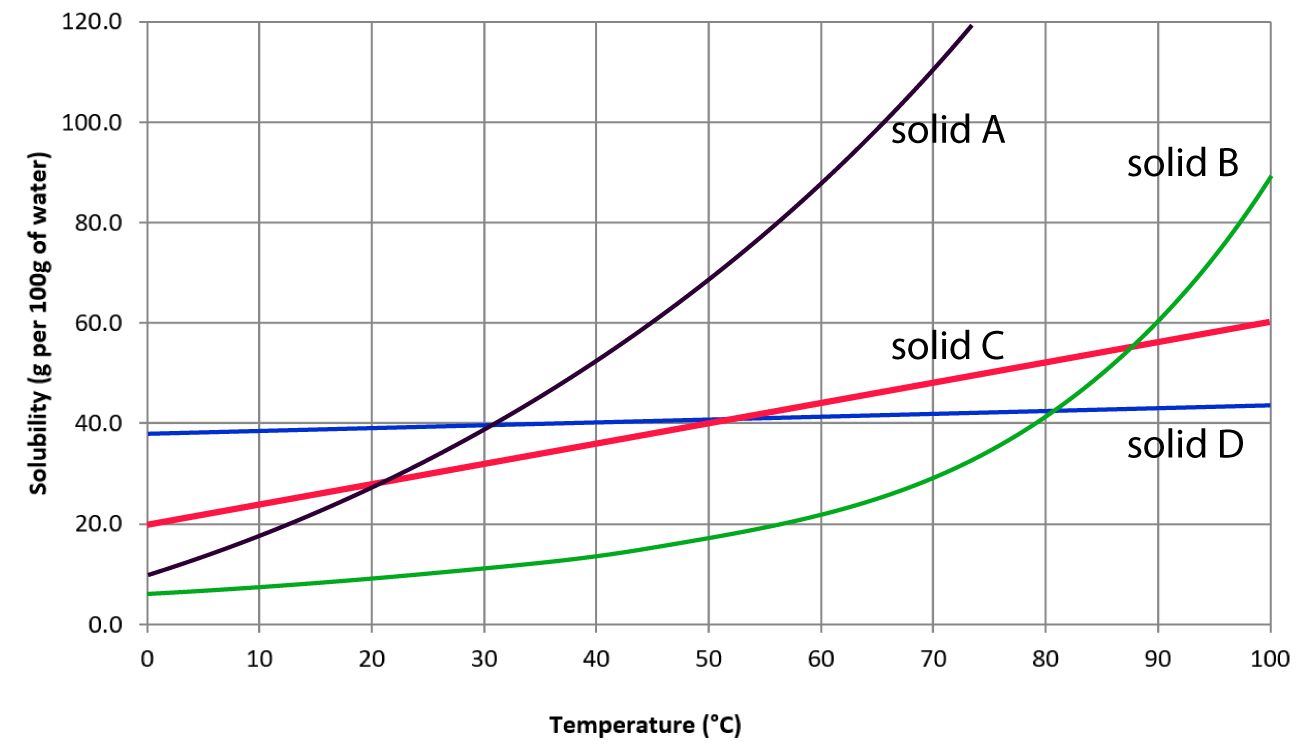
The graph above shows solubility curves for four different substances.
Reading solubility curves
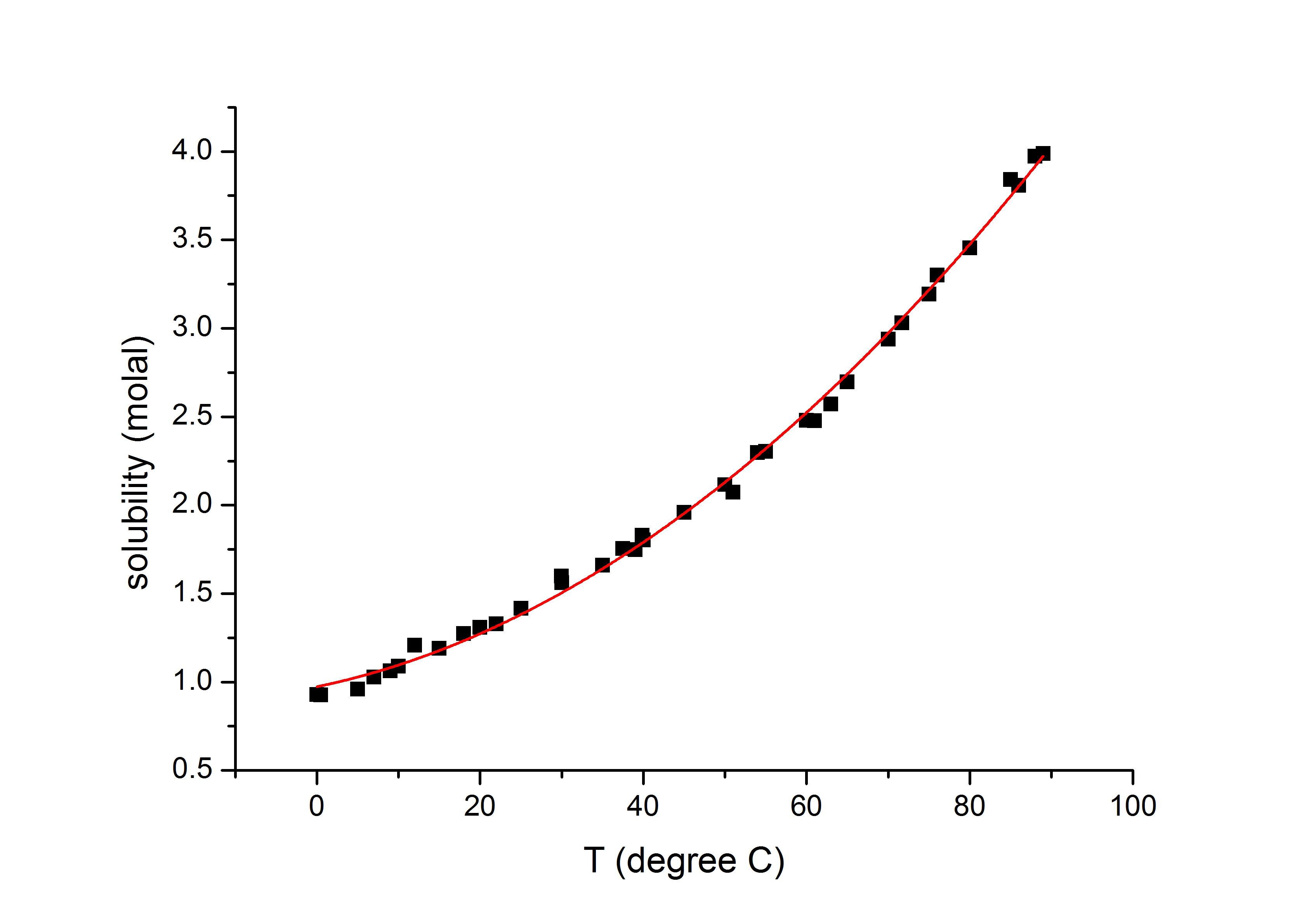
Solubility curves are very useful. You can use them to find out how much of a substance will dissolve at any temperature.
Important
Exam Tip: You must be able to draw a graph of a solubility curve using data given to you. You must also be able to use a solubility curve to deduce certain information - such as finding solubility at a given temperature or determining how much will crystallise when cooled.
Crystallisation
When a hot saturated solution cools down, something interesting happens.
Crystallisation is the formation of crystals when a hot saturated solution is cooled.
Here's how it works:
- Start with a saturated solution at a high temperature (for example, 80°C). At this temperature, a large amount of solute is dissolved.
- As the solution cools to a lower temperature (for example, 20°C), the solubility decreases. The water can no longer hold as much dissolved solute.
- The excess solute comes out of solution and forms solid crystals. The crystals usually settle at the bottom of the container or form on the sides.
Example
Worked Example: Calculating Crystallisation
If you have a saturated solution of copper sulfate at 80°C containing 56 g of dissolved copper sulfate in 100 g of water, and you cool it to 20°C, only 20 g can remain dissolved.
Calculation:
Therefore, 36 g will crystallise out of solution.
This process is how crystals form naturally in caves, mines, and on rocks by the sea. It's also the principle behind Experiment 18.1, where you grew copper sulfate crystals by allowing a hot saturated solution to cool in an evaporating basin overnight.
Electrical conductivity
Note
Substances like copper sulfate solution can conduct electricity when dissolved in water. This is because the charged particles in the crystals become free to move when dissolved. These charged particles can then carry an electric current through the solution.
When copper sulfate dissolves in water, the charged particles separate and move freely throughout the water. This allows the solution to conduct electricity, which makes the bulb light up in a simple circuit.
Interestingly, when copper sulfate is replaced with sugar, the bulb does not light. This tells us that sugar does not produce any charged particles when dissolved in water. Sugar solution is not a conductor of electricity.
Remember!
Summary
Key Points to Remember:
- A solvent dissolves other materials; a solute is what gets dissolved; together they form a solution
- Dilute solutions have a small amount of solute in a large amount of solvent; concentrated solutions have a large amount of solute in a small amount of solvent
- A saturated solution contains as much dissolved solute as possible at a given temperature; crystals form when a saturated solution is cooled
- Solubility is measured as the mass (in grams) that will dissolve in 100 g of solvent at a fixed temperature
- Solubility curves show how solubility changes with temperature - generally, substances are more soluble in hot water than cold water
- Crystallisation occurs when a hot saturated solution is cooled, causing excess solute to form solid crystals
- The formula: Solute + Solvent = Solution (remember the three S's!)