Parts of the Tree (Junior Cert Wood Technology): Revision Notes
📚Revision Notes
Tree Components and Functions
This revision note explores the essential parts of a tree, analysing their structure, roles, and relevance in botany and wood science.
Definitions
- Root: Secures the tree within the soil, absorbs vital water and nutrients, and stores energy reserves.
Important
- Trunk: The central support framework of the tree, sustaining the branches and leaves.
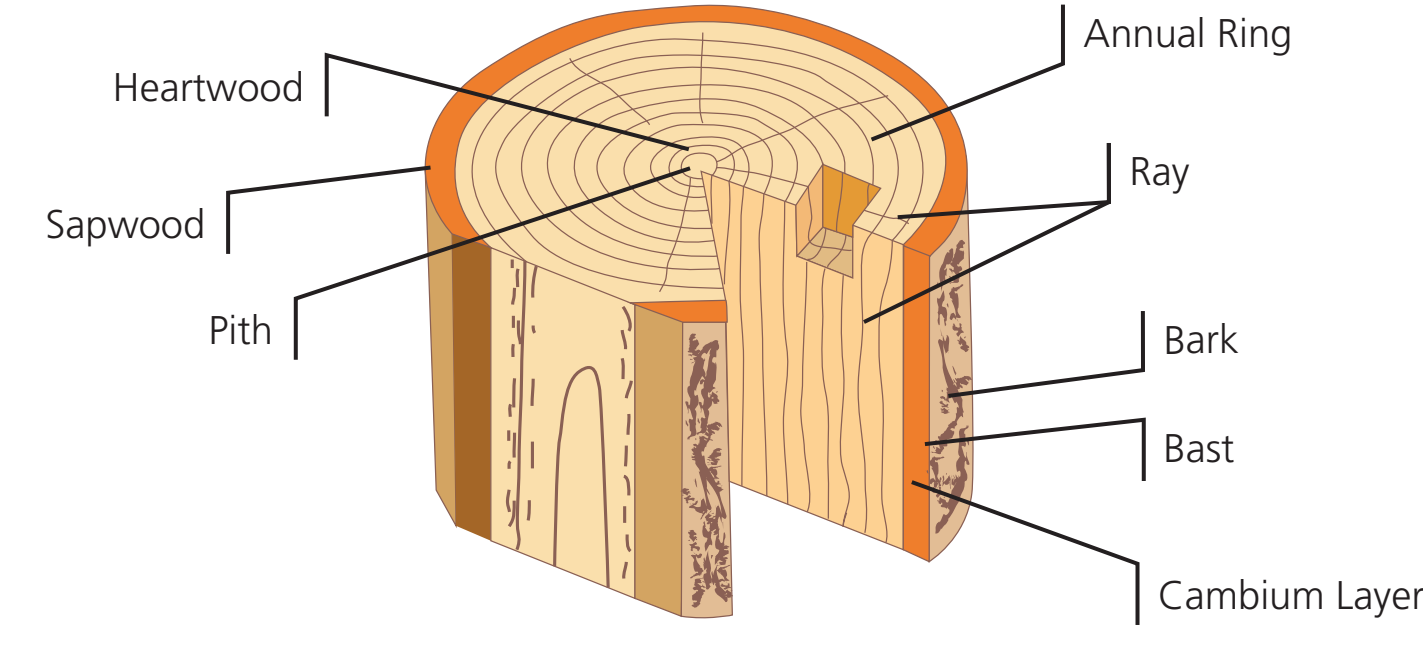
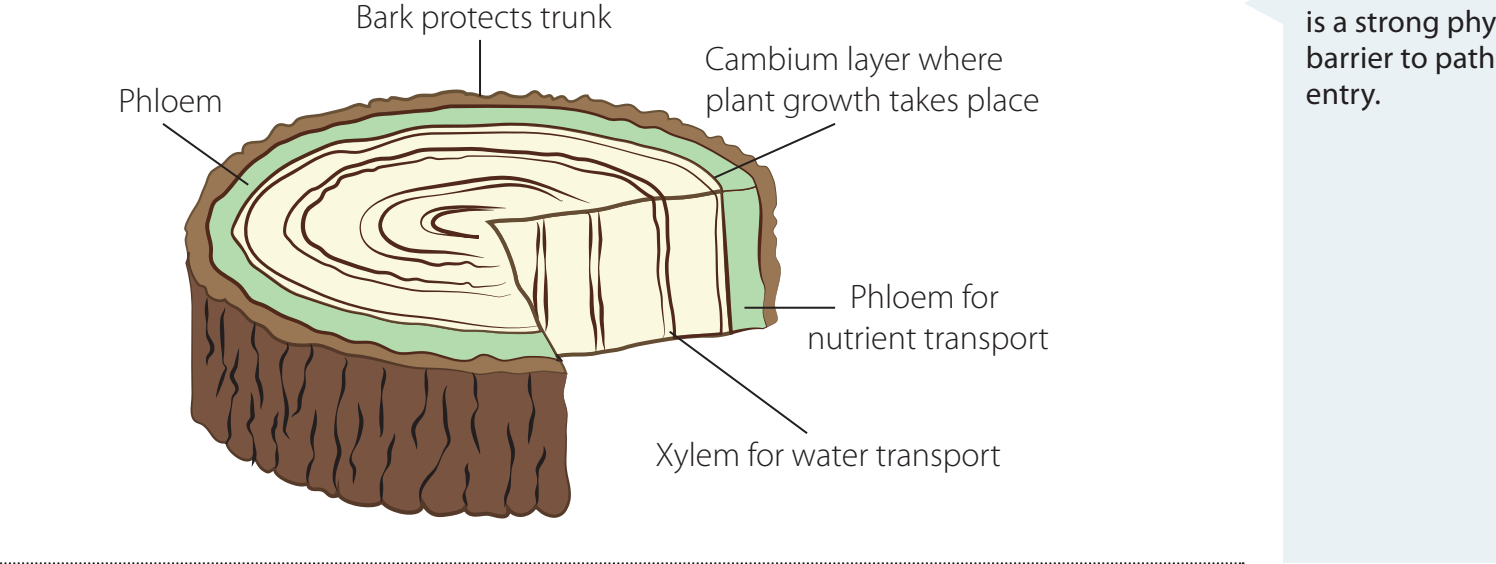
- Cambium: A fine layer of cells that facilitates growth by producing additional xylem and phloem.
- Xylem: Conducts water and minerals from roots throughout the tree, providing structural robustness.
- Phloem: Circulates nutrients and sugars from leaves to the rest of the tree.
- Heartwood: The dense and durable core of the trunk, offering substantial support.
- Sapwood: A more pliant external layer of the trunk, instrumental in nutrient and water transport.
Note
- Bark: Protective casing that safeguards the trunk, branches, and roots of the tree.
- Leaves: Engage in photosynthesis by capturing solar energy.
Important
- Reproductive Structures: Encompasses flowers, cones, seeds, or fruits, crucial for propagation.
Major Tree Components
-
Roots:
- Absorb essential water and nutrients.
- Comprise extensive networks for optimal absorption.
-
Trunk:
- Elevates leaves for maximal sun exposure.
- Functions as the conduit for nutrients and water.
-
Branches and Leaves:
- Branches maintain leaf position for sunlight absorption.
- Leaves house chlorophyll crucial for energy synthesis.
Note
- Bark:
- Provides a barrier against environmental damage and pests.
- Minimises water loss and aids thermal regulation.
- Reproductive Structures:
- Facilitate species propagation via seed dispersal.
- Flowers and cones partake in pollination and seed generation.
Function of Tree Parts
- Roots: Stability, nutrient, and water absorption.
- Trunk: Support, acts as a conduit for nutrients.
- Leaves: Photosynthesis and transpiration.
- Bark: Protection and moisture retention.
- Reproductive Structures: Facilitate reproduction.
| Component | Function |
|---|---|
| Roots | Absorption, anchorage |
| Trunk | Support, nutrient conduit |
| Branches & Leaves | Photosynthesis, positioning |
| Bark | Protection, moisture retention |
| Reproductive Structures | Propagation |
Cambium Layers: Xylem and Phloem
Important
- Xylem:
- Conducts water and minerals, fortifying the tree structure.
- Phloem:
- Distributes sugars and nutrients crucial for growth.
Heartwood vs. Sapwood
-
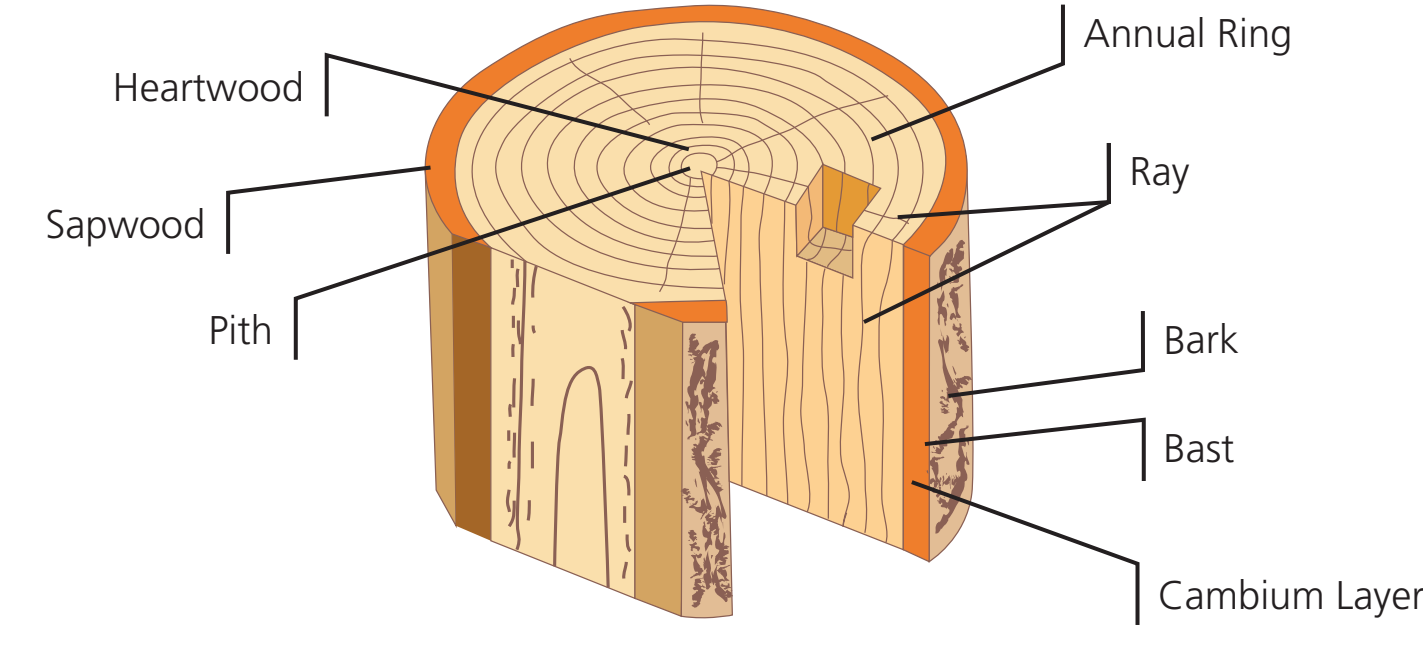
Heartwood:
- Augments the tree's structural strength.
- Comprises older, darkened wood.
-
Sapwood:
- Actively facilitates water and nutrient transport.
- Located near the bark, lighter in hue.
| Type of Wood | Characteristics | Function |
|---|---|---|
| Heartwood | Dense, durable | Robust support |
| Sapwood | Pliant, active | Transport of nutrients |
Note
Summary
- Trees comprise roots, trunk, branches, leaves, bark, and reproductive elements.
- Each part fulfils a vital role in the plant's survival and growth.
- Cambium layers (xylem and phloem) are essential for living processes and structural coherence.
- Heartwood fortifies the tree; sapwood aids in nutrient circulation.