Digestive System (Leaving Cert Agricultural Science): Revision Notes
📚Revision Notes
Digestive System
What is digestion?
Digestion is the process by which animals break down food into smaller, absorbable nutrients that can be used by the body for energy, growth, and repair. The digestive system consists of various organs working together to process food from ingestion through to waste elimination.
Note
The digestive process involves multiple stages and organs working in coordination, from the initial intake of food to the final elimination of waste products. Understanding this system helps explain how different animals have adapted to process various types of food efficiently.
Ingestion
Ingestion represents the initial stage of digestion, where food enters the organism through the mouth. This process involves both physical and chemical breakdown of food materials.
Physical digestion
The teeth and tongue work together to mechanically break down food into smaller pieces. Different types of teeth serve specific functions in this process.
Chemical digestion
Saliva contains enzymes that begin the chemical breakdown of food. Monogastric animals (like humans and pigs) produce an enzyme called amylase in their saliva, which breaks down starch into maltose. Saliva also acts as a lubricant, making food easier to swallow.
Once food is adequately processed in the mouth, it forms a bolus that travels down the oesophagus to the stomach through a process called peristalsis - involuntary wave-like muscular contractions.
Types of teeth and their functions
Animals have different types of teeth adapted for their feeding habits and diet. Understanding tooth structure helps explain how different species process their food.
The four main types of teeth each serve distinct purposes:
- Incisors are chisel-shaped teeth with sharp edges, perfect for cutting and biting food
- Canines are long, pointed teeth used for gripping and tearing food (particularly well-developed in carnivores)
- Premolars have surface projections called cusps that help crush and chew food
- Molars are large back teeth designed for crushing and chewing tough plant material
Note
An important feature in many animals is the diastema - the gap between the front teeth and premolars. Livestock, being herbivores, typically have more molars than canines since they need to grind fibrous plant material rather than tear meat.

Ruminant animals
Cattle and sheep are classified as ruminant animals, meaning they have evolved a specialised digestive system to process tough plant materials like grass and hay. This system is particularly important in agriculture as it allows these animals to convert cellulose (which humans cannot digest) into valuable nutrients.
The four-chambered stomach
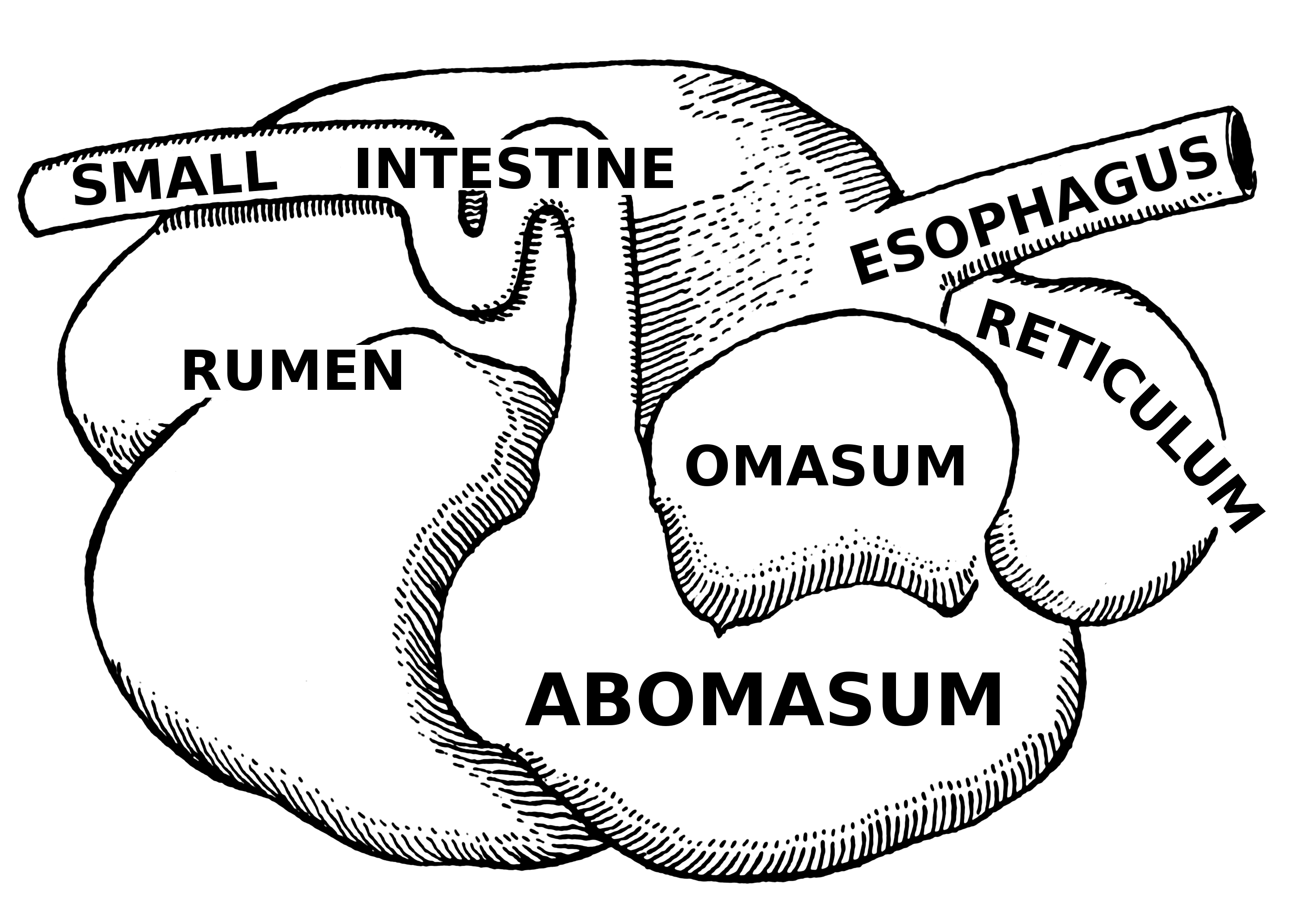
Ruminants possess a stomach divided into four distinct chambers: the rumen, reticulum, omasum, and abomasum. This complex system enables them to extract maximum nutrition from fibrous plant matter.
Example
The Ruminant Digestion Process:
- Rumen: Food enters and undergoes microbial fermentation, breaking down cellulose into glucose
- Reticulum: Partially digested food is regurgitated as 'cud' for re-chewing
- Omasum: Water is absorbed and food is compressed and dehydrated
- Abomasum: Final digestion occurs with gastric juices, similar to a simple stomach
The rumen
The rumen is the largest chamber and serves as a fermentation vessel. It contains millions of microorganisms including bacteria and protozoans that break down cellulose into glucose. This anaerobic environment (lacking oxygen) maintains a pH of approximately 7.
The microbial breakdown produces carbon dioxide and methane gas as byproducts. The rumen contracts regularly to expel these gases - if this doesn't happen properly, dangerous conditions like bloat can occur.
The reticulum
The second chamber has a distinctive honeycomb appearance and works closely with the rumen. Its primary function is to help regurgitate partially digested food (called 'cud') back to the mouth for further chewing. This process, known as "chewing the cud," allows ruminants to break down tough plant fibres more thoroughly.
The omasum
The third chamber contains many layers of tissue that squeeze and compress the food, absorbing water and other liquids. This dehydration process prepares the food for final digestion.
The abomasum
The fourth and final chamber functions similarly to a monogastric stomach. Often called the "true stomach," it secretes gastric juice containing enzymes to complete protein breakdown and prepare nutrients for absorption in the small intestine.
Symbiosis in ruminant digestion
The relationship between ruminants and their rumen microorganisms represents a perfect example of symbiosis - two organisms living together where both benefit. The bacteria feed on cellulose provided by the animal's diet, while the cow benefits by receiving glucose for energy plus essential vitamins produced by the microbes.
Problems in ruminant digestion
Important
Critical Ruminant Health Issues
Both bloat and acidosis are serious conditions that can be fatal if not treated promptly. Farmers must monitor their livestock carefully and understand the warning signs of these digestive disorders.
Bloat
Bloat occurs when cattle graze on early spring grass containing white clover. The clover creates a foam that traps gases in the rumen, preventing their normal release. The left side of the animal's abdomen becomes visibly swollen.
Treatment options include administering an antacid solution or inserting a tube through the mouth to release trapped gases. In severe cases, a veterinarian may create an incision in the abdomen and insert a troika and cannula - the troika is removed but the cannula remains to allow gas escape.
Acidosis
Acidosis develops when the rumen's pH falls below 5.5, typically due to low-fibre or high-concentrate diets that produce excessive lactic acid. This creates an acidic environment that the animal cannot absorb easily, leading to reduced rumen movement and appetite loss. Harmful bacteria multiply in these acidic conditions, potentially causing metabolic acidosis if acid is absorbed through the rumen wall.
Digestion in young ruminants
Young calves and lambs have not yet developed fully functioning ruminants. During their first few weeks of life, milk bypasses the undeveloped rumen chambers and goes directly to the abomasum for digestion.
Note
It takes approximately six weeks for the rumen and reticulum to develop fully and function like adult ruminants. During this time, young animals gradually transition from milk-only diets to solid food consumption.
Key enzymes active in young ruminants include:
- Pepsinogen (converted to pepsin) breaks down proteins into peptides and amino acids
- Rennin acts on milk proteins, converting liquid caseinogen into solid casein
- Lipase breaks down fats and lipids into fatty acids and glycerol
As young animals begin eating solid food, microorganisms gradually colonise the rumen.
The small intestine
The small intestine consists of two main sections: the duodenum and the ileum. This organ is where most nutrient absorption occurs.
The duodenum connects the stomach to the ileum and receives important digestive secretions. The ileum is where the majority of nutrient absorption takes place.
Digestive secretions
Two crucial secretions enter the small intestine to aid digestion:
Bile is produced by the liver and stored in the gall bladder. Its primary function is to emulsify lipids (break them into smaller droplets) and neutralise acidic food coming from the stomach.
Pancreatic juice contains three important enzymes:
- Lipase breaks down lipids into fatty acids and glycerol
- Trypsin breaks down proteins into peptides and amino acids
- Pancreatic amylase converts starch into maltose and glucose
The large intestine
The large intestine comprises the caecum and the colon. Its main functions include water reabsorption from digestive waste and preparing material for elimination through the anus.
Note
An important secondary function involves bacterial symbiosis - beneficial bacteria in the large intestine produce vitamins B and K, which the animal can absorb and utilise.
Monogastric animals
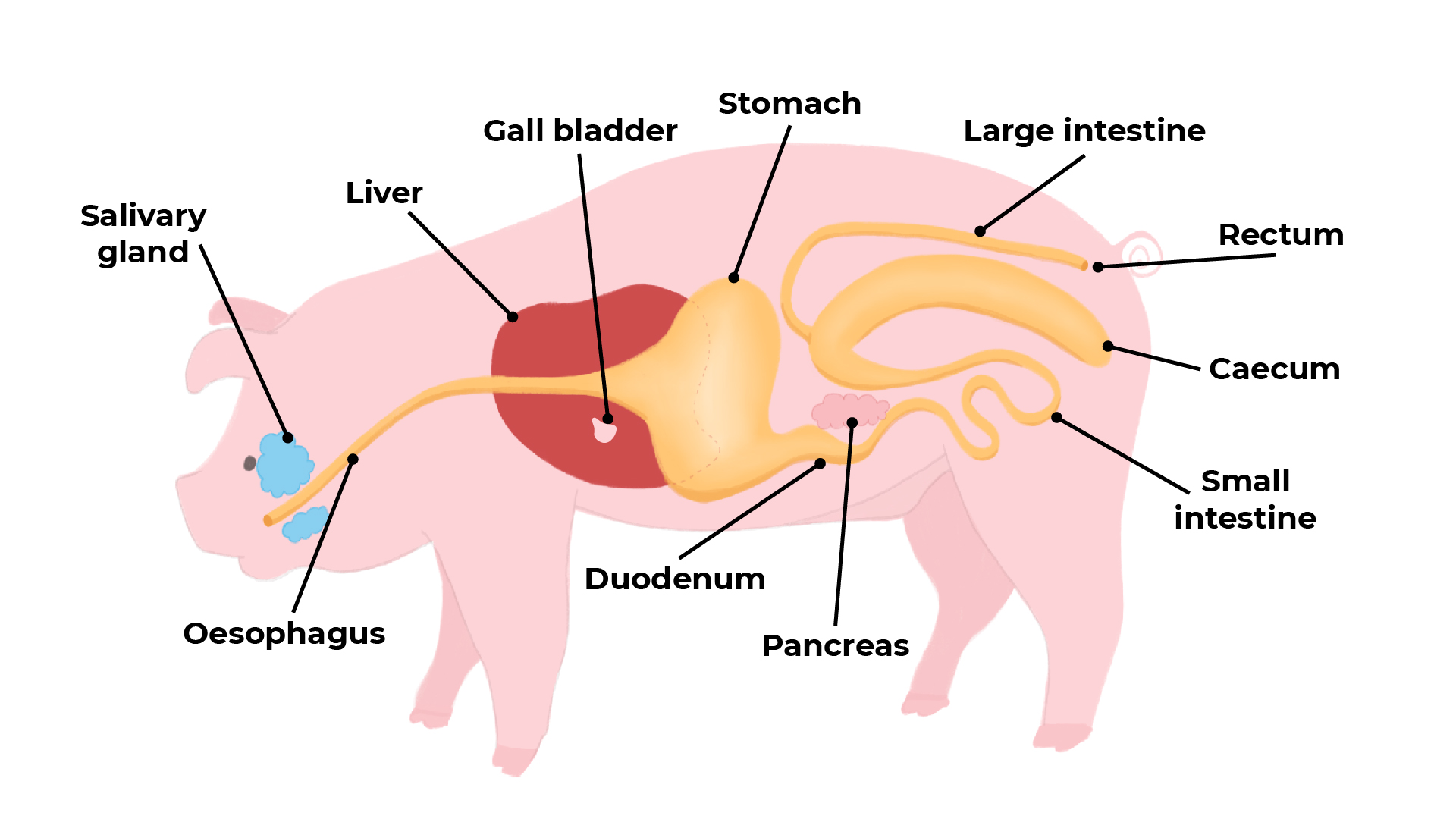
Monogastric animals, including pigs and humans, possess only one stomach chamber and cannot digest cellulose. Their digestive system is simpler but more efficient for processing non-fibrous foods.
The liver's role
Summary
Key Liver Functions in Monogastric Animals:
- Production: Secretes bile for fat digestion
- Storage: Stores glucose as glycogen, vitamins, and minerals
- Detoxification: Converts toxic ammonia into less harmful urea
- Other functions: Recycles red blood cells and helps regulate body temperature
The liver performs multiple vital functions in monogastric animals:
Production: The liver secretes bile for fat digestion.
Storage: Glucose is stored as glycogen in the liver, ready for conversion back to glucose when energy levels are low. The liver also stores various vitamins and minerals.
Detoxification: The liver breaks down toxic substances, converting ammonia (produced from amino acid breakdown) into less harmful urea through a process called deamination.
Other functions: The liver recycles red blood cells for bile pigment production and helps regulate body temperature by generating heat as blood passes through the organ.
Digestive system of birds
Birds have evolved unique digestive adaptations as they lack teeth entirely. Instead, they possess a beak adapted for their specific feeding habits - chickens have short, sharp beaks ideal for eating grains.
Food travels from the oesophagus to the stomach, but birds also have a specialised storage organ called the crop that allows them to store food for later consumption.
The bird's stomach divides into two distinct parts: the proventriculus and the gizzard. The proventriculus secretes digestive enzymes and juices for chemical digestion, while the gizzard provides mechanical digestion. Birds swallow grit (small stones) that accumulates in the gizzard, helping to grind food mechanically as it would be processed by teeth in other animals.
Note
An interesting difference in birds is that they lack a separate urinary system, so urine and faeces are eliminated together through a single opening.
Summary
Key Points to Remember:
- Ingestion involves both physical (teeth/tongue) and chemical (saliva/enzymes) processes in the mouth
- Ruminants have four stomach chambers (rumen, reticulum, omasum, abomasum) that allow them to digest cellulose with help from beneficial microorganisms
- Young ruminants bypass their undeveloped rumen and digest milk directly in the abomasum until around 6 weeks of age
- The small intestine is where most nutrient absorption occurs, aided by bile from the liver and enzymes from the pancreas
- The liver performs multiple crucial functions including bile production, glucose storage, and detoxification of harmful substances