Overview (Leaving Cert Agricultural Science): Revision Notes
📚Revision Notes
Overview
Crop harvesting is a critical stage in agricultural production that requires careful planning, proper techniques, and attention to detail. This process involves gathering mature crops from the field while maintaining quality and minimising losses. Understanding the various harvesting methods and following specific guidelines for different crop types is essential for successful agricultural operations.
Note
The main concepts covered in crop harvesting include understanding different harvesting processes, mastering various harvesting methods, applying crop-specific guidelines, and following essential checklists to ensure quality outcomes.
Harvesting processes
Before any harvesting activity can begin, farmers must make several important decisions and complete necessary preparations. The success of the entire harvest depends heavily on this planning phase.
Planning and decision making forms the foundation of successful harvesting. Farmers need to analyse maturity indexing data and crop estimates to determine the optimal timing for harvest. This timing decision directly affects both the quality and quantity of the final product. Additionally, decisions must be made about the picking period and the number of workers required for the operation.
Worker preparation is crucial for maintaining harvest quality. The necessary workers must be recruited and properly trained before harvesting begins. This is particularly important when dealing with export crops, where pickers need to understand quality standards and proper handling techniques. Well-trained workers who are closely monitored help ensure that export-quality fruit is not mistakenly picked or damaged during the process.
Important
Equipment inspection and maintenance must be completed before harvesting starts. All equipment that may come into contact with the crop needs thorough cleaning and sterilisation to prevent contamination and reduce waste. This includes pruning shears, picking bags, ladders, bins, trailers, and tractors. Proper maintenance ensures equipment functions correctly and doesn't cause damage to the harvested crops.
Contract harvesting considerations are particularly important for farmers using external harvesting services. Mechanical harvesters are expensive, so many farmers contract out their harvesting operations. When using contractors, farmers must book harvesters well in advance to avoid delays that could result in yield and quality losses. Contractors typically prefer to harvest entire production areas before moving to different locations, so planting timing becomes part of harvest preparation. Farmers should also plan for contract labour, transport arrangements, and delivery to processing facilities or storage locations.
Harvesting methods
Different crops require different harvesting approaches, and choosing the right method is essential for maintaining crop quality and maximising yields.
Fruit picking methods
Two primary methods exist for harvesting fruit crops: snap picking and clipping, each with specific advantages and applications.
Snap picking involves twisting fruit off the plant sharply by hand without using any tools. While this method can be faster in certain situations, it has significant limitations. When snap picking is used, the calyx buttons can be pulled out easily, leading to a condition called oleocellosis. This occurs because pressure is applied to the fruit as it's pulled and twisted, and stems are sometimes not cleanly broken off. For these reasons, snap picking is not recommended for export citrus fruit, though it may be appropriate for crops destined for local processing or when teams are selecting and picking non-export fruit.
Important
Clipping uses specially designed pruning shears to cut the fruit stem cleanly. This method is generally recommended for most fruit crops because it produces higher quality results. When clipping, purpose-built pruning shears should cut the stem as close to the fruit as possible without injuring the fruit's shoulder. Proper technique involves leaving stems between 1mm and 4mm long. Stems that are too long create problems during handling and can cause injury to other fruit when placed in picking containers.
Clipping is often preferred for crops like tomatoes and other vegetable fruits because it improves the quality of the produce and reduces physical damage compared to snap picking methods.
Example
Worked Example: Proper Clipping Technique
Step 1: Position pruning shears close to fruit shoulder Step 2: Cut stem cleanly without injuring fruit Step 3: Leave stem length between 1-4mm Step 4: Check that no torn edges remain on stem
Result: Clean cut reduces decay and maintains fruit quality for export standards.
Harvesting leafy vegetables
Leafy vegetables such as cabbage and lettuce require specific harvesting techniques to maintain freshness and quality. Most leafy crops are cut from their roots at the base of the head, positioning the cut as close as possible to the soil surface using a sharp knife.
For crops where individual leaves are harvested, such as spinach or loose-leaf lettuce, workers place their fingers close to the base of the leaf stalks. While firmly holding the stalk, the leaf is removed using a method similar to snap picking. However, care must be taken to avoid tearing the leaf tissue, and knives may be used for cleaner cuts when necessary.
Harvesting grain and seed crops
Small areas of grain and seed crops can be efficiently harvested using manual methods. For crops like maize, individual ears can be harvested using the snap picking technique. Pruning shears can be used to cut sunflower heads from their stems, after which the ears are transported to storage areas where the outer leaves are removed to access the kernels.
Manual removal of kernels can be accomplished by firmly rubbing the hand palm over the ear, or by rubbing two ears together. For crops like soybeans, stems should be cut close to the soil surface and taken to storage areas where pods can be manually removed. Seeds are extracted from pods by applying pressure to the pod sides until they open.
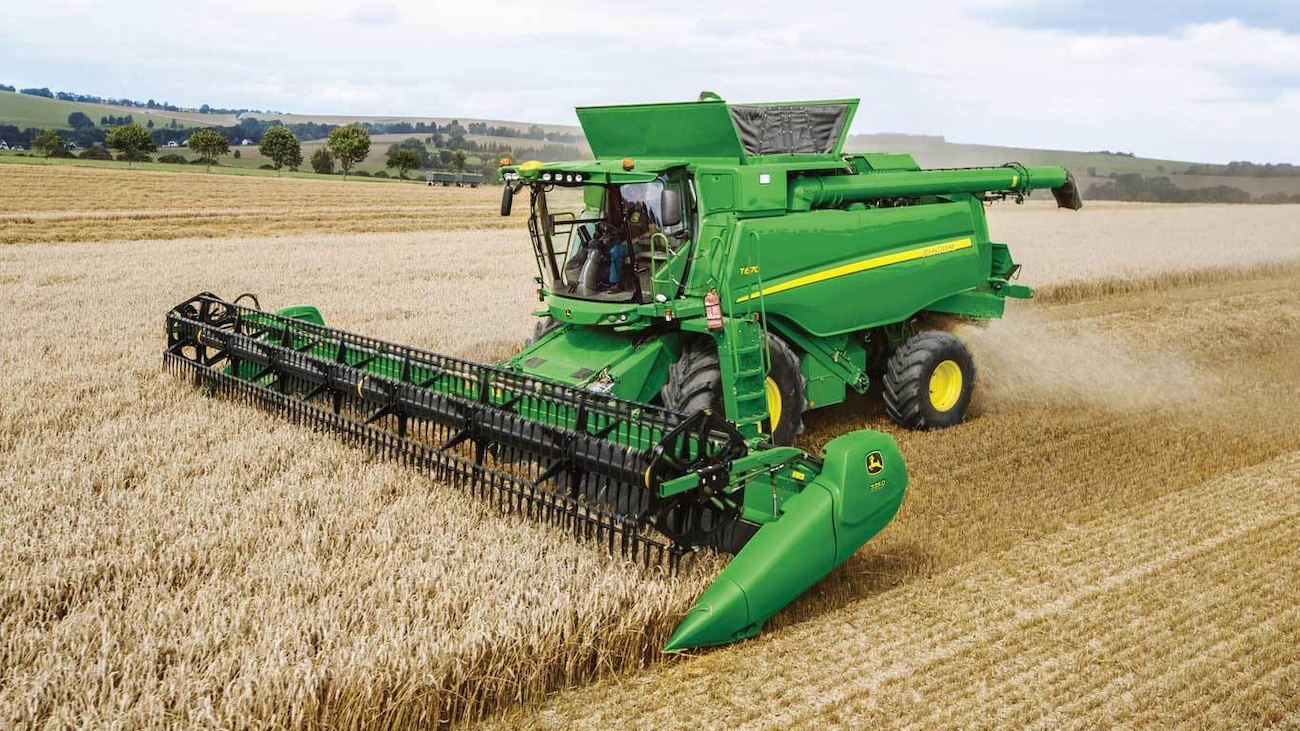
Harvesting larger areas of grain and seed crops is usually carried out with a combine harvester, which cuts the crop, threshes the grain from the seed heads, and separates it from the straw in one operation. This method allows large areas to be harvested quickly and efficiently, ensuring that the grain is collected at the correct stage of maturity and moisture content to maintain quality. The straw may then be baled for fodder or bedding, while the cleaned grain is transported for drying and storage.
Guidelines for specific crops
Different crops have unique requirements and characteristics that influence harvesting techniques and timing. Understanding these specific needs helps ensure optimal quality and yield.
Citrus crops
Citrus harvesting requires particular attention to handling techniques and quality control. Several basic guidelines should be followed once picking begins:
Picking bags must be suspended from the side of workers rather than carried in front, which prevents damage to fruit when workers lean against ladders or push through branches. Workers should walk steadily with full picking bags rather than running, as running causes bouncing and chafing that can lead to oleocellosis development.
Note
When emptying picking bags, they should be placed close to existing fruit bins or trailers before being emptied to limit potential injury. After each bag is emptied, it should be opened and shaken to remove loose twigs, leaves, and sand that may have collected during picking.
Quality control is essential throughout the process. Fruit that falls during picking should never be collected from the ground and mixed with export fruit. Similarly, fruit that has been in contact with soil should not be included with export-quality produce.
For varieties susceptible to oleocellosis, bulk bins and trailers should not be filled beyond approximately 50% capacity. The exact limitation depends on specific conditions, but this precaution helps prevent pressure damage. Additional protection can be provided by lining bins with rubber or cardboard sheeting.
Soft fruits and vegetables
Tomatoes and other soft fruits require gentle handling and clear quality guidelines. Workers should receive specific instructions about which colour fruits to harvest and which to leave for future picking. Site-specific procedures should be followed, with examples provided of poor quality fruits and appropriate actions when such fruits are encountered. These fruits bruise easily and should never be thrown into picking containers from a distance.
Vegetable crops should generally be harvested during cooler parts of the morning and stored as quickly as possible afterward. For market-destined produce, correct storage conditions must be maintained, while processing-destined crops should be cooled and stored under refrigeration to preserve flavour and quality.
Example
Worked Example: Harvesting Different Vegetables
Beans: Harvest green beans before seeds develop in the pod, typically when pods are about pencil diameter. Test readiness by bending pods in the middle - they should snap easily when ready.
Beetroot: Harvest when roots reach 5-8 cm diameter for market sales, or 2-3 cm diameter for smaller beets. Leaves should measure approximately 10-15 cm long.
Broccoli: Harvest dark green, compact clusters when they reach about 15 cm diameter. Buds must be tight and should be harvested before any yellow flowers develop.
Cabbage: Harvest when heads feel firm and solid. Cut heads from stems just below the attachment point using a clean, sharp knife, and maintain knife cleanliness with sanitiser solutions.
Tree crops
Tree crop harvesting requires specific techniques to prevent damage to both fruit and trees while ensuring worker safety.
Important
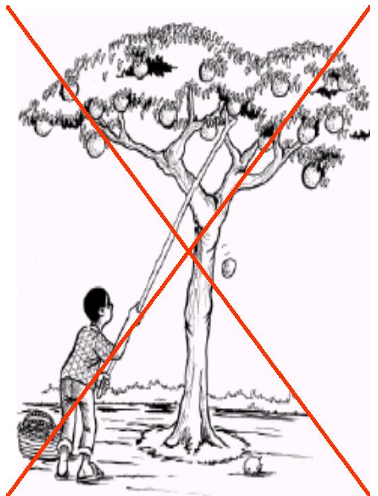
Safety and tree protection are fundamental considerations. Workers should never shake tree branches to make fruit fall, as this leads to bruising and damage. Ladders should be used whenever possible for safe access to higher branches. When harvesting for processing purposes, harvesting sticks can be used for fruit that's difficult to reach, but these should only be used when fruit can drop onto soft surfaces like nets.
Quality preservation requires careful handling throughout the process. For exports or extended transport, a portion of the stalk should be left on fruits like mangoes and avocados. Workers should never throw fruits during harvest, and heavy crops like banana bunches require two people for safe handling.
Timing considerations are crucial for tree crops. Harvesting should occur during early morning or late afternoon to avoid heat stress. Initial grading according to market destination should be performed during harvest to streamline processing.
Contamination prevention is particularly important for tree crops. Workers must ensure that latex from mangoes, bananas, and paw paws doesn't contact fruit skin, washing fruit with clean water if contact occurs. Harvested fruits should be placed on well-aerated surfaces or in containers that aren't made of rough materials to prevent damage.
The harvesting checklist
A comprehensive checklist helps ensure all critical aspects of harvesting are properly managed. This systematic approach reduces the likelihood of problems and helps maintain consistent quality.
Equipment management
Equipment maintenance forms the foundation of successful harvesting operations. All harvesting equipment including ladders, bins, picking bags, and containers must be maintained in good condition. Regular washing and cleaning of all equipment used for fruit picking prevents contamination and maintains hygiene standards.
Weather considerations
Note
Weather conditions significantly impact harvesting operations and fruit quality. During colder conditions, harvesting should occur during warmer parts of the day to reduce the risk of skin damage in sensitive fruits. Conversely, during hot conditions, wilted fruit should not be picked, and orchards should be irrigated before harvest to maintain fruit quality.
Fruit handling protocols
Careful handling throughout the harvesting process maintains product quality and reduces losses. Workers should wear gloves and maintain short fingernails to prevent fruit damage. Bags should be emptied carefully to avoid dropping or damaging produce, and overfilling of bags or bins should be avoided.
Transportation considerations
Transport planning ensures harvested crops reach their destination in optimal condition. Farm road surfaces should be maintained smooth to reduce vibration damage during transport. Trailer tyre pressures should be minimised to provide cushioning during the journey, and drivers should travel slowly to packing facilities.
Sun protection is essential for maintaining fruit quality after harvest. Harvested produce should be kept out of direct sunlight, with temporary shelters erected if necessary. Full bins should be transported directly to packing facilities, and appropriate post-harvest treatments like fungicides should be applied within 24 hours when required.
Orchard hygiene practices help prevent contamination and disease spread. Standard hygiene practices should be implemented to avoid mould infections and rind damage. This includes pruning trees to remove dead branches and twigs, ensuring adequate light and air movement through trees, harvesting varieties susceptible to splitting early in their season, and never mixing fallen fruit with fresh fruit in storage containers.
Summary
Key Points to Remember:
-
Proper planning is essential - make decisions about timing, workers, and equipment well before harvest begins to ensure smooth operations and quality outcomes
-
Choose the right harvesting method - use clipping with pruning shears for high-quality fruit production, and reserve snap picking only for processing crops or specific situations
-
Follow crop-specific guidelines - different crops have unique requirements for timing, handling, and storage that must be understood and implemented correctly
-
Maintain equipment and hygiene standards - clean and well-maintained equipment prevents contamination and damage while ensuring efficient operations
-
Weather and timing matter - harvest during optimal weather conditions and times of day to maintain fruit quality and reduce stress on both crops and workers