Structures & Processes (Leaving Cert Agricultural Science): Revision Notes
📚Revision Notes
Structures & Processes
What is plant physiology?
Plant physiology is a fascinating branch of botany that explores how plants actually work. It focuses on understanding the various processes and functions that keep plants alive and thriving. This field examines plants at both the molecular and cellular levels, helping us understand the ecological, physiological, and biochemical aspects of plant life.

Note
As terrestrial plants evolved, they developed special techniques and procedures that allowed them to survive by managing the crucial balance between water and carbon dioxide.
Plant physiology helps us analyse the key processes that occur in plants, including photosynthesis, mineral nutrition, respiration, transportation, and ultimately plant development and growth - all essential characteristics of living organisms.
Major plant structures and their functions
Understanding plant structures is essential because each part has specific roles that contribute to the plant's overall survival and success.
Leaves
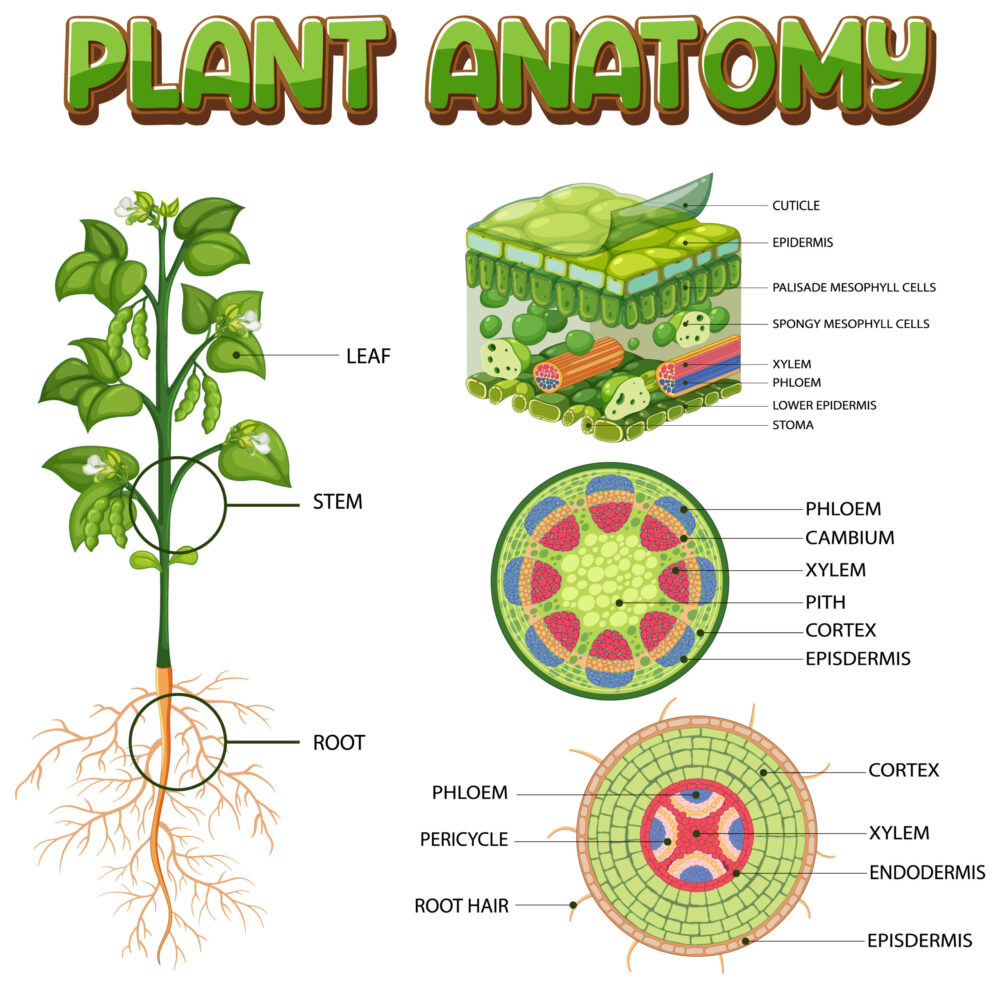
Leaves are vital organs that come in many different shapes and sizes depending on the plant species. They serve as the primary centre for photosynthesis, where plants capture sunlight and convert it into energy. This makes leaves absolutely crucial for the plant's ability to produce its own food.
Stem
The stem acts as the plant's support system, providing both structure and stability. Stems perform many important functions that help plants grow, compete with other plants, and survive in different environments. The structure of stems varies significantly between different plant species, reflecting their specific needs and growing conditions.
Roots
Roots are the underground components of plants that play a vital role in plant survival. Their primary function is to absorb water and nutrients from the soil, making them essential for the plant's nutrition and hydration. Without healthy roots, plants cannot obtain the resources they need to grow and thrive.
Xylem and phloem
These tissues form the plant's vascular system, often called the plant's transport network or "sap". Xylem and phloem work together to transport water, sugars, and other important substances between the roots, stem, and leaves. Think of them as the plant's highway system, ensuring all parts receive what they need to function properly.
Cuticle
The cuticle is a waxy, waterproof layer on the surface of leaves and stems. It reduces water loss by evaporation and protects the plant from pathogens.
Mesophyll
The mesophyll is the inner tissue of a leaf, packed with chloroplasts. It is the main site where photosynthesis occurs, divided into palisade mesophyll (light absorption) and spongy mesophyll (gas exchange).
Stomata
Stomata are tiny pores on the leaf surface that open and close to regulate gas exchange (carbon dioxide in, oxygen out) and water vapour loss (transpiration). They are controlled by surrounding guard cells.
Flowers
Flowers are the plant's reproductive organs, responsible for producing seeds. They attract pollinators, facilitate fertilisation, and ensure the continuation of the species.
Seeds
Seeds are the plant's reproductive units, containing the embryo, stored food, and protective coat. They allow plants to spread and survive in new environments.
Important
All plant structures work together as an interconnected system. The success of each part depends on the proper functioning of all others, making plant physiology a study of integrated systems rather than isolated components.
Essential plant processes
Transportation in plants
Plants have developed a sophisticated vascular system consisting of xylem and phloem that enables the transport of nutrients and water from the roots to all parts of the plant through a process called translocation.
The transport of water and nutrients in rooted plants can occur in multiple directions. Plants use two main modes of transportation:
- Passive transport: This occurs through diffusion and facilitated diffusion, where substances move naturally without the plant using energy (Diffusion in plants is the passive movement of molecules (such as gases or solutes) from an area of higher concentration to an area of lower concentration until they are evenly spread out).
- Active transport: This involves specific membrane proteins called pumps that require energy to move substances against concentration gradients
Note
Water plays a crucial role in all physiological activities in plants, making plant-water relationships fundamental to understanding how plants work. The concept of water potential helps explain water movement through terms such as solute potential and pressure potential.
At the cellular level, osmosis allows the movement of molecules into and out of plant cells. Osmosis in plants is the movement of water molecules across a selectively permeable membrane from a region of high water concentration to a region of low water concentration.
Transpiration is another critical aspect of the plant life cycle, helping plants regulate water loss and maintain proper hydration.
Mineral nutrition
Plant nutrition is essential for proper plant growth and provides insight into how plants obtain and use the elements they need for development. This process involves understanding which elements are essential for plants, their specific roles, how to identify deficiency symptoms, and the mechanisms plants use to absorb these elements.
Macro and micronutrients present in plants carry out essential processes including:
- Cell membrane permeability
- Osmotic concentration of cell sap and its maintenance
- Enzyme activity
- Various other cellular functions
Important
When plants don't receive adequate supplies of essential elements, it can lead to critical nutrient deficiencies. Plants absorb elements through sophisticated mechanisms involving specialised cells, tissues, and organs working together.
An important process related to plant nutrition is nitrogen fixation, which allows plants to convert atmospheric nitrogen into forms they can use for growth and protein synthesis.
Photosynthesis in higher plants
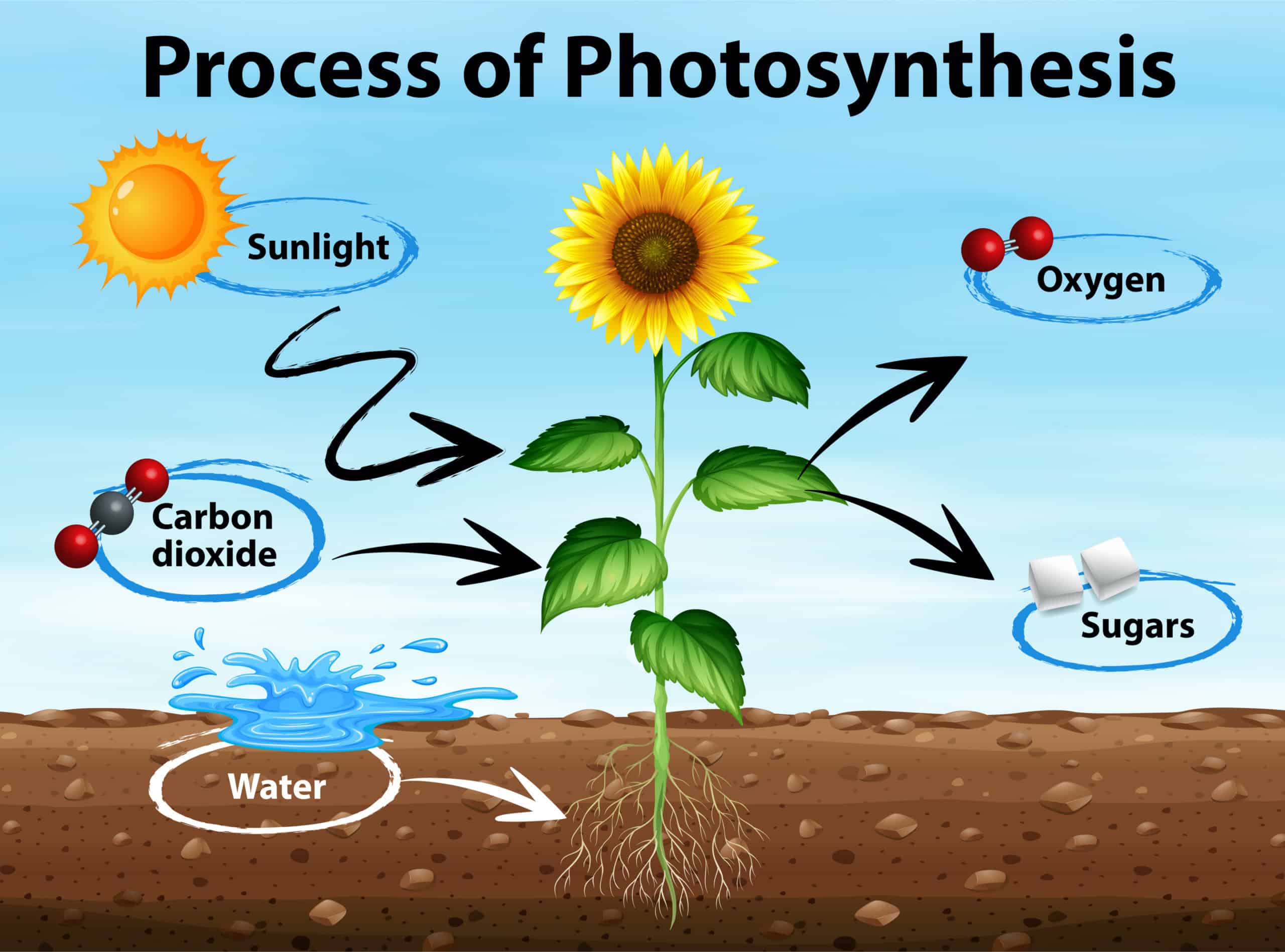
Plants are remarkable because they can synthesise their own food through photosynthesis, earning them the classification as autotrophs (self-feeding organisms).
Photosynthesis is incredibly important as it serves as the primary source of food for all living entities on Earth. Additionally, it releases oxygen into the atmosphere, which we need to breathe and survive.
The process takes place in chloroplasts through both light and dark reactions.
Example
The Four Photosynthetic Pigments
Photosynthesis uses four main pigments that work together:
- Chlorophyll a
- Chlorophyll b
- Xanthophyll
- Carotenoids
These pigments capture different wavelengths of light to maximise energy absorption.
These pigments work together to extract energy from light and store it as chemical bond energy through a process called phosphorylation. In plants, both cyclic and non-cyclic photo-phosphorylations occur. During photosynthesis, the Calvin cycle takes place through a series of four chemical reactions that help convert carbon dioxide into glucose.
Respiration in plants
Plants need to break down the food produced during photosynthesis to access energy for life processes. Cellular respiration releases energy that plants use for ATP synthesis, which involves a process called glycolysis.
Aerobic respiration leads to complete oxidation of organic substances in the presence of oxygen, which is the most common form of respiration in higher organisms.
To release and utilise the energy stored in food molecules, plants undergo several steps:
- Electron transport system
- Oxidative phosphorylation
An important measurement in plant respiration is the respiratory quotient - the ratio of the volume of carbon dioxide released to the volume of oxygen consumed. This can be expressed as:
This helps scientists understand how efficiently plants are using oxygen and producing carbon dioxide.
Plant growth and development
Plant development begins with germination under favourable environmental conditions. Unlike animals, plant growth is indeterminate, meaning they retain their capacity to grow throughout their entire lives due to the presence of meristems (areas of actively dividing cells).
Plant growth can be measured through various parameters including:
- Dry weight
- Increase in fresh weight
- Length changes
- Area expansion
- Volume increases
- Cell number counts
Example
The Three Phases of Plant Growth
The period of plant growth is divided into three distinct phases:
- Meristematic phase: Active cell division occurs
- Elongation phase: Cells increase in size and volume
- Maturation phase: Cells differentiate and specialise for specific functions
Each phase is crucial for proper plant development and cannot be skipped.
Growth rate can be determined quantitatively in two ways:
- Absolute growth rate: Total growth over time
- Relative growth rate: Growth rate relative to existing size
Plant growth is controlled by plant growth regulators - natural chemicals that influence how plants develop. Plants also produce compounds called phytochromes that are light-sensitive and help plants respond to environmental signals, stimulating growth based on light conditions.
Note
Plant physiology connects directly to agriculture through the production of fruits, vegetables, and other edible plant parts. Understanding how plants grow, develop, and respond to their environment is crucial for successful crop production, including harvest timing and post-harvest storage of plant products.
Summary
Key Points to Remember:
- Plant physiology studies how plants function at molecular and cellular levels, focusing on essential life processes
- Key plant structures each have specific roles: leaves for photosynthesis, stems for support, roots for absorption, and xylem/phloem for transport
- Transportation occurs through both passive and active mechanisms, with water potential driving movement throughout the plant
- Photosynthesis uses four pigments in chloroplasts to convert light energy into chemical energy, making plants autotrophic
- Plant growth is indeterminate and occurs in three phases (meristematic, elongation, maturation), controlled by growth regulators and environmental signals