Claude Monet (Leaving Cert Art): Revision Notes
📚Revision Notes
Claude Monet
Introduction to Claude Monet
Claude Monet stands as one of the most influential artists in art history, serving as the founding father of the Impressionist movement. Born on 14th November 1840 in Paris, France, and passing away on 5th December 1926 in Giverny, France, Monet dedicated his life to capturing the fleeting effects of light and atmosphere in his paintings.
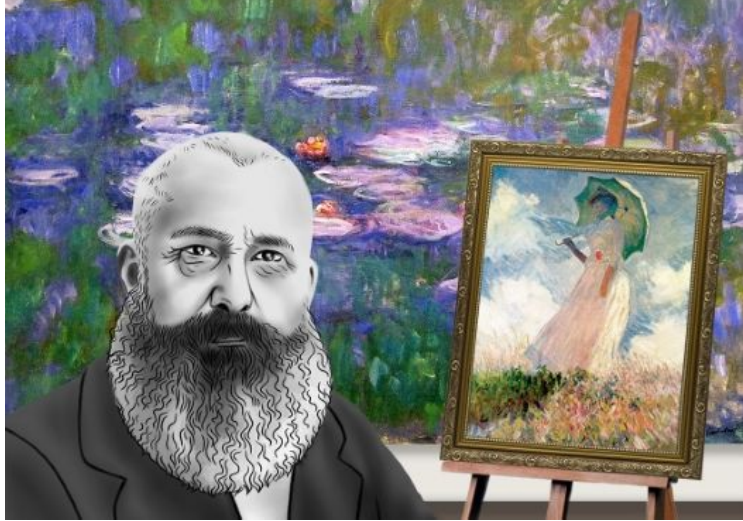
As Monet famously declared: "Colour is my daylong obsession, joy, and torment." This quote perfectly encapsulates his lifelong dedication to exploring how colour and light interact in the natural world.
Note
Monet's 86-year lifespan allowed him to witness and influence the entire development of modern art, from traditional academic painting through to the early stages of abstract art.
Artistic movements and philosophy
Monet was the leader and namesake of the Impressionist movement, which revolutionised art in the late 19th century. The movement took its name from one of his paintings, though initially used as criticism by art critics.
Important
The term "Impressionism" was originally meant as an insult by critics who dismissed Monet's loose painting style. The name came from his painting "Impression, Sunrise" (1872), but Monet and his fellow artists embraced the term and turned it into one of art history's most beloved movements.
Key characteristics of Monet's Impressionism:
- Emphasis on capturing natural light and its changing qualities
- Loose, visible brushstrokes that suggested form rather than defining it precisely
- Outdoor painting (en plein air) to observe subjects in natural lighting
- Focus on the artist's immediate visual impression rather than detailed accuracy
- Bright, pure colours applied side by side rather than mixed on the palette
Monet also worked within Naturalism, representing subjects as they appeared in nature without idealisation or romantic interpretation.
Working period
Monet's productive career spanned approximately 60 years, from around 1860 until his death in 1926. This timeline shows his remarkably long and consistent artistic output, with major achievements occurring throughout different decades of his life.
Note
Unlike many artists who experience creative peaks and valleys, Monet maintained an extraordinary level of productivity and innovation throughout his entire career, continuing to paint masterpieces well into his 80s despite suffering from cataracts.
Major works and artistic periods
Garden scenes and outdoor life
Monet excelled at capturing outdoor scenes, particularly gardens and leisure activities. His paintings often featured dappled sunlight filtering through foliage, creating complex patterns of light and shadow.

These works demonstrate his mastery of atmospheric effects and his ability to convey the sensation of being outdoors on a particular day at a specific time.
Example
Technique Demonstration: Capturing Dappled Light
Monet achieved his famous dappled light effects by:
- Applying small dabs of pure colour directly to the canvas
- Layering warm and cool tones to suggest light and shadow
- Using complementary colours side by side to create vibration
- Leaving areas of canvas visible to represent the brightest light
Figures in landscapes
One of Monet's most recognisable subjects was figures in outdoor settings, often featuring women with parasols. These paintings showcase his skill in representing the effects of natural light on both figures and landscapes.
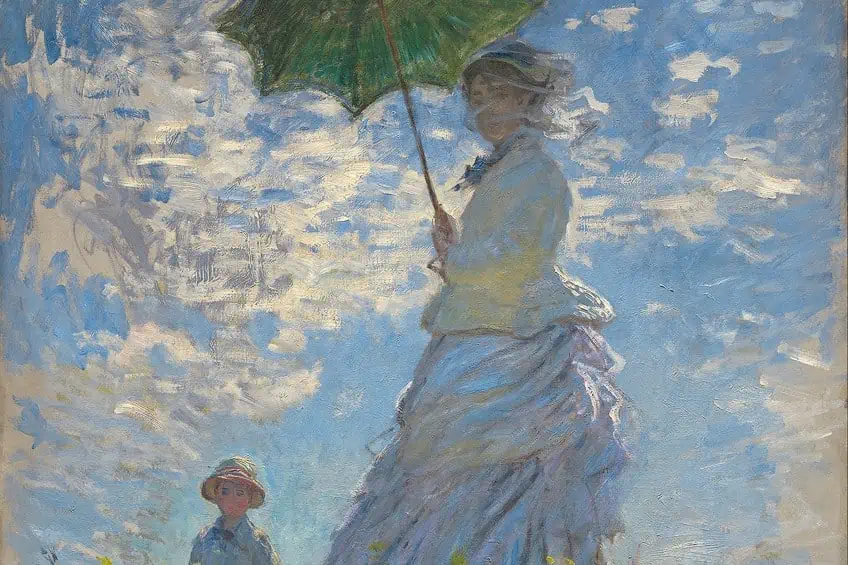
The parasol became a recurring motif in Monet's work, serving both as a compositional element and as a way to study how objects interact with light and cast shadows.
Urban scenes and modern life
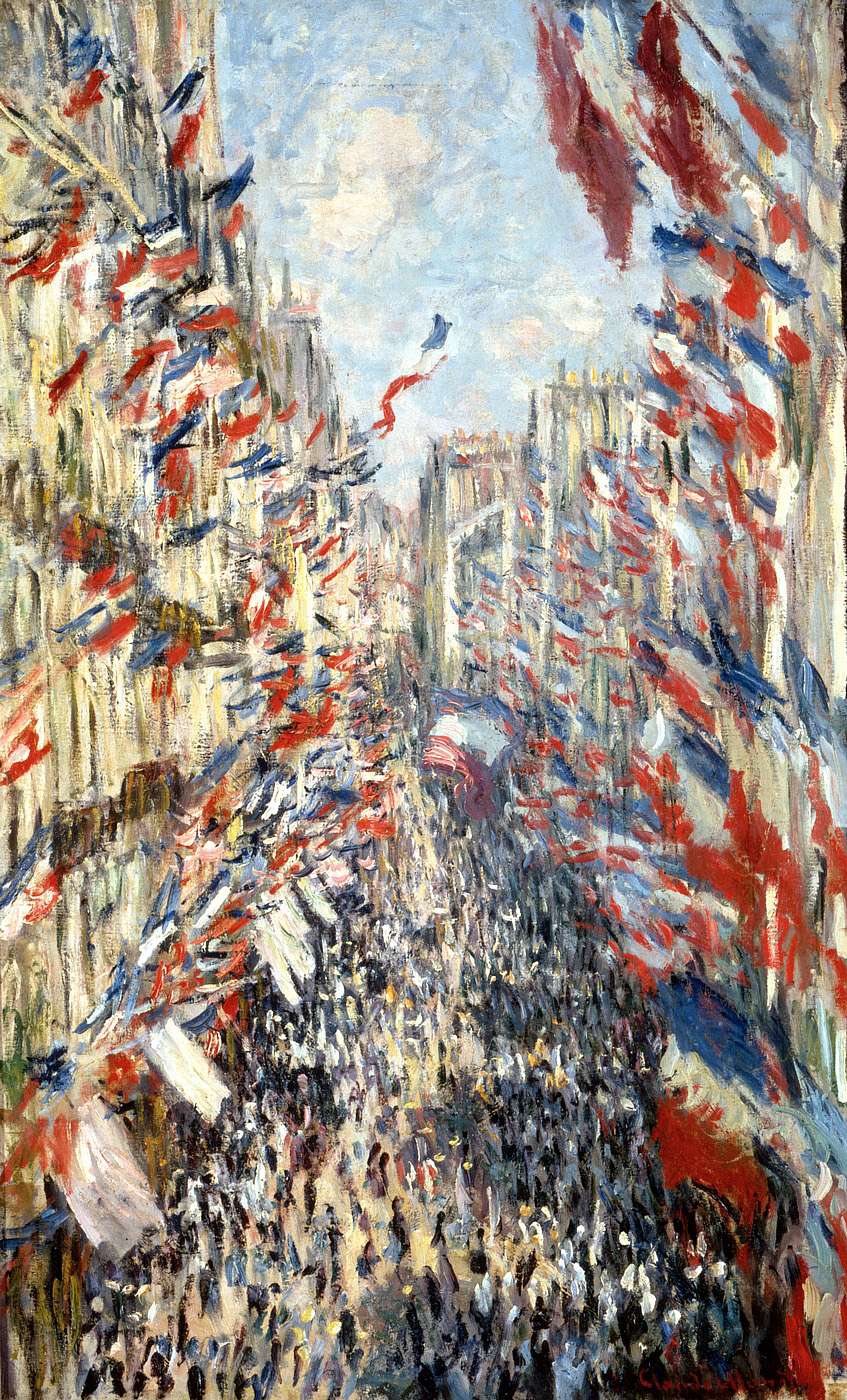
Monet also painted contemporary urban life, capturing the bustling energy of Paris through his impressionistic technique. His cityscapes often featured atmospheric effects like mist, snow, or the golden light of different times of day.

These urban works demonstrate how Impressionism could be applied to modern subjects, not just traditional landscapes and garden scenes.
Note
Monet's urban paintings were groundbreaking because they showed that the Impressionist technique could capture the energy and atmosphere of modern city life, proving that this new style wasn't limited to peaceful countryside scenes.
Series paintings
One of Monet's greatest innovations was his development of series paintings - multiple canvases showing the same subject under different lighting conditions or at different times of day. This approach allowed him to explore how changing light transformed the appearance of his subjects.
His most famous series include:
- Water Lilies (Nymphéas)
- Rouen Cathedral
- Haystacks
- Poplar Trees
- Charing Cross Bridge

Important
The series paintings represent Monet's most significant contribution to art history. By painting the same subject repeatedly under different conditions, he proved that light and atmosphere were more important than the subject itself - a revolutionary concept that paved the way for abstract art.
Techniques and innovations
Brushwork: Monet developed a distinctive loose, gestural brushwork that suggested forms and textures rather than defining them precisely. His brushstrokes often followed the direction of the forms they were describing.
Colour theory: Rather than mixing colours on his palette, Monet often applied pure colours directly to the canvas, allowing the viewer's eye to "mix" them optically. This created more vibrant and luminous effects.
Plein air painting: Monet was one of the pioneers of outdoor painting, believing that only by working directly from nature could an artist capture the true effects of natural light.
Light studies: His obsession with light led him to paint the same subjects repeatedly under different conditions, documenting how light transforms appearance throughout the day and across seasons.
Example
Technique Demonstration: Optical Colour Mixing
Instead of mixing green paint for foliage, Monet would:
- Apply small strokes of pure blue paint
- Add small strokes of pure yellow paint nearby
- Allow the viewer's eye to "mix" these colours at a distance
- This created more vibrant greens than pre-mixed paint could achieve
Signature and identity

Monet's distinctive signature became as recognisable as his painting style, appearing on works that would become some of the most valuable and beloved paintings in art history.
Legacy and influence
Monet's innovations in capturing light, atmosphere, and colour had a profound impact on the development of modern art. His work influenced countless artists who followed, and Impressionism remains one of the most popular and accessible art movements for the general public.
His dedication to observing and recording the natural world through paint established new possibilities for what painting could achieve, moving away from the academic traditions that had dominated European art for centuries.
Note
Monet's influence extends far beyond painting - his approach to capturing fleeting moments and changing light has influenced photography, cinema, and even digital art. His garden at Giverny continues to inspire artists and garden designers today.
Exam tips
- Focus on technique: Be able to describe Monet's brushwork, use of colour, and painting methods
- Understand context: Know how Impressionism challenged traditional academic art
- Identify key works: Familiarise yourself with his major series and individual masterpieces
- Analyse light: Practice describing how Monet captured different lighting effects in his paintings
- Connect to movement: Understand Monet's role in founding and leading Impressionism
Summary
Key Points to Remember:
- Claude Monet (1840-1926) was the founder and leader of the Impressionist movement in France
- His famous quote "Colour is my daylong obsession, joy, and torment" reveals his dedication to studying colour and light
- En plein air (outdoor painting) was central to his practice, allowing him to capture natural lighting effects
- Series paintings were his major innovation - painting the same subject under different conditions to study changing light
- His loose brushwork and pure colours created luminous effects that suggested rather than precisely defined forms