Paul Cézanne (Leaving Cert Art): Revision Notes
📚Revision Notes
Paul Cézanne

Who was Paul Cézanne?
Paul Cézanne was a French Post-Impressionist painter who became one of the most important figures in the development of modern art. Often called the "Master of Aix" after his hometown in southern France, Cézanne created a vital bridge between 19th-century Impressionism and the revolutionary art movements of the early 20th century, particularly Cubism.
Cézanne famously declared: "I owe you the truth in painting and I will tell it to you" - a statement that captures his commitment to honest artistic expression and his rejection of superficial visual effects.
Note
The term "Post-Impressionism" was coined by British art critic Roger Fry in 1910 to describe the diverse styles of painting that followed Impressionism. While Impressionists focused on capturing fleeting light effects, Post-Impressionists like Cézanne were more concerned with structure, form, and emotional expression.
Biography and timeline
Early life (1839-1870)
Paul Cézanne was born on 19th January 1839 in Aix-en-Provence, a town in the South of France. His father was a wealthy lawyer and banker who wanted Paul to follow a traditional career path. This created tension throughout Cézanne's early years, though he remained financially dependent on his family until his father's death in 1886.
As a young man, Cézanne formed close friendships with future literary figures, including the writer Émile Zola. Together they were part of a group called "The Inseparables" who moved to Paris in 1861.
Note
Cézanne's friendship with Émile Zola would later turn sour when Zola published his novel "L'Œuvre" (The Masterpiece) in 1886. The book featured a fictional failed painter that many believed was based on Cézanne, causing a permanent rift in their relationship.
Artistic training and development
Cézanne was largely self-taught as an artist. In 1859, he attended evening drawing classes in Aix, and later attempted to enter the prestigious École des Beaux-Arts in Paris, but was rejected twice. Instead of formal academic training, Cézanne:
- Visited the Académie Suisse where he could draw from live models
- Copied works by old masters in the Louvre Museum
- Met fellow struggling artists including Camille Pissarro, Claude Monet, and Auguste Renoir
Mature period (1870-1906)
The year 1870 marked a crucial turning point in Cézanne's artistic development. He moved to L'Estaque in southern France to avoid military draught and began developing his distinctive style. This period was characterised by:
- Brighter palette influenced by Pissarro
- Plein air painting (painting outdoors)
- Development of his famous constructive brushwork
- Focus on geometric simplification of natural forms
In 1872, his son Paul was born, and in 1886, he married Hortense Fiquet. The same year marked his father's death, which finally gave Cézanne financial independence.
Artistic style and techniques
Important
Understanding Cézanne's innovative techniques is essential for grasping his influence on modern art. His methods represented a radical departure from traditional academic painting and laid the groundwork for abstract art.
Key characteristics of Cézanne's mature style
Constructive brushwork: Rather than simply copying what he saw, Cézanne applied paint in methodical, discrete brushstrokes as if he were "constructing" the picture rather than merely painting it. Each brushstroke was carefully considered to contribute to the overall structural integrity of the composition.
Geometric approach: Cézanne simplified natural forms into geometric shapes. He famously advised artists to "treat nature by means of the cylinder, the sphere, and the cone." This approach would later inspire Cubist artists like Pablo Picasso.
Colour modulation: Instead of using traditional light and shadow, Cézanne used warm and cool colours to create form and depth. He believed that "when colour attains richness, form attains its fullness."
Major works and artistic themes
The card players series (1890-1892)

Example
Masterwork Analysis: The Card Players
Cézanne's Card Players series demonstrates his mature style:
Step 1: Composition Structure
- Strong horizontal line of the table creates stability
- Vertical figures provide balance and rhythm
- Geometric arrangement eliminates unnecessary detail
Step 2: Colour and Form
- Earth-tone palette (browns, ochres, muted greens) creates harmony
- Colour patches build form without traditional modelling
- Each brushstroke contributes to the overall architectural structure
Step 3: Psychological Content
- Timeless, universal theme of human social interaction
- Dignified treatment of working-class subjects
- Concentration and absorption suggest deeper meaning beyond mere card playing
Still life paintings
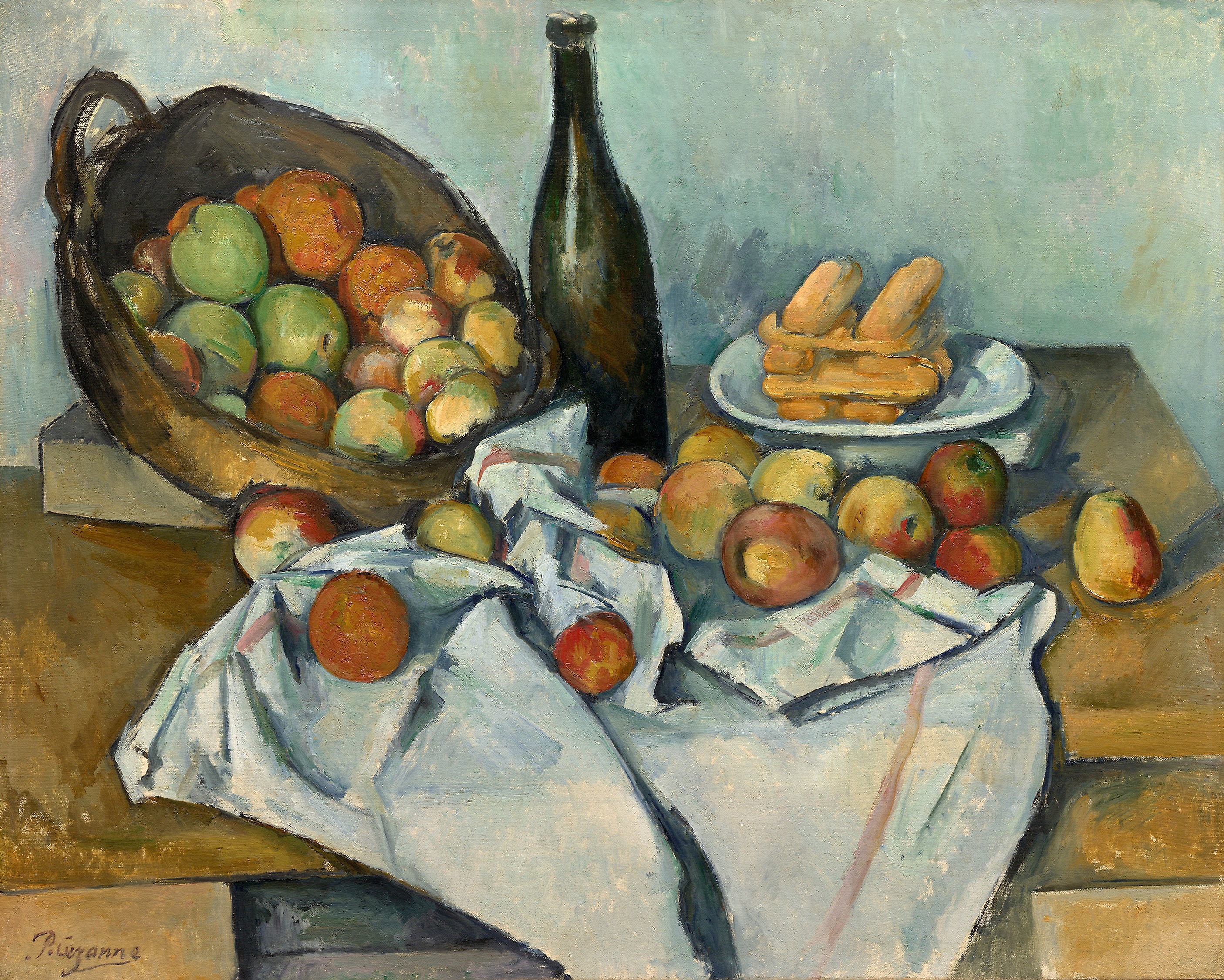
Cézanne revolutionised the still life genre, moving beyond mere representation to explore formal relationships between objects. His still lifes typically featured:
- Apples, pears, and other fruits arranged on draped tables
- Multiple viewpoints within a single composition
- Geometric simplification of everyday objects
- Rich colour relationships that create structural unity
Note
Cézanne chose apples as his preferred subject because they didn't rot quickly during long painting sessions. He would often work on a single still life for weeks or even months, requiring subjects that could maintain their appearance over time.
Landscape paintings
Mont Sainte-Victoire series

The mountain Mont Sainte-Victoire, visible from Cézanne's hometown of Aix-en-Provence, became one of his most painted subjects. In these works, he:
- Abstracted the landscape into geometric colour patches
- Experimented with perspective and spatial relationships
- Developed his mature style of colour modulation
- Influenced future abstract artists through his innovative approach
Example
Landscape Innovation: Mont Sainte-Victoire Series
Cézanne painted this mountain over 60 times, using it as a laboratory for artistic experimentation:
Early versions (1880s): More naturalistic representation with traditional perspective Middle period (1890s): Introduction of geometric simplification and colour patches Late works (1900s): Near-abstract treatment pointing towards pure abstraction
Each version shows his evolving understanding of how colour and form could create spatial depth without relying on traditional Renaissance techniques.
Mediterranean landscapes
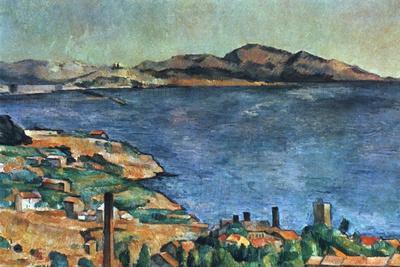
Cézanne's southern French landscapes capture the brilliant light and colour of the Mediterranean region through:
- Bold colour contrasts between blues, oranges, and earth tones
- Simplified architectural forms of local buildings
- Atmospheric perspective created through colour rather than traditional techniques
The bathers series
Example
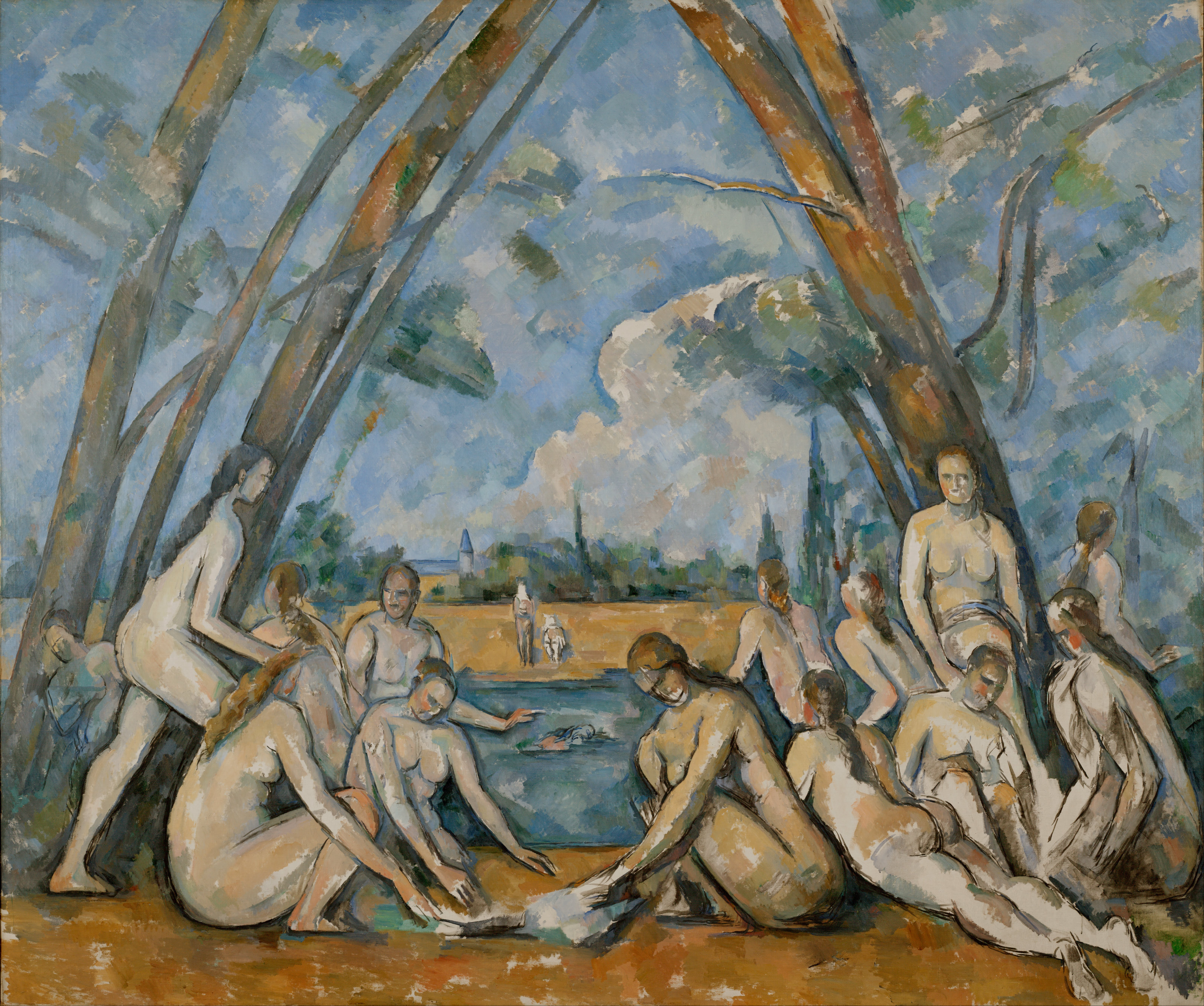
Monumental Work: The Large Bathers
Cézanne's Bathers paintings represent his most ambitious compositions:
Artistic Challenge: Combining figure painting with landscape settings Classical Inspiration: References to Renaissance and Baroque master paintings Modern Innovation: Geometric treatment of human forms Legacy: Direct influence on Picasso's "Les Demoiselles d'Avignon" (1907)
These works show Cézanne's attempt to create a new kind of classical art for the modern age.
Portrait and figure paintings
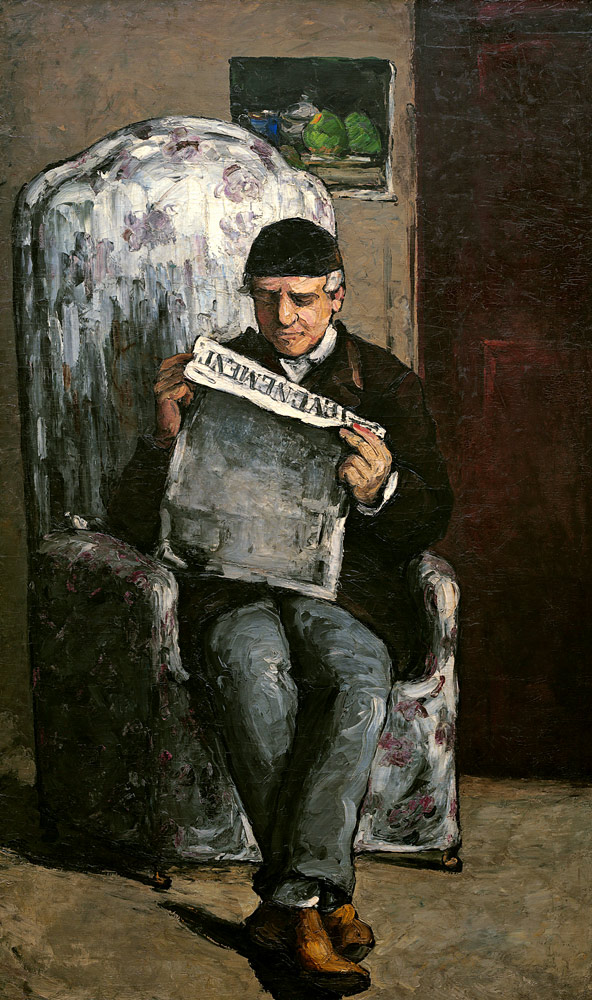
Cézanne's portraits, including his famous painting of his father reading a newspaper, demonstrate his ability to apply his geometric approach to figure painting. These works show:
- Solid, monumental figures with simplified forms
- Careful attention to pose and gesture
- Integration of figure with environment
- Psychological presence despite formal simplification
Watercolour studies
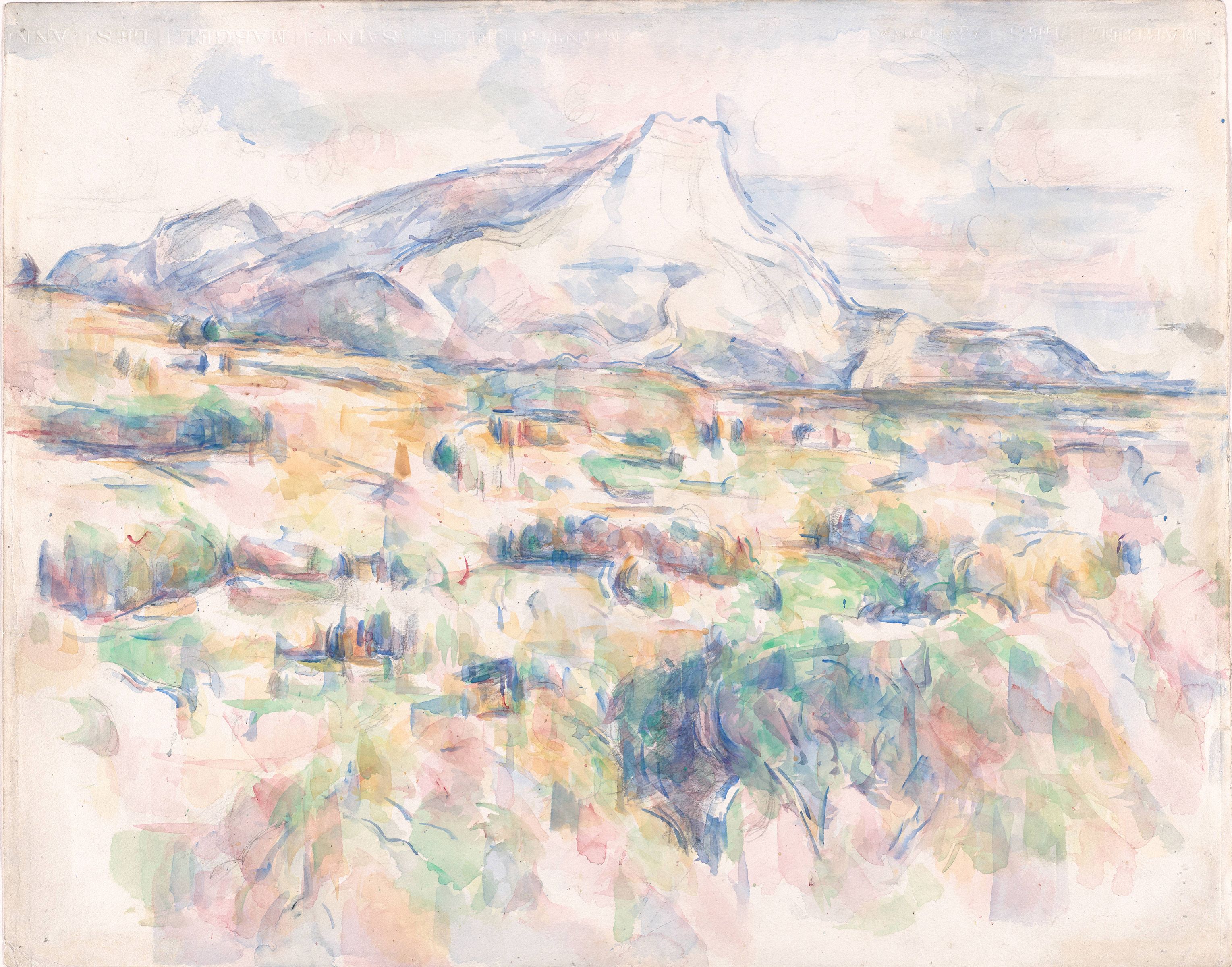
In his later years, Cézanne increasingly worked in watercolour, creating loose, expressive studies that pointed towards complete abstraction. These works feature:
- Fluid brushstrokes and transparent colour washes
- Spontaneous, gestural quality
- Abstract treatment of landscape forms
- Influence on future abstract painters
Cézanne's influence on modern art
Important
Cézanne's revolutionary approach to painting fundamentally changed the course of art history. His influence extends from Cubism through to Abstract Expressionism and beyond, making him one of the most important figures in the transition from traditional to modern art.
Bridge to cubism
Cézanne's geometric approach to form and his multiple viewpoints within single compositions directly influenced the development of Cubism. Pablo Picasso famously called Cézanne "the father of us all."
Key innovations that influenced Cubism:
- Breaking down forms into geometric shapes
- Showing multiple angles of objects simultaneously
- Emphasising structure over surface appearance
- Using colour to create form rather than describe it
Legacy in abstract art
Cézanne's later works, particularly his watercolour landscapes, pointed towards complete abstraction. His influence continued into the 1930s and 1940s, inspiring the development of Abstract Expressionism.
Note
Many major 20th-century artists acknowledged Cézanne's influence, including Henri Matisse, who called him "the father of us all," and Wassily Kandinsky, who saw in Cézanne's work the pathway to pure abstraction.
Study techniques for students
Note
Understanding Cézanne's development
When studying Cézanne, focus on his artistic evolution:
- Early period: Heavy, dark paintings with thick impasto
- Impressionist influence: Lighter palette and plein air techniques
- Mature style: Geometric approach and constructive brushwork
- Late period: Movement towards abstraction
Key works to remember
- The Card Players (1890-1892) - Genre painting and geometric composition
- Mont Sainte-Victoire series - Landscape innovation and colour theory
- The Large Bathers (1898-1906) - Classical tradition meets modern vision
- Still lifes - Revolutionary approach to everyday objects
Exam tips
- Connect Cézanne to art movements: Post-Impressionism (participant) and Cubism (influence)
- Understand his techniques: Constructive brushwork, colour modulation, geometric simplification
- Know his famous quote: "I owe you the truth in painting and I will tell it to you"
- Recognise his subjects: Mont Sainte-Victoire, still lifes with fruit, card players, bathers
Summary
Key Points to Remember:
- Paul Cézanne (1839-1906) was a French Post-Impressionist painter known as the "Master of Aix"
- His geometric approach to form and constructive brushwork influenced the development of Cubism and modern art
- Key subjects included Mont Sainte-Victoire, still lifes with fruit, card players, and bathers in landscapes
- He bridged Impressionism and modern art through his innovative techniques and philosophical approach to painting
- His famous quote "I owe you the truth in painting and I will tell it to you" reflects his commitment to honest artistic expression
- His influence extends from Cubism through Abstract Expressionism, making him one of the most important figures in modern art history