Realism (Leaving Cert Art): Revision Notes
📚Revision Notes
Realism
What is realism?
Realism in art represents the effort to show subjects truthfully and naturally, without artificial beauty, exaggeration, or fantasy elements. This artistic approach focuses on depicting the real world as it actually appears, rather than how artists think it should look.
Note
Realism often gets confused with naturalism, but they're slightly different concepts. While naturalism aims to show objects with minimal distortion (like a very accurate photograph), realism is more about the honest portrayal of everyday life and ordinary people.
The movement emerged as a specific historical development in France during the mid-19th century, particularly after the Revolution of 1848. This was a time of great social and political change, when artists began to focus more on common people rather than just the wealthy and powerful.
Historical development and origins
The French revolution of 1848 and social change
Realism as an organised artistic movement began in France following the 1848 Revolution. This political upheaval brought new ideas about democracy and social equality, which directly influenced how artists saw their role in society.
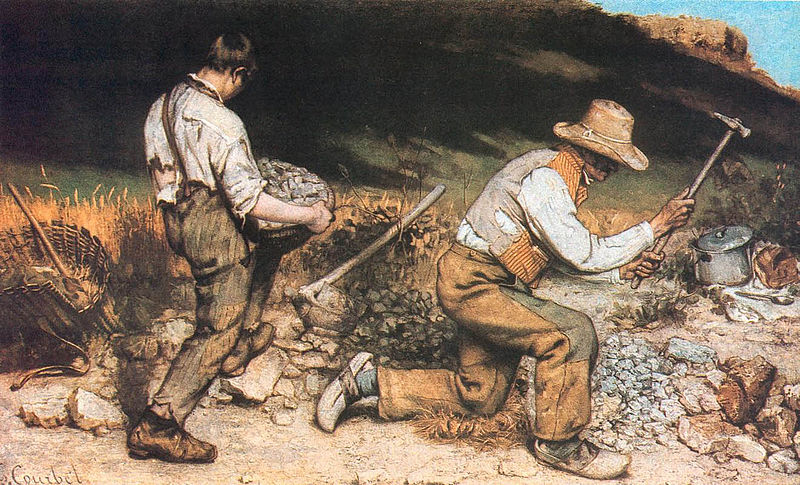
Artists like Gustave Courbet became key figures in this movement. They deliberately chose to paint ordinary working people instead of the traditional subjects of mythology, religion, or aristocratic life.
Important
This was considered quite revolutionary at the time - imagine the shock of gallery visitors expecting to see paintings of gods and kings, only to find images of stone breakers and farm workers! This shift represented a fundamental change in what was considered "worthy" of artistic attention.
Reaction against romanticism
Realist artists were specifically reacting against Romanticism, which had dominated French art and literature in the late 18th century. Romantic artists focused on emotion, imagination, and idealised beauty. Realists, by contrast, wanted to show life as it really was - including the harsh, unglamorous, and sometimes ugly aspects of everyday existence.
This painting by Francisco Goya shows a more honest, unflattering portrayal of the Spanish royal family, demonstrating how some artists were already moving towards realist approaches even before the formal movement began.
Key characteristics of realist art
Focus on ordinary subjects and working people
Rather than painting gods, heroes, or wealthy patrons, realist artists deliberately chose subjects from everyday life. This included:
- Working people: farmers, factory workers, servants, craftspeople
- Contemporary settings: modern streets, workshops, domestic interiors
- Real activities: actual work being done, not posed or idealised scenes
- Social conditions: poverty, hardship, and the realities of industrial life
Note
This type of market or workshop scene became typical of realist art, showing ordinary people engaged in their daily work. The choice to elevate these subjects to the level of "fine art" was itself a political and social statement about the value and dignity of common people.
Truthful representation without idealisation
Realist artists refused to 'improve' their subjects by making them more beautiful or noble than they actually were. This meant:
- Painting people with their actual physical features, including imperfections
- Showing working conditions as they really existed
- Using natural lighting and realistic proportions
- Avoiding dramatic poses or artificial arrangements
Contemporary relevance and social awareness
Many realist works carried subtle social messages about the conditions of working-class life. Artists began to highlight:
- The dignity of manual labour
- The harsh realities of poverty
- The effects of industrialisation on communities
- The importance of ordinary people in society
Pastoral scenes like this one captured the quiet reality of rural life without romanticising it.
Resisting classical idealisation
The debate over beauty versus truth
Throughout art history, there had been ongoing debates about whether artists should show things as they really are or as they ideally should be. Classical art traditions, influenced by ancient Greek and Roman examples, typically favoured idealised beauty.
Note
Renaissance masters like Leonardo da Vinci had argued for studying nature directly, while others like Michelangelo believed in selecting only the most beautiful elements. Realist artists firmly took da Vinci's side in this debate, but went even further by insisting that ordinary subjects could be just as worthy of artistic attention as classical gods and heroes.
Religious realism
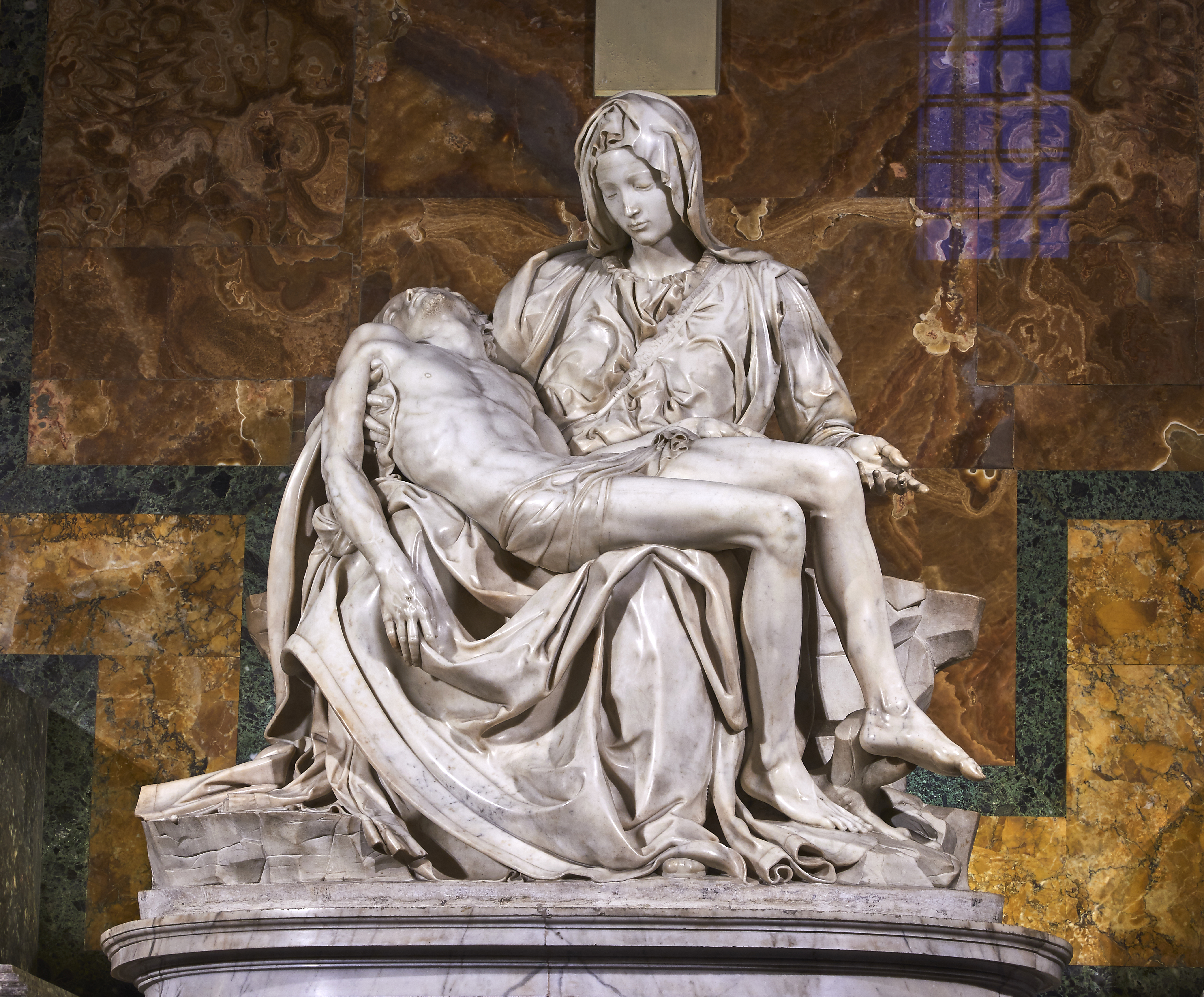
Even in religious art, there had been movements towards more realistic representation. During the Late Middle Ages, some artists began showing Christ's human suffering more graphically, emphasising his physical reality rather than just his divine nature. This approach influenced later realist thinking about the importance of showing truth rather than idealised beauty.
This Pietà sculpture demonstrates how religious art could incorporate realistic human emotion and physical detail.
The formal realist movement (mid-19th century)
Key artists and their contributions
The organised Realist movement was led by several important French artists:
Example
Key Realist Artists and Their Contributions:
Gustave Courbet (1819-1877) - Often considered the leader of the movement, Courbet painted scenes of rural life and working people. He famously declared that he could only paint what he could see, rejecting requests to paint angels because he had never encountered one.
Jean-François Millet (1814-1875) - Known for his dignified portrayals of rural workers, particularly peasants and farm labourers.
Honoré Daumier (1808-1879) - Created both paintings and satirical prints showing urban life and social criticism.
These contrasting images show the range of realist subjects, from quiet domestic scenes to dramatic historical events, all treated with attention to authentic detail.
International spread
The French Realist movement quickly spread to other countries, adapting to local conditions and concerns:
Russia: The Peredvizhniki (Wanderers) group formed in the 1860s, organising travelling exhibitions to bring art to ordinary people. Artists like Ilya Repin and Vasily Perov created powerful images of Russian social conditions.
Britain: Artists such as Hubert von Herkomer and Luke Fildes gained success with paintings addressing social issues and working-class life.
These examples from Russian realist art show the movement's international reach and its focus on both religious processions and social conditions.
Depiction of working life
Realist artists made working people the central subjects of major paintings, something that had rarely been done before in fine art. This included:
- Detailed studies of different trades and professions
- Industrial scenes showing the new factories and machinery
- Rural work depicted without sentimentality
- Urban poverty and social issues
Important
The artists wanted to show that ordinary work had dignity and that working people deserved the same artistic attention traditionally given to royalty and mythology. This represented a major shift in artistic values and social consciousness.
Techniques and approaches
Observation from life
Realist artists emphasised working directly from observation rather than copying from other artworks or relying on imagination. This meant:
- Sketching and painting outdoors when possible
- Using real models from the working classes
- Studying actual environments and lighting conditions
- Paying close attention to accurate details of clothing, tools, and settings
Naturalistic style
While realist artists varied in their exact techniques, they generally preferred:
- Natural, unforced compositions
- Subdued colour palettes that reflected real lighting
- Careful attention to textures and surfaces
- Realistic proportions and perspective
Note
This peaceful landscape demonstrates the naturalistic approach to depicting environment without dramatic enhancement. The goal was to present scenes as they would actually appear to the human eye, rather than creating artificial drama or beauty.
Legacy and influence
Realism established several important principles that continued to influence art:
- The idea that any subject could be worthy of serious artistic treatment
- The importance of social relevance in art
- The value of direct observation and study from life
- The artist's role as a social commentator and documenter of contemporary life
Note
The movement also influenced developments in literature, theatre, and eventually cinema, all of which adopted similar approaches to showing life truthfully rather than through idealised or romantic philtres. This cross-media influence demonstrates the broader cultural impact of realist principles.
Summary
Key Points to Remember:
- Realism emerged in mid-19th century France as a reaction against Romanticism and classical idealisation
- Key principle: Represent subjects truthfully without artificial beauty or fantasy elements
- Focus on ordinary people: Working-class subjects, contemporary life, and social conditions became central themes
- Major artists: Gustave Courbet, Jean-François Millet, and Honoré Daumier led the French movement
- International movement: Spread to Russia (Peredvizhniki), Britain, and other countries, adapting to local social concerns