Art as Social Commentary (Leaving Cert Art): Revision Notes
📚Revision Notes
Art as Social Commentary
Art has always served as a powerful vehicle for social and political change. From ancient cave paintings to contemporary street art, artists have used their creative abilities to express views on society and challenge the world around them. When we talk about art as social commentary, we're referring to artwork created specifically to critique, question, or protest social and political issues.
Note
The tradition of using art to comment on society spans across all cultures and time periods, making it one of the most universal forms of human expression and resistance.
Understanding protest art
Protest art refers to creative works that challenge the status quo - the existing state of affairs in society. This type of art typically emerges in response to social or political problems and aims to inspire change. Artists who create protest art often become activists themselves, using their work to raise awareness about important issues and give voice to marginalised groups.
Today, protest art can be found everywhere - in galleries, museums, public spaces, and across social media platforms. It takes many different forms including:
- Paintings
- Sculptures
- Murals
- Posters
- Street art
Historical development of protest art
Ancient origins
The tradition of using art for social commentary stretches back centuries. In ancient Egypt, artists used their work to criticise pharaohs and the ruling class. Similarly, in ancient Greece, artists challenged the political and social norms of their time through various artistic expressions.
Renaissance period
During the Renaissance, artists began to use their work more openly to express views on religion and politics. The Italian artist Michelangelo created some of the most famous protest art of this era, including his sculpture of David, which became a symbol of resistance against the powerful Medici family's control in Florence.
20th century developments
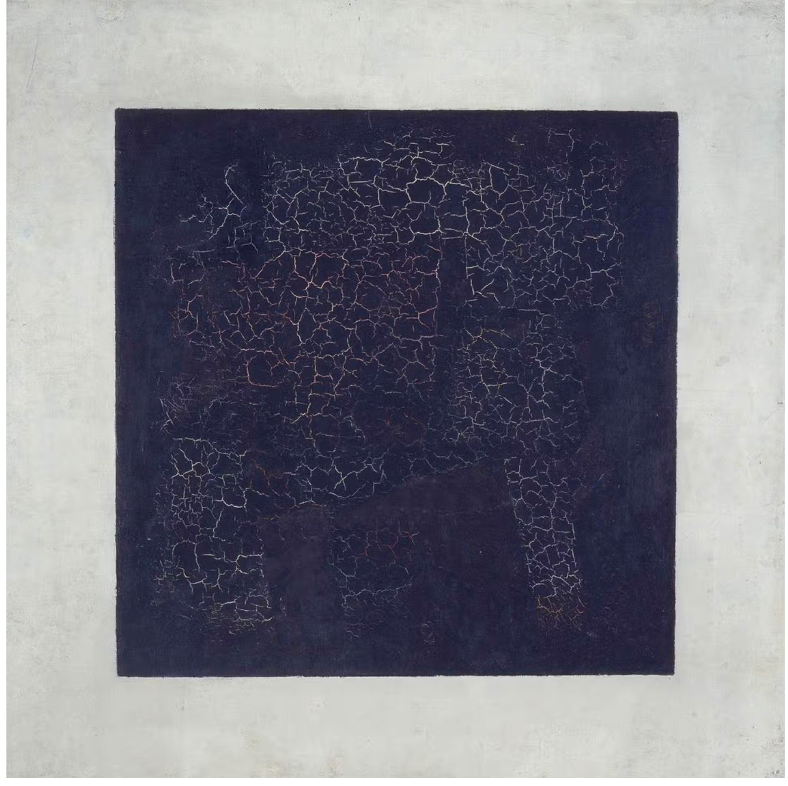
The 20th century marked a significant shift in protest art as artists began to explore more abstract forms of expression. Ukrainian-born artist Kazimir Malevich created some of the earliest examples of abstract protest art with works like "Black Square" (1915), which represented a rejection of traditional art forms and marked the beginning of a new era where art and politics intersected more directly.
Note
As Mexican artist Diego Rivera famously said: "Great protests are great art works." This quote captures the essential connection between artistic excellence and social activism.
Wartime and conflict art
World Wars impact
During World War I and World War II, artists used their work to protest against the rise of fascism and global conflict. The Dada movement emerged during this period, with artists like Marcel Duchamp, Tristan Tzara, Hans Arp and Hannah Höch creating works that challenged conventional ideas about art and society.
Important
A defining characteristic of Dada artists was their use of everyday objects in their art, which was seen as a controversial move that challenged the very definition of what art could be.
The German artist Otto Dix created a haunting series called "Der Krieg" (The War) that depicted the horrors of war and its impact on society.
1960s and 1970s movements
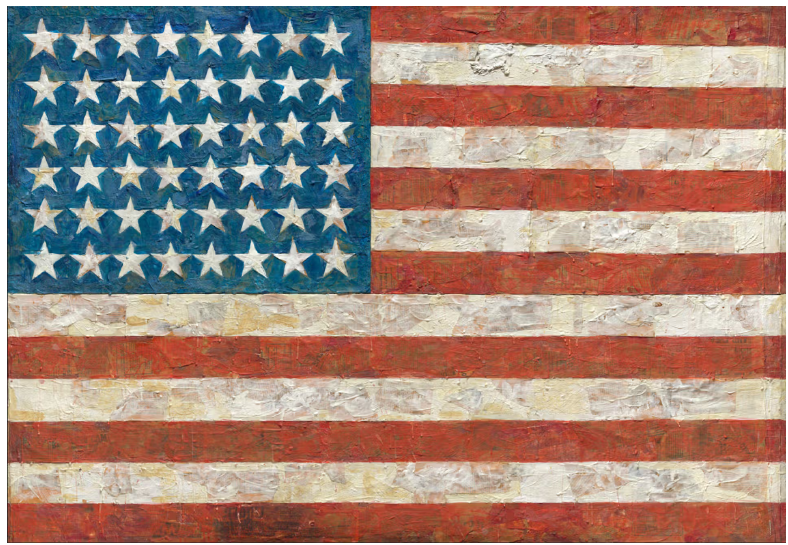
In the 1960s and 1970s, protest art became more widespread as artists began to address issues such as racism, sexism, and Cold War conflicts. The American artist Jasper Johns created some of the most famous protest art of this period, including his painting "Flag," which offered a critique of American nationalism without being overtly political.
Key artists and their contributions
Pablo Picasso
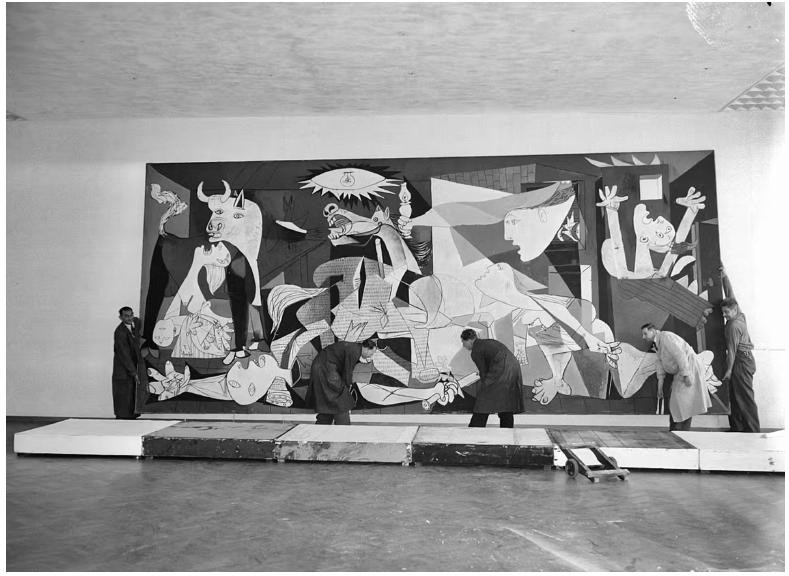
Pablo Picasso stands as one of the most influential artists of the 20th century and played a crucial role in developing Cubism, an artistic movement closely connected to political activism. Picasso's work often reflected his views, and he became a vocal critic of war and violence.
Example
Masterpiece Analysis: Guernica (1937)
Picasso's most famous work, "Guernica," serves as a powerful anti-war painting that depicts the horrors of the Spanish Civil War.
Context: Created in response to the brutal bombing of the Spanish town of Guernica by German and Italian warplanes during the conflict, leading to numerous civilian casualties.
Impact: This monumental painting has become an iconic symbol of peace, inspiring generations of artists to use their work as a form of social and political protest.
Jean-Michel Basquiat
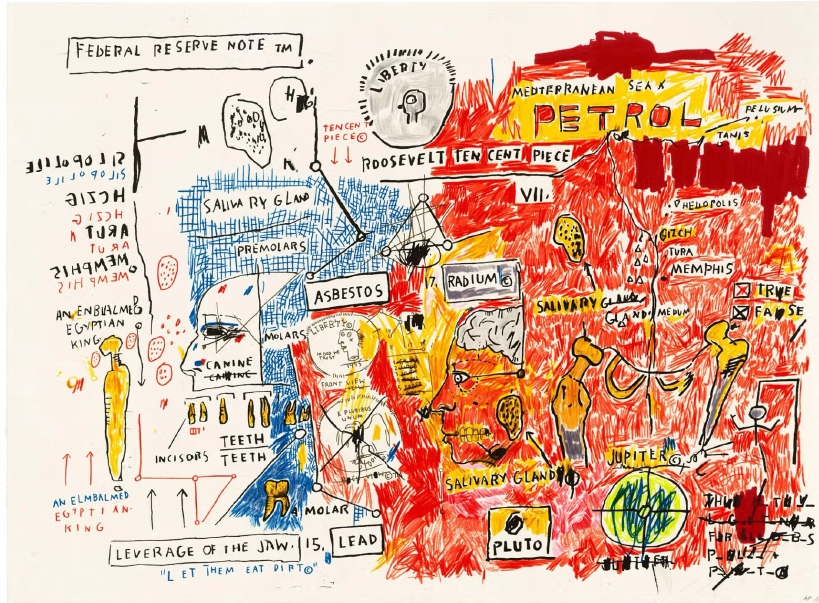
Jean-Michel Basquiat emerged as a prominent American artist in the 1980s, known for his graffiti-inspired paintings that frequently addressed issues surrounding racism and inequality. Basquiat's work challenged the status quo and provided powerful social commentary on the struggles of marginalised social groups.
One of his most politically charged works, "Defacement (The Death of Michael Stewart)" (1983), pays tribute to Michael Stewart, a young Black artist who was beaten to death by New York City police officers. The painting depicts Stewart's face with the words "It Could Happen to Anybody" written above it, capturing Basquiat's awareness of the threat of police violence to young Black men and the fear that accompanied it.
Note
Basquiat's work continues to inspire generations of artists to use their creativity as a form of social and political protest, addressing ongoing issues of race, inequality, and social justice.
Keith Haring
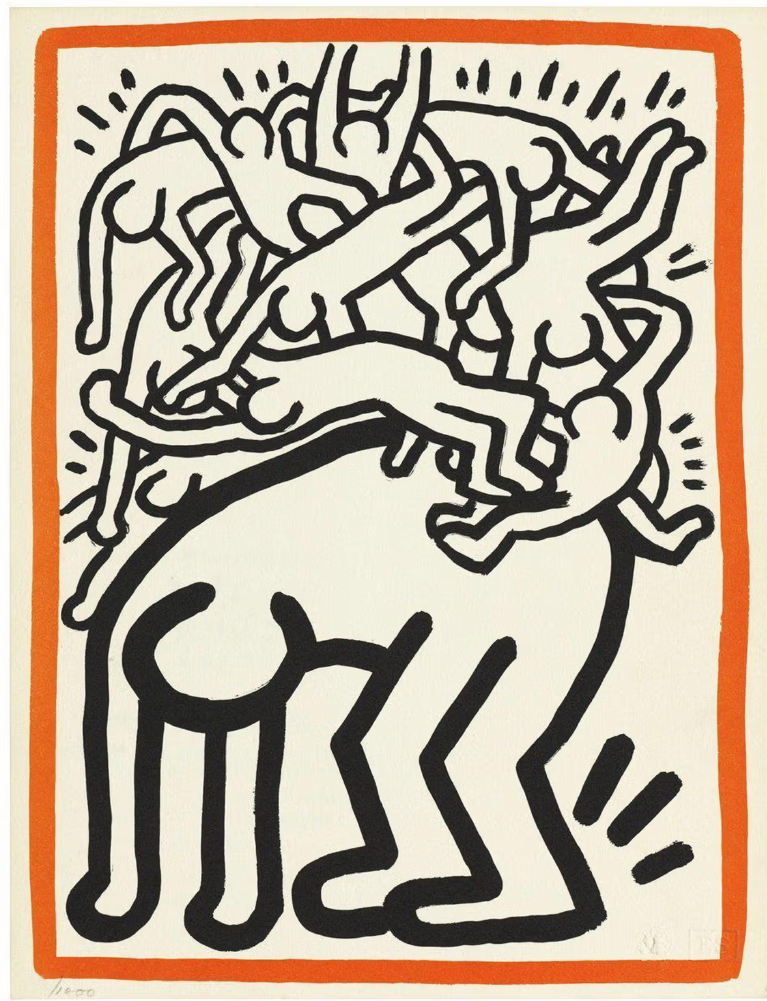
Keith Haring was an American artist who became known for his bold, colourful murals that often addressed issues such as AIDS, drug addiction, and nuclear disarmament. Emerging from the graffiti subculture of New York in the 1980s, Haring's work was often controversial due to its engagement with polarising social issues.
Example
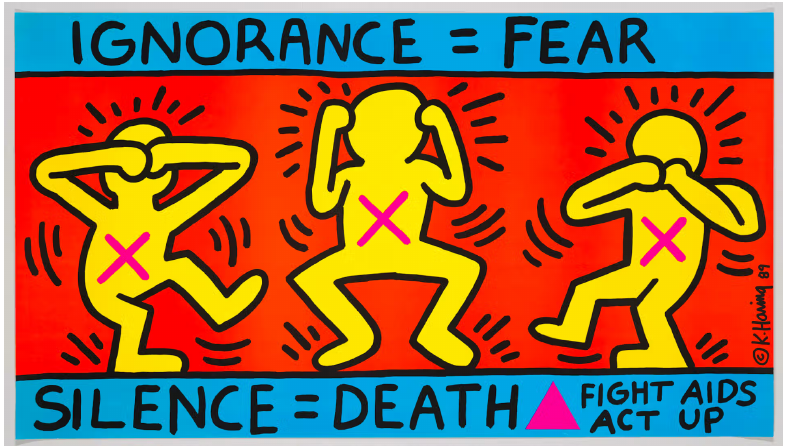
Activism Through Art: "Ignorance = Fear / Silence = Death" (1989)
Diagnosed with AIDS in 1988, Haring's art became a key cultural artefact that highlighted the pain and politics of the crisis.
The Message: This direct and unapologetic statement about the AIDS epidemic features a pink triangle with the words "Silence = Death" written below it.
Legacy: The work demonstrates how personal struggle can be transformed into powerful social commentary that raises awareness about critical health and social issues.
Although Haring's career was cut short by his death in 1991, his legacy demonstrates the power of protest art. He established the Keith Haring Foundation in 1989, an organisation that continues his artistic and philanthropic work by supporting children in need and those affected by HIV/AIDS. Haring's visual style has also become central to the legacy of Pop Art.
Banksy
Banksy is an anonymous street artist known for politically charged artworks displayed in public locations. Addressing issues such as war, poverty, and inequality, his work has been featured in galleries around the world and has inspired a new generation of street artists to use their work for social and political protest.
Example
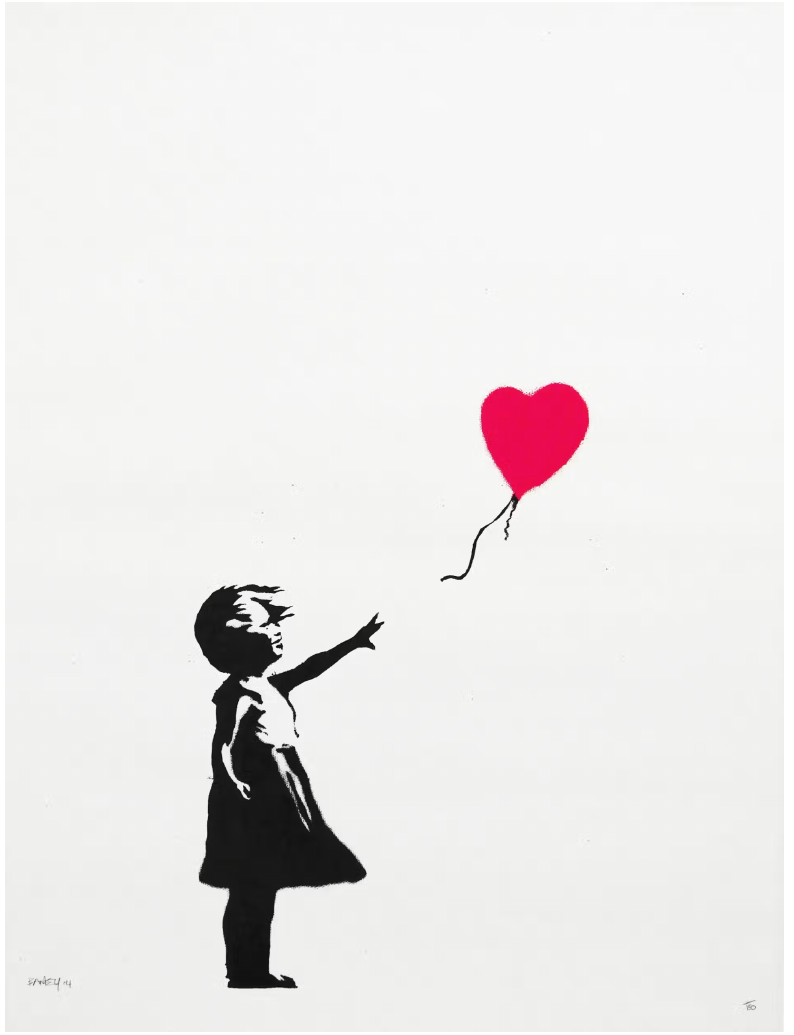
Icon of Hope: "Girl with Balloon" (2004)
The Image: Depicts a young girl reaching for a heart-shaped balloon that appears to be slipping from her grasp.
Multiple Interpretations: Some view the girl as losing the balloon, whilst others see her on the verge of catching it. It serves as an allegory of hope, love, and freedom.
Cultural Impact: The piece gained additional notoriety when it was used for campaigns addressing the Syrian refugee crisis of 2014, demonstrating how art can be repurposed for different social causes.
Banksy's subversive approach has also inspired creative activism in the art world. In 2018, a framed version of "Girl with Balloon" was auctioned at Sotheby's, but immediately after the sale, the artwork was partially shredded through a hidden mechanism in the frame, creating a new piece titled "Love Is In The Bin."
The role of artists in social movements
Artists play a crucial role in social and political movements, utilising their work as a medium to express their views about the world around them. In our increasingly visual age, art serves as a powerful force for movements and protests.
Important
Protest art possesses the unique ability to challenge authority in ways that words alone cannot. Through symbols and artistic expression, protest art often inspires people to take action and helps build communities.
Art can raise awareness about social and political issues whilst giving voice to marginalised groups. Many artists who create protest art view themselves as activists. For some, the act of protest guides and motivates their practice, using their work to challenge existing systems and advocate for the change they wish to see.
Artists who create protest art often become visual symbols of movements or get involved in grassroots campaigning beyond their artistic work. Contemporary examples include groups like "Artists for the Earth," a collective of creatives committed to using art to engage the public with critical environmental issues.
Contemporary significance
The tradition of art as social commentary continues to evolve in the digital age. Social media platforms have become new venues for activist art, allowing artists to reach global audiences instantly. Contemporary artists continue to address pressing issues including:
- Climate change
- Social inequality
- Racial justice
- Political corruption
These issues are addressed through their creative work, demonstrating that the power of art as social commentary remains as relevant today as it has throughout history.
Summary
Key Points to Remember:
- Protest art serves as a powerful tool for challenging the status quo and inspiring social change throughout history
- Key historical movements include ancient critique of rulers, Renaissance religious commentary, 20th-century abstract protest, and wartime anti-fascist art
- Major artists like Picasso (Guernica), Basquiat (racial inequality), Haring (AIDS activism), and Banksy (contemporary social issues) have used their work to address critical social problems
- Art as social commentary takes many forms - from traditional paintings and sculptures to modern street art and digital media
- Artists often become activists themselves, using their creative platforms to give voice to marginalised communities and raise awareness about important social and political issues