DNA Replication (Leaving Cert Biology): Revision Notes
📚Revision Notes
DNA Replication
DNA replication is a fundamental process that occurs in every cell before it divides. Understanding this process is crucial for grasping how genetic information is passed on from one cell generation to the next.
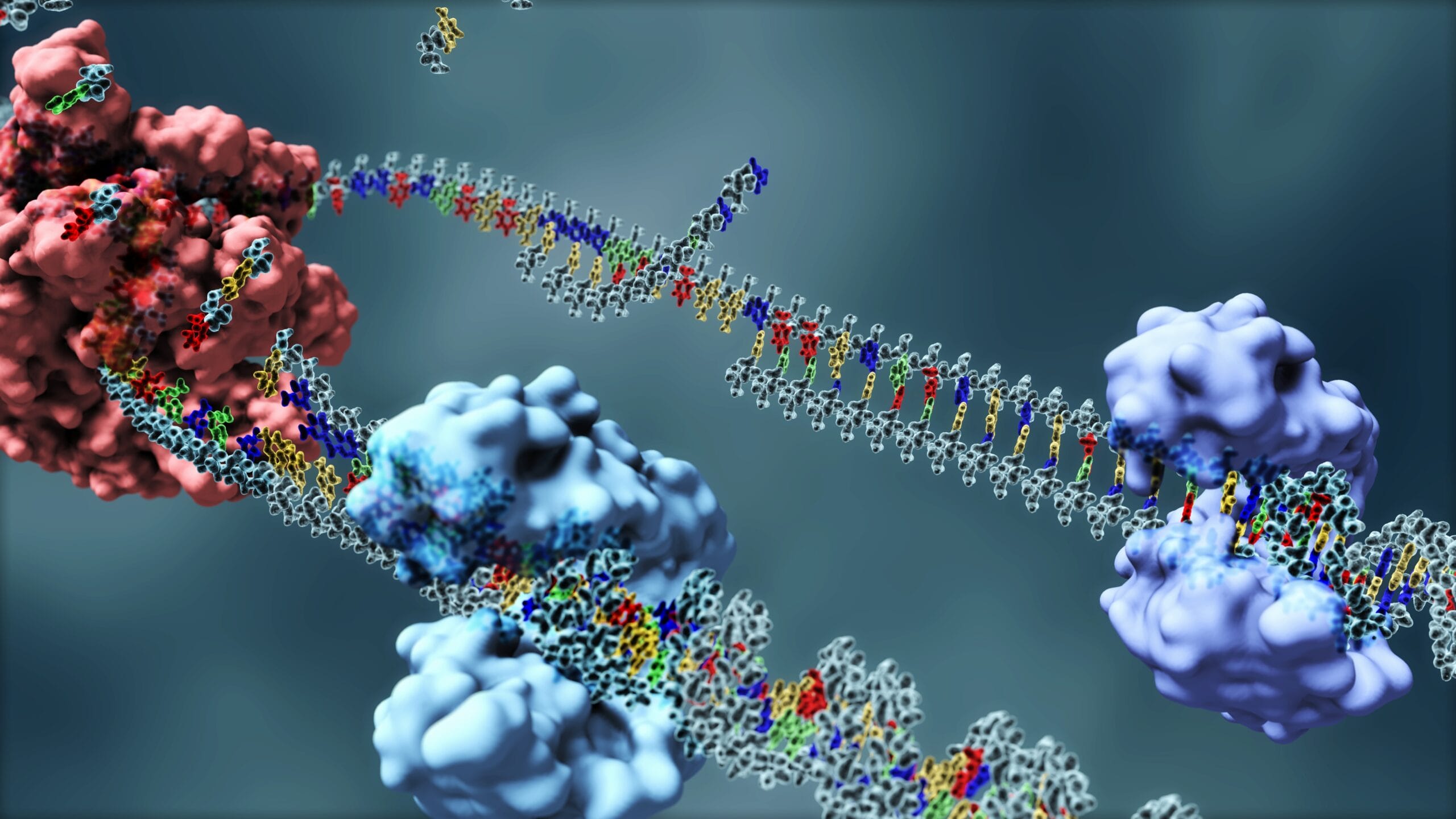
What is DNA replication?
DNA replication is the process by which a cell makes an exact copy of its DNA. This ensures that when a cell divides, each new cell receives identical genetic information. The process creates two identical DNA molecules from one original molecule.
During replication, a single-stranded chromosome produces an exact copy of itself, resulting in a double-stranded chromosome. This means the cell ends up with twice the amount of DNA it started with, which is essential for cell division.
Note
The term "replication" literally means "to make a copy," and in DNA replication, this copying must be absolutely precise to maintain genetic integrity across cell generations.
When does DNA replication occur?
DNA replication takes place in the nucleus when the cell is not actively dividing. This happens during a specific phase of the cell cycle when the cell is growing and preparing for division.
When a cell is not dividing, its DNA exists as long, thin fibres called chromatin. At this stage, each chromosome consists of a single strand of DNA. However, each single strand is actually made up of two strands of DNA joined together - this is the familiar double helix structure.
Note
Understanding Chromatin Structure
Chromatin is the relaxed, uncoiled form of DNA that allows the cell's machinery to access genetic information for processes like transcription and replication. This is in contrast to the highly condensed chromosomes visible during cell division.
The process of DNA replication
The process of DNA replication follows a precise sequence of steps that ensures accurate copying of genetic information. This process is called semi-conservative replication because each new DNA molecule contains one original strand and one newly synthesised strand.
Example
Worked Example: The Six Steps of DNA Replication
Step 1: Unwinding the double helix The DNA double helix unwinds and uncoils to expose the individual strands. This is necessary to access the genetic information stored in the base sequences.
Step 2: Strand separation An enzyme breaks the bonds between the base pairs, causing the two strands of the original double helix to separate. This creates two single strands that will serve as templates.
Step 3: Nucleotide preparation DNA nucleotides, which consist of a phosphate group, a sugar (deoxyribose), and a base, are present in the cytoplasm. These building blocks enter the nucleus and become available for the replication process.
Step 4: Base pairing The incoming bases attach to their complementary bases on the exposed template strands. This follows the base pairing rules: Adenine (A) pairs with Thymine (T), and Guanine (G) pairs with Cytosine (C).
Step 5: New strand formation Each strand of the DNA molecule acts as a template for forming new DNA strands. The process is catalysed by an enzyme called DNA polymerase, which helps join the nucleotides together.
Step 6: Completion Each new complementary strand rewinds to form a double helix. The result is two identical DNA double helixes, each containing:
- Half original DNA and half new DNA
- Identical genetic information to the original molecule
- The same sequence of bases as the starting molecule
Key features of DNA replication
Semi-conservative nature: Each new DNA molecule consists of one original strand and one newly synthesised strand. This ensures that genetic information is preserved accurately.
Template-directed: Each original strand serves as a template that determines the sequence of nucleotides in the new strand through complementary base pairing.
Enzyme-controlled: The process relies on specific enzymes, particularly DNA polymerase, to catalysee the formation of new DNA strands.
High fidelity: The base pairing rules ensure that replication is highly accurate, maintaining the integrity of genetic information.
Important
Critical Concept: Semi-Conservative Replication
The semi-conservative nature of DNA replication is fundamental to understanding inheritance. Because each new DNA molecule retains one original strand, there is a direct physical connection between parent and offspring DNA, ensuring genetic continuity while allowing for the doubling of genetic material necessary for cell division.
Summary
Key Points to Remember:
- DNA replication occurs in the nucleus when the cell is not dividing, preparing for cell division
- The process creates two identical DNA molecules from one original molecule through semi-conservative replication
- Each new DNA molecule contains one original strand and one newly synthesised strand
- Base pairing rules (A-T and G-C) ensure accurate copying of genetic information
- The enzyme DNA polymerase plays a crucial role in joining nucleotides to form new DNA strands