Respiration (LC 2027) (Leaving Cert Biology): Revision Notes
📚Revision Notes
Respiration
What is respiration?
Respiration is a catabolic reaction - a process that breaks down large molecules (like glucose) into smaller ones to release energy. All living organisms need energy for their metabolic activities, and they obtain this energy through respiration.
The process is carefully controlled by enzymes so that energy is released in small, manageable packets. This energy is typically stored in the form of ATP (adenosine triphosphate), which acts as the cell's energy currency.
Note
ATP stands for Adenosine Triphosphate and functions as the universal energy currency in all living cells. Think of ATP as the "energy coins" that cells use to pay for all their activities.
There are two main types of respiration:
- Aerobic respiration - uses oxygen
- Anaerobic respiration - does not use oxygen
Aerobic respiration
Aerobic respiration is the controlled release of energy from food using oxygen. Most living organisms obtain their energy through this process and are therefore called aerobic organisms.

Aerobic respiration is highly efficient, converting about 60% of the energy stored in glucose into ATP. This high efficiency occurs because the substrate (glucose) is completely broken down during the process.
Word equation for aerobic respiration
The basic word equation shows the overall process:
Example
Word Equation for Aerobic Respiration:
Glucose + Oxygen → Carbon dioxide + Water + Energy (ATP)
Balanced chemical equation
The complete chemical equation provides more detail:
Example
Balanced Chemical Equation:
Sources of reactants and products
Reactants needed:
- Glucose is obtained from:
- Plants producing their own glucose through photosynthesis
- Animals consuming plants and other animals
- Oxygen is obtained from:
- Plants releasing oxygen during photosynthesis
- Animals breathing oxygen from the air
Products formed:
- Carbon dioxide comes from the breakdown of glucose
- Water forms when hydrogen atoms from glucose combine with oxygen
- ATP forms when ADP gains energy and a phosphate group
Energy transfer for cellular activities
The energy released from glucose during respiration converts ADP (low-energy molecules) into ATP (high-energy molecules). ATP then provides energy for all cellular reactions throughout the organism.
Note
The ATP-ADP cycle is like a rechargeable battery system. When ATP releases its energy for cellular work, it becomes ADP. Respiration then "recharges" ADP back into ATP, creating a continuous energy cycle.
When ATP releases its stored energy, it converts back to ADP. This creates a continuous cycle where ADP is reformed into ATP through respiration, providing each cell with the energy it requires.
Anaerobic respiration
Anaerobic respiration is the controlled release of energy from food without using oxygen. This process is also known as fermentation.
Key characteristics of anaerobic respiration:
- Does not require oxygen (can occur when oxygen is present but doesn't use it)
- Takes place in the cytosol
- Releases only a small amount of energy
- Is much less efficient than aerobic respiration because glucose is only partially broken down
Important
Anaerobic respiration is much less efficient than aerobic respiration because glucose is only partially broken down, producing far less ATP per glucose molecule.
There are two common types of fermentation:
- Lactic acid fermentation
- Alcohol fermentation
Lactic acid fermentation
Lactic acid fermentation occurs in some bacteria, fungi, and in human muscle cells when oxygen supply is insufficient.
Example
Lactic Acid Fermentation Equation:
Glucose → 2 lactic acid + small amount of energy
This process is particularly important during intense exercise. When muscles work hard and the oxygen supply cannot meet energy demands, lactic acid fermentation provides additional energy. However, lactic acid can build up in muscles, sometimes causing cramps and stiffness.
The lactic acid is eventually transported to the liver and broken down when oxygen becomes available again.
Practical applications of lactic acid fermentation:
- Bacteria souring milk
- Bacteria producing sauerkraut from cabbage
- Cheese and yoghurt production
Alcohol fermentation
Alcohol fermentation occurs in bacteria, fungi (like yeast), and plants when deprived of oxygen.
Example
Alcohol Fermentation Equation:
Glucose → Ethanol + 2 carbon dioxide + small amount of energy
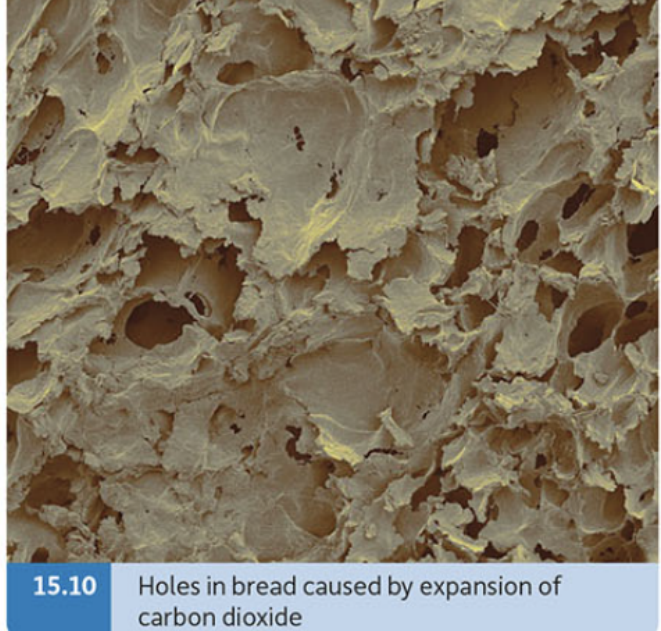
This process has been used for thousands of years in baking and alcohol production. In baking, yeast mixed with flour and liquid produces carbon dioxide gas, which creates bubbles that make bread rise and give it a light texture.
The two-stage process of respiration
Aerobic respiration is a complex two-stage process. Understanding these stages helps explain how cells extract maximum energy from glucose.
Note
Think of aerobic respiration as a two-part factory process: Stage 1 prepares the raw materials in the main factory floor (cytosol), while Stage 2 completes the manufacturing in the specialised powerhouse section (mitochondria).
Stage 1: Glycolysis
Glycolysis is the conversion of glucose into two molecules of pyruvic acid. This stage occurs in the cytosol of the cell.
Key features of glycolysis:
- Takes place in the cytosol
- Does not require oxygen (is anaerobic)
- Converts one six-carbon glucose molecule into two three-carbon pyruvic acid molecules
- Produces two ATP molecules
- Forms two molecules of NADH
- Creates pyruvic acid as an end-product
Example
Products of Stage 1 (Glycolysis):
- 2 Pyruvic acid molecules
- 2 ATP molecules
- 2 NADH molecules
Stage 2: Citric acid cycle and electron transport chain
Stage 2 is a complex series of reactions requiring oxygen. If oxygen is present, pyruvic acid enters the mitochondria where it undergoes the citric acid cycle.
The citric acid cycle process:
- Pyruvic acid loses a carbon dioxide molecule to form acetyl coenzyme A
- Acetyl coenzyme A enters a series of reactions called the citric acid cycle (also known as the Krebs cycle)
- The cycle produces ATP, NADH, and carbon dioxide
- NADH molecules then enter electron transport chains
Note
The citric acid cycle was first discovered by German biochemist Sir Hans Krebs (1900-1981), who won the Nobel Prize in 1953 for this groundbreaking work. This is why it's also called the Krebs cycle.
Products of the citric acid cycle (per acetyl CoA):
- One ATP molecule
- Several NADH molecules
- Two carbon dioxide molecules
Electron transport chains
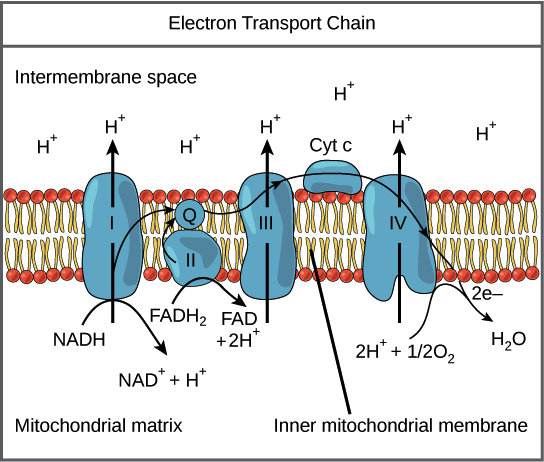
The electron transport chains are located within the inner membrane of mitochondria. These chains consist of protein complexes and mobile electron carriers that pass high-energy electrons from NADH.
How electron transport chains work:
- NADH molecules deliver high-energy electrons to the first protein complex
- Electrons pass from molecule to molecule along the chain, losing energy at each step
- The energy released pumps hydrogen ions across the inner mitochondrial membrane
- This creates a concentration gradient of hydrogen ions
- Hydrogen ions flow back through ATP synthase enzyme
- ATP synthase uses this energy to convert ADP and phosphate into ATP
- At the end of each chain, electrons combine with oxygen and hydrogen ions to form water
Important
The electron transport chains cannot function without oxygen. When oxygen is absent, electrons cannot flow along the chains, so no further ATP is produced. This is why aerobic organisms require oxygen to survive.
End-products of the electron transport chain:
- NAD⁺ (recycled for reuse)
- ATP (large amounts produced)
- Water
The structure of a mitochondrion facilitates respiration
Mitochondria are perfectly adapted for their role in aerobic respiration:
Note
Mitochondrial Adaptations for Respiration:
Mitochondria are often called the "powerhouses of the cell" because their structure is perfectly designed for energy production through aerobic respiration.
Key structural features:
- Double membrane - retains all biomolecules needed for respiration
- Own loop of DNA - produces some biomolecules needed for respiration
- Inner membrane with infoldings - contains electron transport chain molecules and increases surface area
- Matrix - contains many biomolecules including enzymes for the citric acid cycle
- Formation of acetyl coenzyme A - occurs in the space between membranes
Cellular locations for respiration
Understanding where different stages occur helps explain the process:
- Glycolysis - takes place in the cytosol
- Citric acid cycle - occurs inside (matrix of) the mitochondrion
- Electron transport chains - located in the inner membrane of mitochondrion
Summary: Aerobic vs anaerobic respiration
Aerobic respiration involves both stages:
- Stage 1 (glycolysis) is anaerobic and releases small amounts of energy
- Stage 2 includes citric acid cycle and electron transport chains
- Results in complete breakdown of glucose
- Electron transport chains are aerobic and release large amounts of energy
Anaerobic respiration involves only Stage 1:
- Only glycolysis reactions occur in the cytosol
- Glucose converts into two pyruvic acid molecules
- ATP and NADH are produced, but in much smaller quantities
- No Stage 2 reactions occur
- No further ATP is produced
In the absence of oxygen, pyruvic acid converts to either lactic acid (in animals and some bacteria) or ethanol and carbon dioxide (in plants and yeast). Both forms of anaerobic respiration are types of fermentation.
Remember!
Summary
Key Points to Remember:
- Respiration is a catabolic reaction that breaks down glucose to release energy in the form of ATP
- Aerobic respiration uses oxygen and is highly efficient (~60% energy conversion), while anaerobic respiration doesn't use oxygen and is less efficient
- Two-stage process: Stage 1 (glycolysis) occurs in cytosol, Stage 2 (citric acid cycle and electron transport) occurs in mitochondria
- Fermentation types: Lactic acid fermentation (muscles, bacteria) and alcohol fermentation (yeast, baking, brewing)
- Mitochondria are perfectly adapted for respiration with their double membrane structure and electron transport chains in the inner membrane