Other Body Parts Involved in Digestion (Leaving Cert Biology): Revision Notes
📚Revision Notes
Other Body Parts Involved in Digestion
The digestive system relies on several important organs that work alongside the main digestive tract. These accessory organs play crucial roles in breaking down food and absorbing nutrients. Let's explore how the liver, gall bladder, pancreas, and other structures contribute to effective digestion.
The liver
The liver serves as the body's largest internal organ and performs numerous functions that support digestion. This remarkable organ processes nutrients, produces essential substances, and helps maintain the body's chemical balance.
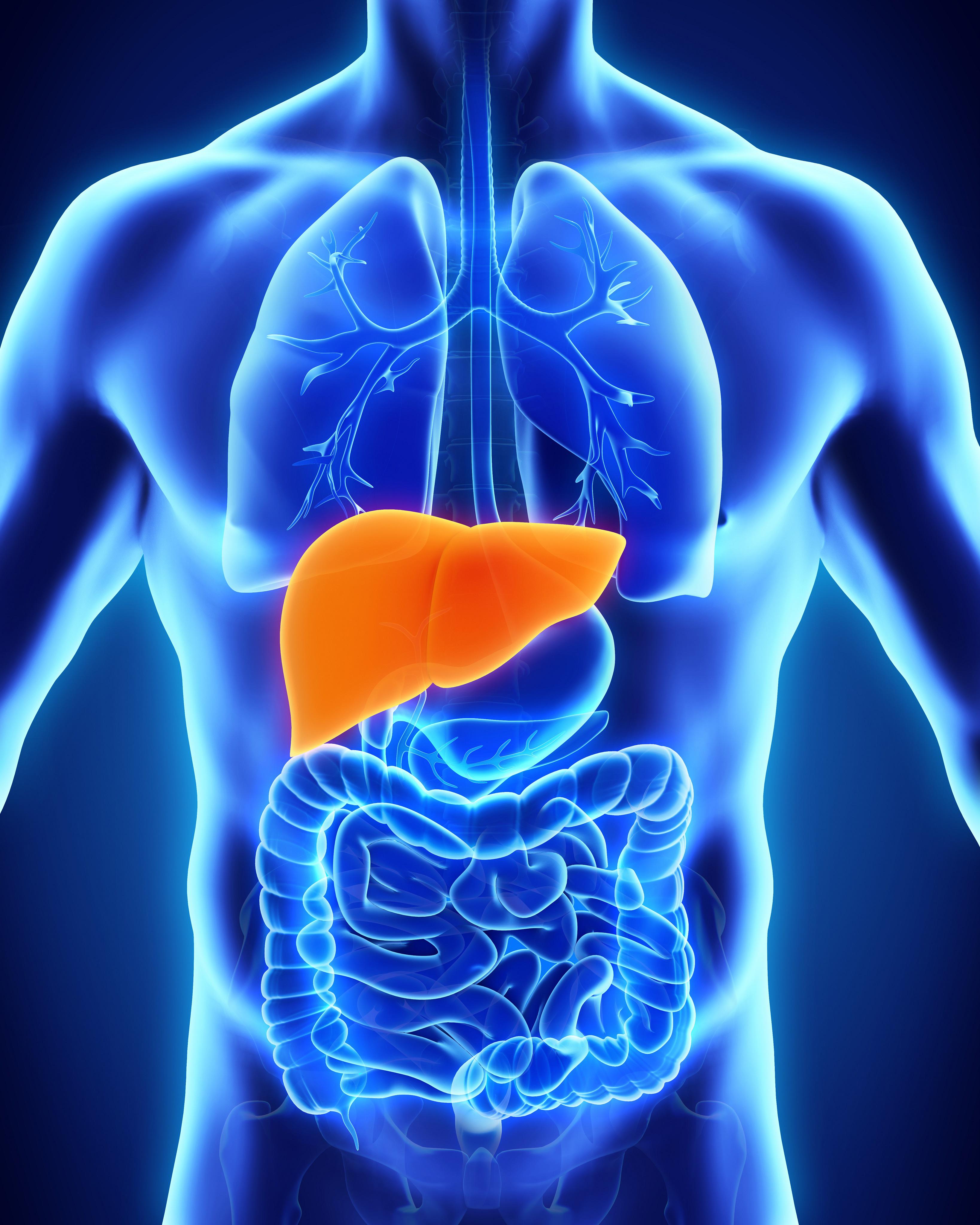
Key digestive functions of the liver
The liver contributes to digestion in several important ways:
- Breaking down red blood cells - The liver processes worn-out red blood cells, recycling their components
- Producing bile - Essential for fat digestion and absorption
- Detoxifying harmful substances - The liver neutralises toxins, alcohol, and drugs that could damage the body
- Storing nutrients - Including glycogen (from glucose), vitamins, and minerals
- Manufacturing proteins - Such as those involved in blood clotting and hormone production
Note
The liver performs over 300 different functions in the body, making it one of the most versatile organs. Its ability to regenerate damaged tissue also makes it unique among internal organs.
Bile production and function
The liver's most significant digestive role involves producing bile. This yellow-green liquid contains water, bile salts, and bile pigments created from broken-down red blood cells. Bile performs several crucial functions in fat digestion.
The gall bladder
The gall bladder acts as a storage and concentration centre for bile produced by the liver. This small, pear-shaped organ sits beneath the liver and connects to the duodenum through the bile duct.
How bile works in digestion
Bile doesn't contain digestive enzymes, but it performs mechanical digestion through emulsification. This process works like washing-up liquid on greasy dishes:
- Bile salts break down large fat globules into tiny droplets
- Increases surface area for lipase enzymes to work more effectively
- Neutralises acidic chyme coming from the stomach using sodium hydrogen carbonate
- Helps eliminate waste products such as bile pigments, which give faeces their brown colour
Gall bladder problems
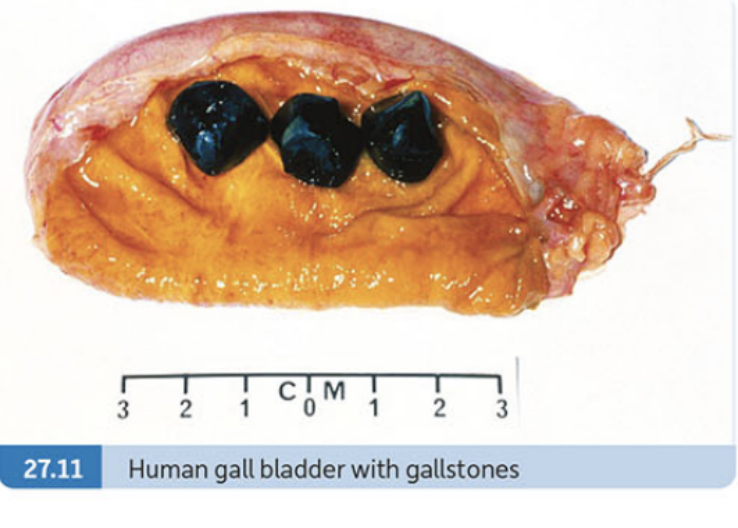
Sometimes bile becomes too concentrated, leading to the formation of gallstones. These hard deposits can block the bile duct, causing pain and digestive problems, particularly after eating fatty foods.
Important
Gallstone Warning Signs
Gallstones can cause severe pain, especially after consuming fatty meals. Symptoms include sharp pain in the upper right abdomen, nausea, and digestive discomfort. This condition often requires medical attention to prevent serious complications.
The pancreas
The pancreas functions as both an endocrine and exocrine gland, producing digestive enzymes and hormones. Its digestive role centres on neutralising stomach acid and breaking down all major food groups.
Pancreatic juice composition
The pancreas produces pancreatic juice containing several key components:
- Sodium hydrogen carbonate - Neutralises acidic chyme from the stomach, creating optimal pH conditions for enzyme function
- Digestive enzymes - Including lipase, amylase, and various proteases
- Enzyme activation - Many pancreatic enzymes become active only when they reach the duodenum
Note
Enzyme Activation Process
Many pancreatic enzymes are produced in inactive forms to prevent them from digesting the pancreas itself. They only become active when they reach the alkaline environment of the duodenum, where the proper pH triggers their activation.
Key pancreatic enzymes
The pancreas produces three main types of digestive enzymes:
Lipase - Breaks down fats (lipids) into fatty acids and glycerol Pancreatic amylase - Converts starch into maltose sugar Proteases - Break down proteins into smaller peptides
Summary of digestive enzymes and their sources
Understanding where different enzymes come from and how they work helps explain the coordinated nature of digestion. The table below summarises the key digestive substances and their properties:
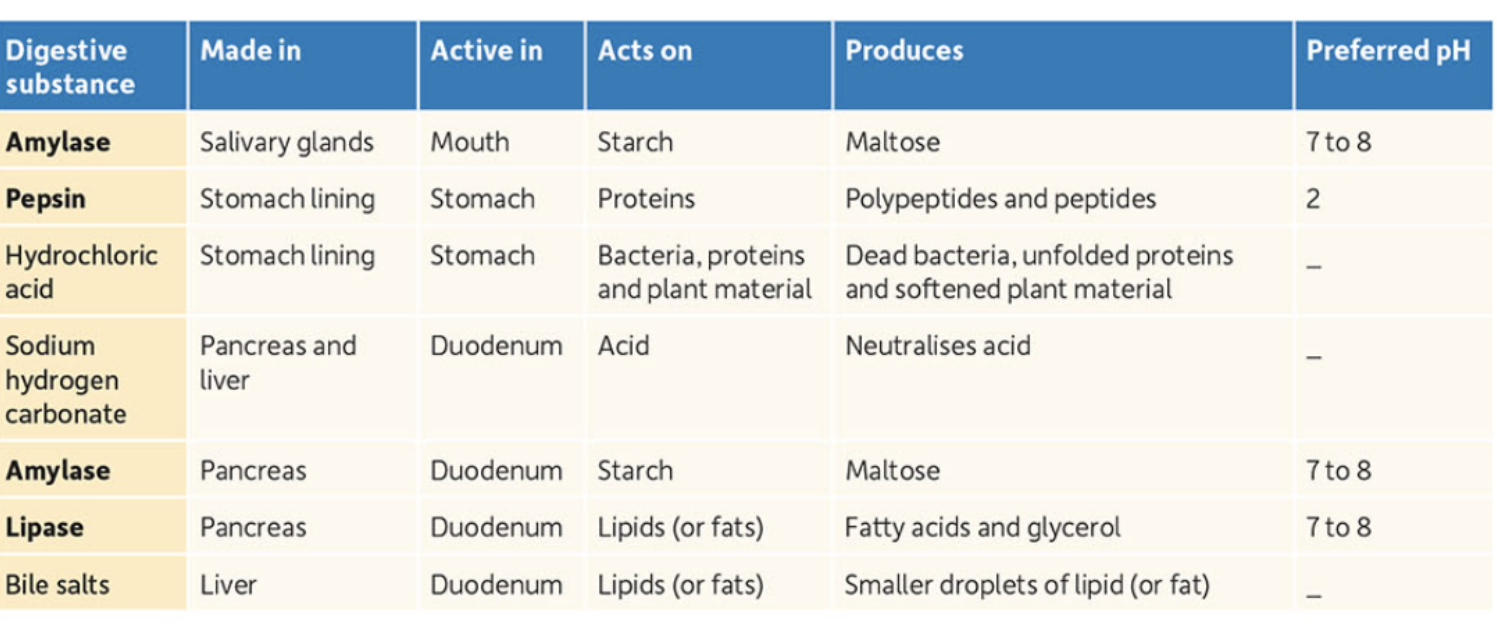
Each enzyme works optimally at specific pH levels. For example, pepsin functions best in the acidic stomach environment (pH 2), while pancreatic enzymes require the alkaline conditions (pH 7-8) created by sodium hydrogen carbonate in the duodenum.
The ileum and nutrient absorption
The ileum represents the longest section of the small intestine, specialising in nutrient absorption. This remarkable structure demonstrates several adaptations that maximise its absorptive capacity.
Structural adaptations for absorption
The ileum's inner surface contains thousands of finger-like projections called villi, each covered with even smaller projections called microvilli. These adaptations dramatically increase the surface area available for absorption.
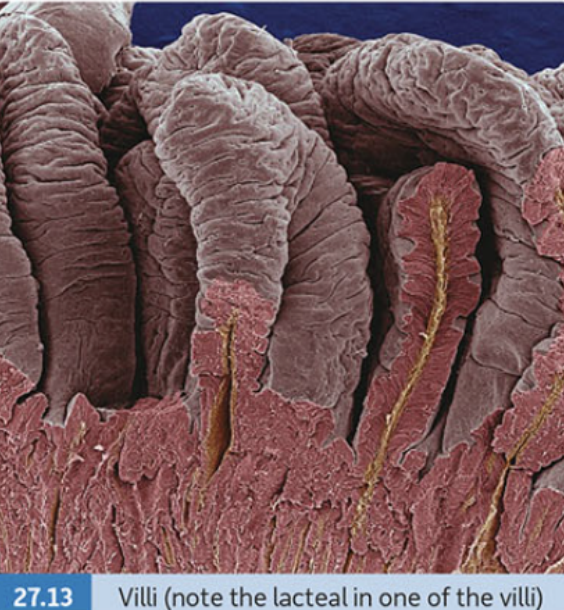
Key adaptations include:
- Extensive length - About 5.5 metres in adults
- Numerous villi - Thousands of projections increase surface area
- Microvilli - Millions of tiny projections on each villus
- Single cell thickness - Allows rapid diffusion of nutrients
- Rich blood supply - Capillaries transport absorbed nutrients
- Lacteals - Specialised lymphatic vessels transport fats
Note
Surface Area Maximisation
The combination of length, villi, and microvilli increases the ileum's surface area to approximately 200 square metres - about the size of a tennis court! This massive surface area ensures efficient nutrient absorption from digested food.
Absorption processes
Different nutrients follow different absorption pathways:
Water-soluble nutrients (amino acids, glucose, vitamins, minerals) pass directly into blood capillaries through diffusion and active transport.
Fat-soluble nutrients require special handling. Fatty acids and glycerol enter the villi, where they're reassembled into fat globules, coated with proteins, and transported via lacteals to the bloodstream.
Connection to the liver
The ileum connects directly to the liver through the hepatic portal vein. This arrangement ensures that absorbed nutrients travel straight to the liver for processing, storage, or distribution before entering general circulation.
The large intestine and gut microbiome
The large intestine or colon performs the final stages of digestion, focusing primarily on water absorption and housing beneficial bacteria.
Structure and function
The large intestine measures about 1.5 metres long and 6 centimetres in diameter. Despite being shorter than the small intestine, its larger diameter gives it the "large intestine" name. Food typically spends 10-20 hours here, compared to just a few hours in the small intestine.
The large intestine consists of several sections:
- Caecum - Connection point with small intestine
- Appendix - Small finger-shaped projection (function not fully understood)
- Colon - Main section for water absorption
- Rectum - Storage area for faeces
- Anus - Exit point
The gut microbiome
The large intestine houses trillions of beneficial bacteria forming the gut microbiome. These microorganisms perform several important functions.

Note
Beneficial Gut Bacteria Functions
The gut microbiome is like having a beneficial factory in your digestive system. These microscopic helpers work around the clock to support your health in ways scientists are still discovering.
- Break down undigested plant material (especially cellulose fibres)
- Produce beneficial substances including some vitamins
- Protect against harmful bacteria by competing for resources
- Support immune system function
- Aid in waste processing
Problems can occur if waste moves too quickly (diarrhoea) or too slowly (constipation) through the colon, affecting water absorption and gut bacteria balance.
Summary
Key Points to Remember:
- The liver produces bile which emulsifies fats, making them easier for lipase enzymes to digest
- The gall bladder stores and concentrates bile until it's needed in the duodenum
- The pancreas produces digestive enzymes and neutralises stomach acid with sodium hydrogen carbonate
- The ileum's villi and microvilli maximise absorption surface area for nutrients to enter the bloodstream
- The large intestine absorbs water and houses beneficial gut bacteria that aid digestion and support health