DNA and RNA (LC 2026) (Leaving Cert Biology): Revision Notes
📚Revision Notes
Protein Synthesis
- Genes control cells by producing enzymes.
- Enzymes are proteins.
- To make the correct protein, amino acids must be assembled in the correct order in ribosomes.
- This process involves:
- The genetic code in DNA being transcribed to mRNA.
- The code on mRNA being translated into the correct sequence of amino acids.
Steps of Protein Synthesis:
- Initiation
- Transcription
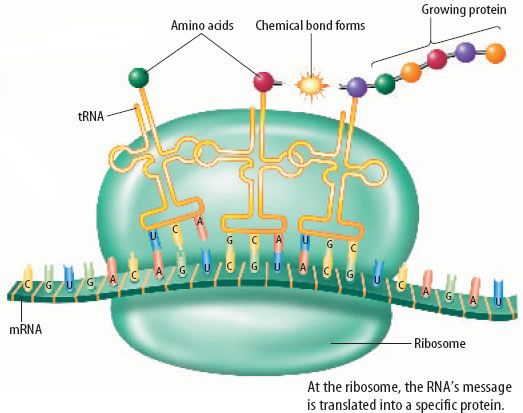
- Translation
Note
Transcription occurs in the nucleus. Translation occurs in the ribosomes.
1. Initiation:
The part of the DNA double helix that codes for the protein unwinds.
2. Transcription:
Note
Transcription is the making of mRNA using a DNA template.
- Occurs in the nucleus.
- Complementary RNA bases attach to the exposed DNA bases.
- The RNA bases are joined together by RNA polymerase to form messenger RNA (mRNA).
- mRNA moves from the nucleus to the cytoplasm.
- This process copies information from DNA to RNA.
3. Translation:
Note
Translation uses the mRNA code to form protein.
- Occurs in the ribosome.
- mRNA attaches to the ribosome, which is made of ribosomal RNA (rRNA).
- Transfer RNA (tRNA) molecules in the cytoplasm are attracted to the mRNA.
- Each tRNA carries a specific amino acid.
- Triplets (codons) on the mRNA strand attract complementary triplets (anti-codons) on the tRNA molecules.
- The amino acids are detached from their tRNA molecules and bonded together to form the new protein.
- The protein folds into the correct 3D shape to allow it to function properly.