Touch - The Skin (Leaving Cert Biology): Revision Notes
📚Revision Notes
Touch - The Skin
- The main function of the skin is to act as a physical barrier, preventing pathogens from entering the body.
- Other functions include:
- Sensing stimuli (e.g., pain, touch, temperature)
- Regulating temperature
- Vitamin D production
- Fat storage
Note
The integumentary system includes the skin, hair, nails, and glands. It protects the body, regulates temperature, and provides sensory information.
The Structure of the Skin
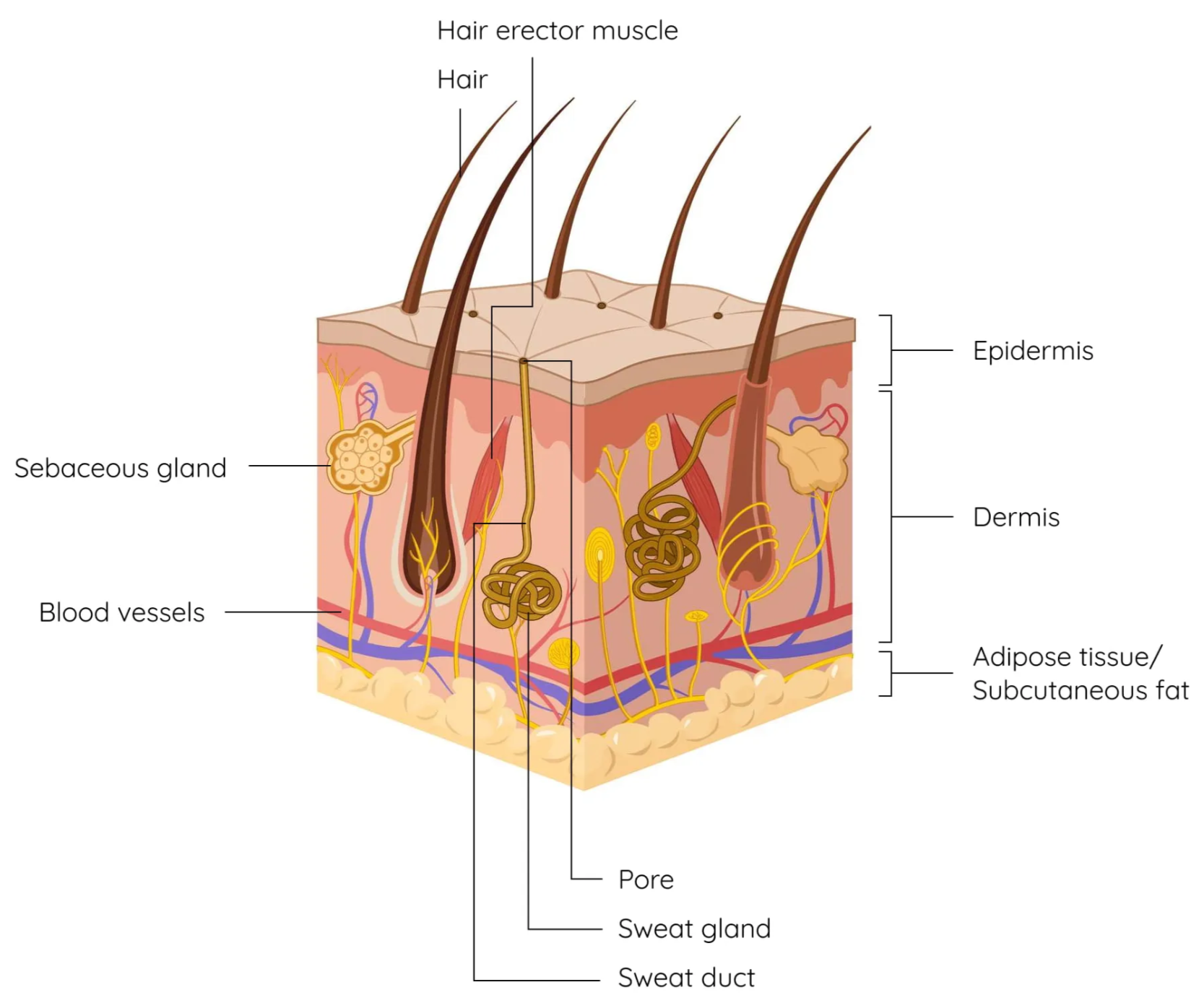
| Layer/Part | Description |
|---|---|
| Epidermis | Outermost layer of skin, made up of three sub-layers: |
| 1. Cornified layer: composed of dead cells, forming an impermeable barrier. | |
| 2. Granular layer: contains keratin, a protein that strengthens the skin. | |
| 3. Malpighian layer: contains melanin-producing cells that give skin its colour and protect against UV rays. | |
| Dermis | Located beneath the epidermis. Contains collagen and elastin, providing strength and elasticity to the skin. |
| Sweat glands | Secrete sweat to help cool the body. These are exocrine glands. |
| Sebaceous glands | Secrete sebum, an oily substance that prevents the skin from drying out. Excess sebum can block pores and allow bacteria to multiply. |
| Hair follicles | Attached to erector muscles. When cold, these muscles contract, causing the hair to stand up and trap a layer of warm air close to the skin for insulation. |
| Blood vessels | Can widen (vasodilation), allowing more blood to enter the skin, causing redness or blushing. This helps regulate temperature. |
| Adipose tissue | Stores fat for insulation and energy. |