Animal Nutrition (LC 2026) (Leaving Cert Biology): Revision Notes
📚Revision Notes
Balanced Human Diet
Importance of a Balanced Diet
- Provides the right amounts of carbohydrates, proteins, fats, vitamins, minerals, fibre, and water needed for health.
- Supplies energy for daily activities and body functions.
- Supports growth and repair of tissues.
- Helps maintain a healthy immune system, reducing risk of illness.
- Prevents deficiency diseases (e.g., scurvy from lack of vitamin C, rickets from lack of vitamin D).
Negative Effects of an Unbalanced Diet
- Too little food → weight loss, weakness, poor immunity, nutrient deficiencies.
- Too much food (especially fats and sugars) → obesity, type 2 diabetes, heart disease, high blood pressure.
- Low protein intake → stunted growth, muscle loss, weakened repair of tissues.
- Vitamin and mineral deficiencies → anaemia (iron), weak bones (calcium/vitamin D), poor vision (vitamin A).
- Lack of fibre → constipation, increased risk of bowel disease.
A balanced diet contains the correct proportions of the following 7 components:
- Proteins
- Fats
- Carbohydrates
- Vitamins
- Minerals
- Water
- Fibre
The total amount of food required depends on factors such as:
- Age
- Activity levels
- Gender
- Health
Food Groups
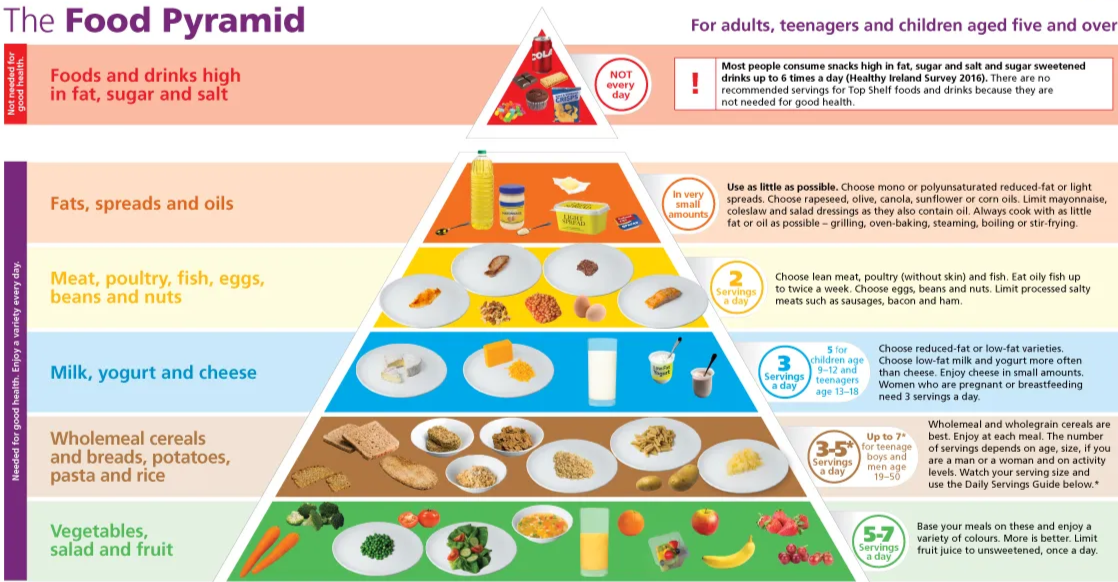
Food is divided into 4 groups with recommended daily servings:
- Cereals, bread and potatoes (6)
- Fruit and vegetables (4)
- Milk, cheese and yoghurt (4)
- Meat, fish and beans (2)
Note
The food pyramid in Ireland is a guide that helps people make healthy eating choices by showing the recommended servings of different food groups for a balanced diet.
Key Nutrient Breakdown
- Carbohydrates → broken down into glucose and transported to the liver via the hepatic portal vein.
- Protein → broken down into amino acids and transported to the liver via the hepatic portal vein.
- Lipids → broken down into fatty acids and glycerol and transported via the lymphatic system (lacteals).