Sex Determination in Humans (Leaving Cert Biology): Revision Notes
📚Revision Notes
Sex Determination in Humans
Introduction to chromosomes in humans
Every human has 46 chromosomes arranged in 23 pairs. These chromosomes contain the genetic information that determines our characteristics. Understanding how sex is determined requires us to first understand the different types of chromosomes in our cells.
Note
Somatic cells are all the body cells that don't produce sex cells (gametes). Examples include muscle cells and liver cells. Each somatic cell contains the full set of 46 chromosomes - one complete set from each parent.
The 46 chromosomes can be divided into two main types:
- Autosomes: These are 22 pairs (44 chromosomes) that control general body characteristics
- Sex chromosomes: These are 1 pair (2 chromosomes) that determine whether you're male or female
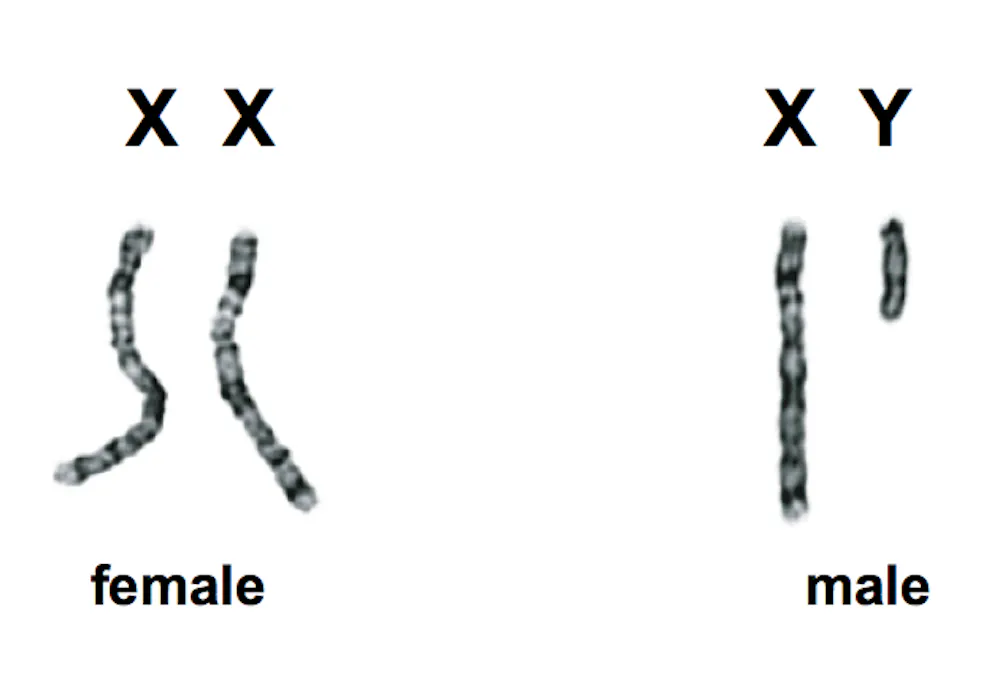
The X and Y chromosomes
The sex chromosomes are called X and Y chromosomes because of their distinctive shapes when viewed under a microscope. These chromosomes have very different characteristics:
The X chromosome:
- Much larger than the Y chromosome
- Contains approximately 1,000 genes
- Carries genes for many important body functions
- Both males and females have at least one X chromosome
The Y chromosome:
- Much smaller than the X chromosome
- Contains fewer than 100 genes
- Primarily carries genes that determine male characteristics
- Only found in males
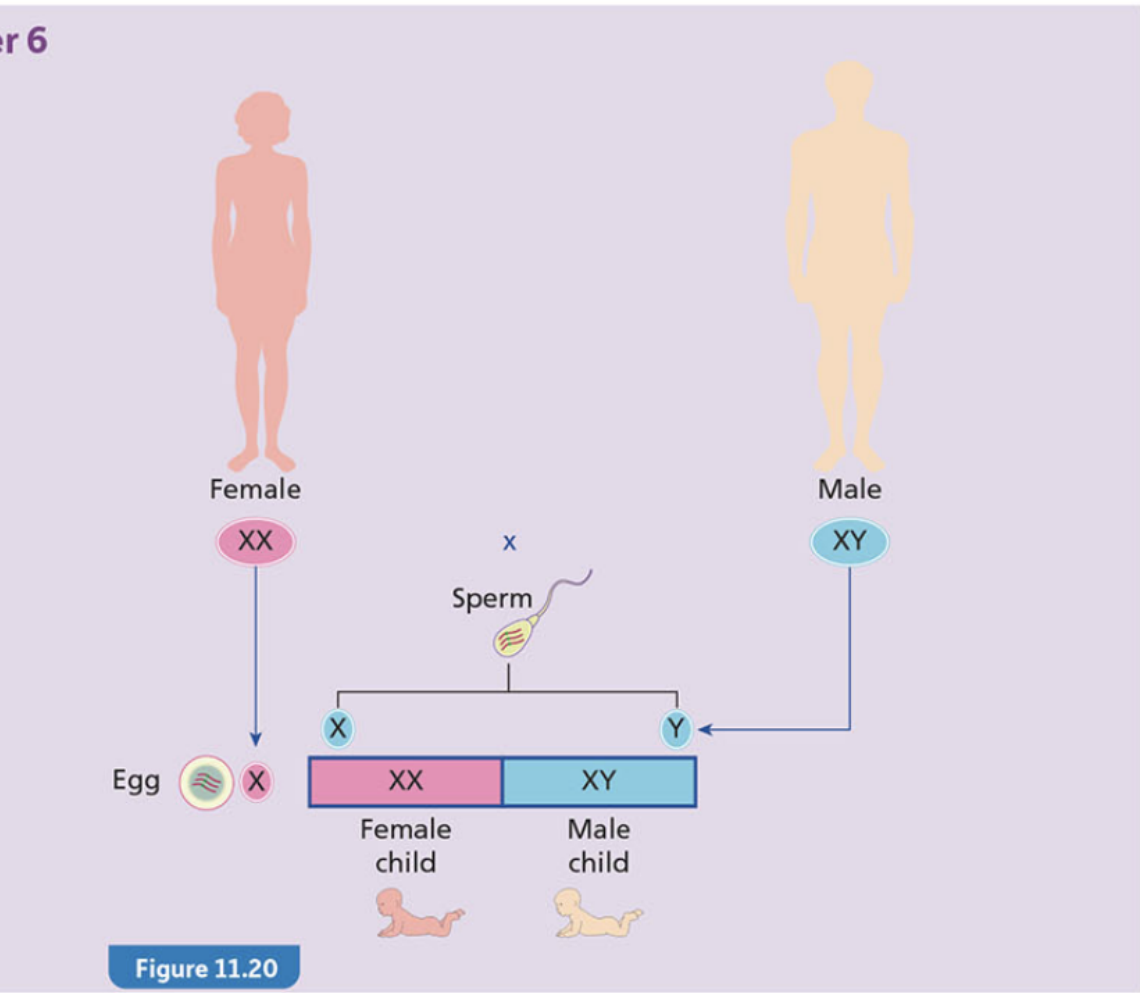
How sex is determined
Sex determination in humans follows a simple but crucial pattern:
Important
- Females have two X chromosomes (XX)
- Males have one X and one Y chromosome (XY)
This arrangement has two important consequences:
- The male parent determines the sex of the child
- The ratio of male to female births should theoretically be equal (1:1)
Why the father determines sex
The process of sex determination depends entirely on which type of sperm fertilises the egg:
From the mother:
- All egg cells carry an X chromosome
- This is because females only have X chromosomes (XX)
From the father:
- Sperm cells carry either an X chromosome OR a Y chromosome
- This is because males have both types (XY)
Example
Worked Example: Sex Determination Process
Step 1: Mother contributes
- Egg cell always contains: X
Step 2: Father contributes (two possibilities)
- X-carrying sperm: X + X = XX = female child
- Y-carrying sperm: X + Y = XY = male child
Step 3: Conclusion Since only the father can contribute either X or Y, he determines the child's sex.
Since the father is the only parent who can contribute either an X or Y chromosome, he determines the sex of the child. The mother can only ever contribute an X chromosome.
Key exam points
These concepts are essential for understanding human genetics and frequently appear in examinations:
Note
- Sex is determined at the moment of fertilisation
- The sex chromosome combination determines sex: XX = female, XY = male
- Males are called the heterogametic sex (different sex chromosomes)
- Females are called the homogametic sex (same sex chromosomes)
- Approximately 50% of sperm carry X chromosomes and 50% carry Y chromosomes
- This should result in roughly equal numbers of male and female births
Remember!
Summary
Key Points to Remember:
- Females are XX, males are XY - this is the fundamental pattern of human sex determination
- The father determines the child's sex because only he can provide either an X or Y chromosome
- The X chromosome is larger and carries many more genes than the smaller Y chromosome
- Sex chromosomes are just one pair out of the 23 pairs of chromosomes humans have
- Sex determination happens at fertilisation when the sperm meets the egg