Immunity (LC 2027) (Leaving Cert Biology): Revision Notes
📚Revision Notes
B Cells and T Cells
The adaptive immune system relies on two main types of white blood cells called lymphocytes: B cells and T cells. These specialised immune cells work together to provide targeted protection against specific pathogens and create long-lasting immunity.
B cells
B cells are lymphocytes that develop and mature in the bone marrow. Once mature, they travel through the lymphatic system to patrol the body for foreign invaders. Each B cell is uniquely designed to recognise just one specific antigen, making them highly specialised defenders.
Note
The specificity of B cells is remarkable - each individual B cell can only recognise and respond to one particular antigen. This means the body needs millions of different B cells to protect against the vast array of potential pathogens.
Types of B cells
There are two main types of B cells, each with distinct roles:
Plasma B cells are the antibody factories of the immune system. When a B cell encounters its specific antigen, it rapidly multiplies and transforms into plasma B cells. These cells dedicate themselves to producing large quantities of Y-shaped proteins called antibodies that can neutralise the specific pathogen.
Memory B cells are the body's long-term security system. Most B cells die once an infection is cleared, but some remain alive for many years as memory cells. If the same pathogen invades again, these memory B cells quickly spring into action, rapidly producing plasma B cells and antibodies.
How B cells work
When a B cell encounters its matching antigen, it undergoes a remarkable transformation. The cell multiplies rapidly, creating an army of identical plasma B cells. Each plasma cell becomes a protein-producing machine, churning out thousands of specific antibodies designed to target that particular pathogen.
The antibodies work by:
- Attaching to specific parts of the pathogen called antigens
- Neutralising the pathogen so it cannot cause harm
- Marking pathogens for destruction by other immune cells like phagocytes
- Activating the complement system to destroy pathogens
Secondary immune response
The presence of memory B cells makes subsequent infections much more manageable. This secondary response is more effective because it:
Important
Secondary Immune Response Advantages:
- Produces antibodies much faster (within 5 days rather than 14 days)
- Creates much larger amounts of antibodies
- Provides greater numbers of antibodies than the first infection
This is why you rarely get the same illness twice and why vaccines are so effective at preventing disease.
T cells
T cells begin their life in the bone marrow but travel to the thymus gland to complete their development and training. The thymus is most active during early childhood, which is why it's crucial for children to develop strong immune systems early in life.
Note
Unlike B cells, T cells don't produce antibodies. Instead, they use different strategies to fight infections, working directly with infected cells and coordinating immune responses.
Types of T cells
There are four main types of T cells, each with specialised functions:
Helper T cells
Helper T cells act as the coordinators of the immune system. They recognise antigens displayed on the surface of other white blood cells, particularly macrophages that have engulfed pathogens.
Helper T cells perform two crucial functions:
- Stimulate B cell multiplication: They encourage B cells that recognise the same antigen to multiply and form plasma cells, boosting antibody production
- Activate killer T cells: They stimulate killer T cells to reproduce and become more effective at destroying infected cells
Killer T cells
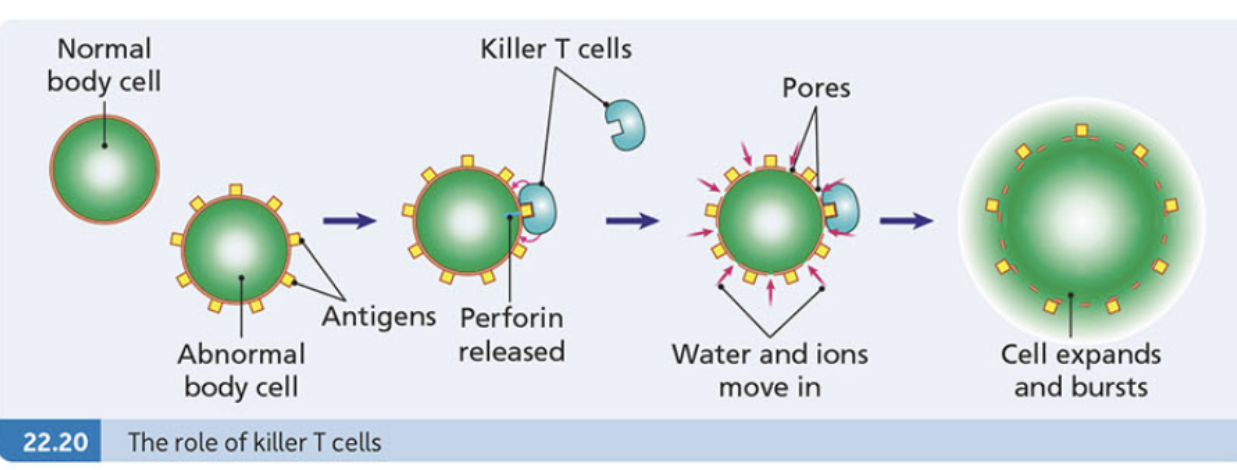
Killer T cells (also called cytotoxic T cells) are the assassins of the immune system. They specifically target and destroy abnormal body cells, including:
- Virus-infected cells
- Cancer cells
- Other abnormal body cells
Example
Worked Example: How Killer T Cells Destroy Infected Cells
Step 1: Recognition - Killer T cells recognise antigens on abnormal body cells
Step 2: Attachment - They attach to the target cell
Step 3: Release - They release a protein called perforin
Step 4: Pore formation - Perforin creates pores (holes) in the target cell's membrane
Step 5: Cell destruction - Water and ions flow into the cell through these pores
Step 6: Final result - The abnormal cell swells and eventually bursts, destroying it
This targeted approach ensures that only abnormal cells are destroyed while healthy cells remain unharmed.
Suppressor T cells
Suppressor T cells act as the immune system's brakes. They prevent excessive immune responses that could damage healthy tissues. These cells:
- Are stimulated by specific antigens
- Grow more slowly than other T cells
- Become active after the pathogen has been destroyed
- Turn off the immune response when the infection is over
- Inhibit plasma B cells, helper T cells, and killer T cells
Memory T cells
Memory T cells provide long-term cellular immunity. Like memory B cells, they:
- Survive for many years after an infection
- Can survive for decades in some cases
- Quickly stimulate memory B cells and killer T cells if the same pathogen returns
- Provide rapid, effective responses to previously encountered threats
How B cells and T cells work together
B cells and T cells don't work in isolation - they collaborate closely to mount effective immune responses. Helper T cells play a particularly important role in coordinating this cooperation by stimulating both B cells and killer T cells when they encounter antigens.
This teamwork ensures that the body can respond to threats through multiple pathways:
- Antibody-mediated immunity (B cells producing antibodies)
- Cell-mediated immunity (T cells directly destroying infected cells)
The memory cells from both systems work together to provide long-lasting protection against future infections, forming the basis of immunity and vaccination effectiveness.
Summary
Key Points to Remember:
-
B cells produce antibodies and develop in the bone marrow, while T cells develop in the thymus and work directly with infected cells
-
Plasma B cells are antibody factories, while memory B cells provide long-term immunity by remembering previous infections
-
Helper T cells coordinate immune responses, killer T cells destroy abnormal cells, suppressor T cells turn off responses, and memory T cells provide cellular immunity
-
The secondary immune response is faster and stronger than the primary response thanks to memory cells
-
B cells and T cells work together to provide both antibody-mediated and cell-mediated immunity, creating comprehensive protection against pathogens