The Brain (Leaving Cert Biology): Revision Notes
📚Revision Notes
The Brain
Introduction to the brain
The human brain is an incredibly complex organ containing approximately 90 billion nerve cells. This remarkable structure is well-protected by the bony skull (cranium) which acts as a natural helmet for your most important organ.
Surrounding the brain are three protective layers called meninges. Between the inner two layers of these meninges flows a special fluid called cerebrospinal fluid (CSF). This fluid serves two important purposes: it cushions the brain like a shock absorber and helps transport nutrients and waste products between the blood and brain tissue.
Note
Did you know? Meningitis is a serious condition where the meninges become inflamed. This disease is more common in children and can be caused by viral or bacterial infections, with bacterial meningitis being the more dangerous form.
Structure of the brain
The brain can be divided into several distinct regions, each with specialised functions that work together to control everything from your thoughts to your heartbeat.
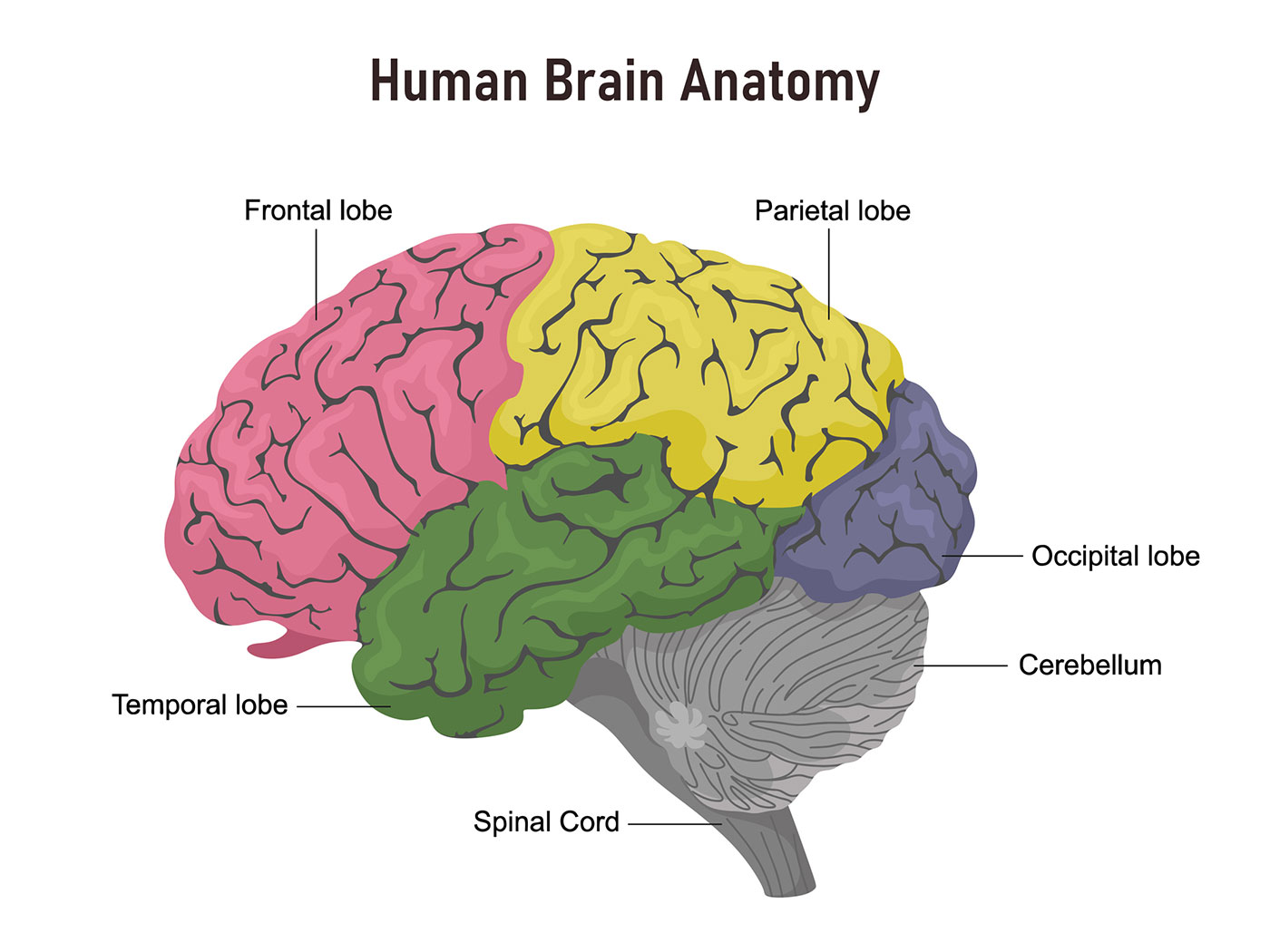
The major regions of the brain include the cerebrum, cerebellum, thalamus, hypothalamus, medulla oblongata, and the attached pituitary gland.
The cerebrum
The cerebrum is the largest part of your brain, containing about 75% of all nerve cells. It's divided into two halves called the left and right cerebral hemispheres.
Important
An interesting feature of the cerebrum is that it controls the opposite side of your body - the right hemisphere controls the left side of your body, while the left hemisphere controls the right side. This is why a stroke affecting one side of the brain can paralyse the opposite side of the body.
The two hemispheres communicate with each other through a bridge of nerve fibres called the corpus callosum. This allows the two sides of your brain to share information and work together effectively.
The outer layer of the cerebrum is called the cerebral cortex. This layer appears grey because it contains the cell bodies of nerve cells, while the inner part appears white because it contains the nerve fibres (axons) that connect different brain regions.
The cerebral cortex controls many important functions:
- Voluntary muscle movements - conscious movements you choose to make
- The five senses - processing information from sight, hearing, touch, taste, and smell
- Learning - acquiring new knowledge and skills
- Emotions - feelings and emotional responses
- Memory - storing and retrieving information
- Understanding - comprehending language and concepts
The cerebellum
The cerebellum is the second largest section of the brain and is located at the back (hindbrain). Despite being much smaller than the cerebrum, it has a very heavily folded surface which increases its surface area significantly.
The cerebellum is responsible for:
- Muscular coordination - ensuring smooth, refined movements
- Balance - maintaining your posture and equilibrium
Example
Example: Learning to Walk
When you first learn to walk, every step requires conscious thought and effort from your cerebrum. However, once the cerebellum takes over, walking becomes an involuntary process that doesn't require conscious control. The same principle applies to activities like riding a bicycle or playing a musical instrument - they become automatic through cerebellar learning.
An important feature of the cerebellum is that it makes learned movements become automatic or involuntary.
The thalamus
The thalamus is roughly the size of a walnut and sits below the cerebrum. Think of it as the brain's sorting office - it acts as a sorting centre by receiving incoming sensory information and directing these impulses to the correct parts of the brain for processing.
The hypothalamus
The hypothalamus lies just below the thalamus, as its name suggests ("hypo" means below). Despite its small size, it has crucial functions:
- Regulating homeostasis - maintaining the body's internal environment by monitoring factors like body temperature, appetite, thirst, water balance, salt levels, and blood pressure
- Hormone regulation - working closely with the pituitary gland to control the production of many important hormones
The medulla oblongata
The medulla is located at the top of the spinal cord where it connects to the brain. This vital region controls essential involuntary actions that keep you alive, including:
- Breathing rate and pattern
- Heart rate and blood pressure
- Swallowing and coughing reflexes
- Salivation, vomiting, and sneezing
Note
These functions continue automatically even when you're asleep or unconscious, which is why the medulla is sometimes called the "life centre" of the brain.
The pituitary gland
Although technically not part of the brain itself, the pituitary gland is closely connected to the hypothalamus and plays a crucial role in the body's control systems. This small gland produces numerous hormones that regulate various body functions. The relationship between the hypothalamus and pituitary gland is so important that it will be covered in more detail in Chapter 20.
Summary
Key Points to Remember:
- The human brain contains approximately 90 billion nerve cells and is protected by the skull and three layers of meninges
- The cerebrum is the largest brain region, controlling voluntary movements, senses, learning, memory, and emotions, with each hemisphere controlling the opposite side of the body
- The cerebellum coordinates movement and balance, making learned actions become automatic and involuntary
- The thalamus acts as the brain's sorting centre, directing sensory information to appropriate brain regions
- The hypothalamus maintains homeostasis and links the nervous system to the endocrine system through the pituitary gland
- The medulla oblongata controls vital involuntary functions like breathing, heart rate, and blood pressure that keep us alive