Nutrient Cycling (LC 2027) (Leaving Cert Biology): Revision Notes
📚Revision Notes
Nutrient Cycling
Introduction to nutrient cycling
Nutrient cycling refers to the continuous movement and transformation of essential elements through ecosystems. Unlike energy, which flows in one direction from the sun, nutrients are recycled and reused repeatedly. These natural recycling processes are called biogeochemical cycles because they involve both biological organisms and geological processes.
Note
Key Difference: While energy flows through ecosystems in one direction (from sun to producers to consumers), nutrients cycle continuously through the environment, making them available for reuse by living organisms.
While many different nutrients cycle through ecosystems, two of the most important cycles for life on Earth are the carbon cycle and the nitrogen cycle. Understanding these cycles is crucial because they support all life on our planet and are being significantly affected by human activities.
The carbon cycle
What is the carbon cycle?
The carbon cycle describes how carbon moves between different reservoirs in the environment. Carbon is the fundamental building block of all organic molecules, making it essential for life. The cycle ensures that carbon is continuously available for living organisms while maintaining balance in the atmosphere.
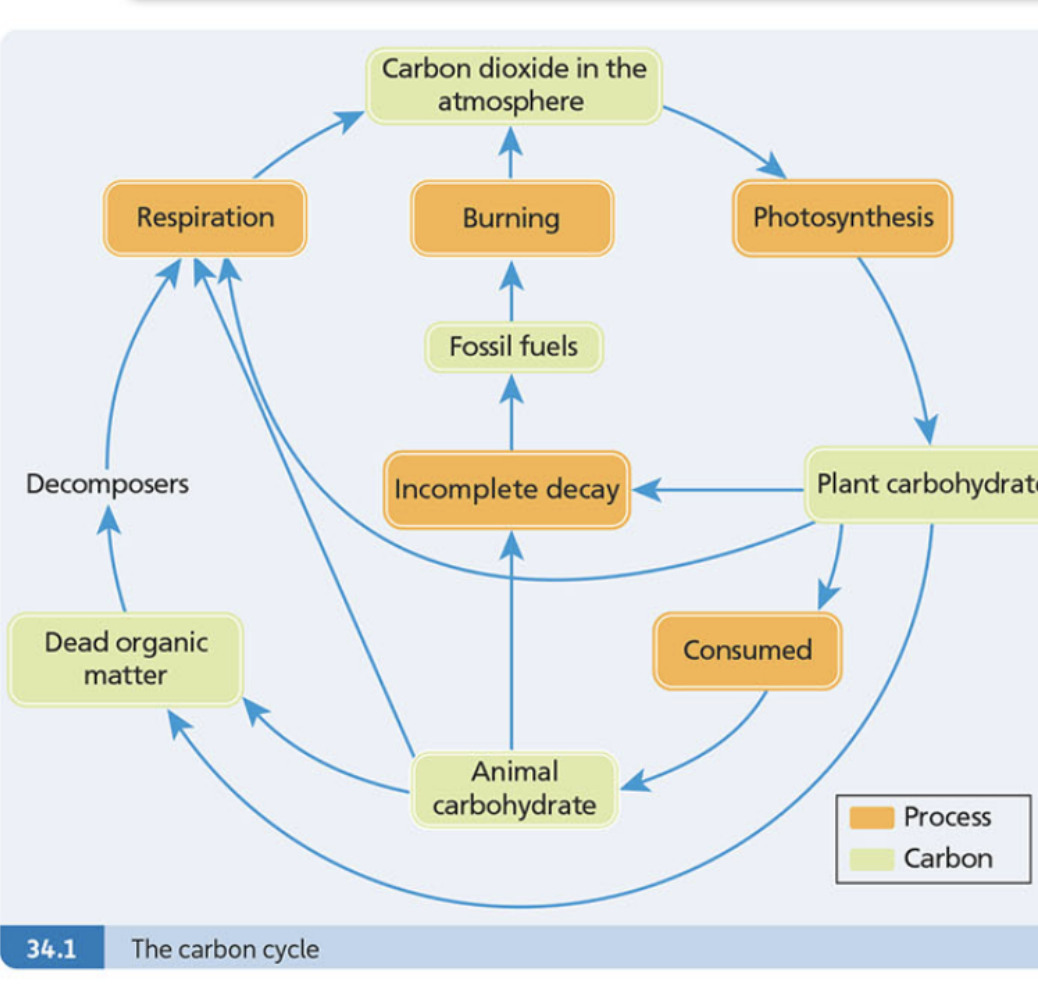
The carbon cycle involves several key processes:
Photosynthesis removes carbon dioxide from the atmosphere when plants use it to make carbohydrates. This process converts inorganic carbon into organic compounds that can be used by living things.
Respiration releases carbon dioxide back to the atmosphere when organisms break down organic molecules for energy. This happens in both plants and animals as they carry out cellular respiration.
Decomposition occurs when bacteria and fungi break down dead organic matter, releasing stored carbon back to the atmosphere as carbon dioxide.
Combustion (burning) of fossil fuels and organic matter rapidly releases large amounts of stored carbon as carbon dioxide.
Role of organisms in the carbon cycle
Different groups of organisms play specific roles in moving carbon through ecosystems:
- Plants remove carbon dioxide from the atmosphere through photosynthesis and store it as carbohydrates in their tissues. When they respire or die, this carbon can be released back to the atmosphere.
- Animals obtain carbon by eating plants or other animals. They release carbon dioxide through respiration and when they produce waste or die.
- Decomposers (bacteria and fungi in the soil) break down dead plant and animal material, releasing the stored carbon back to the atmosphere. This process is vital for recycling nutrients and preventing the accumulation of dead organic matter.
Carbon sinks and sources
Understanding the balance between carbon storage and release is crucial for climate science:
Note
Carbon Sinks vs Sources
Carbon sinks absorb more carbon from the atmosphere than they release. Examples include growing forests, oceans, soil organic matter, and some types of wetlands. These act like natural carbon storage systems, helping to remove excess CO₂ from the atmosphere.
Carbon sources release more carbon to the atmosphere than they absorb. Examples include fossil fuel combustion, deforestation, volcanic eruptions, and some natural processes like respiration when it exceeds photosynthesis.
Climate change and the carbon cycle
Rising greenhouse gas concentrations
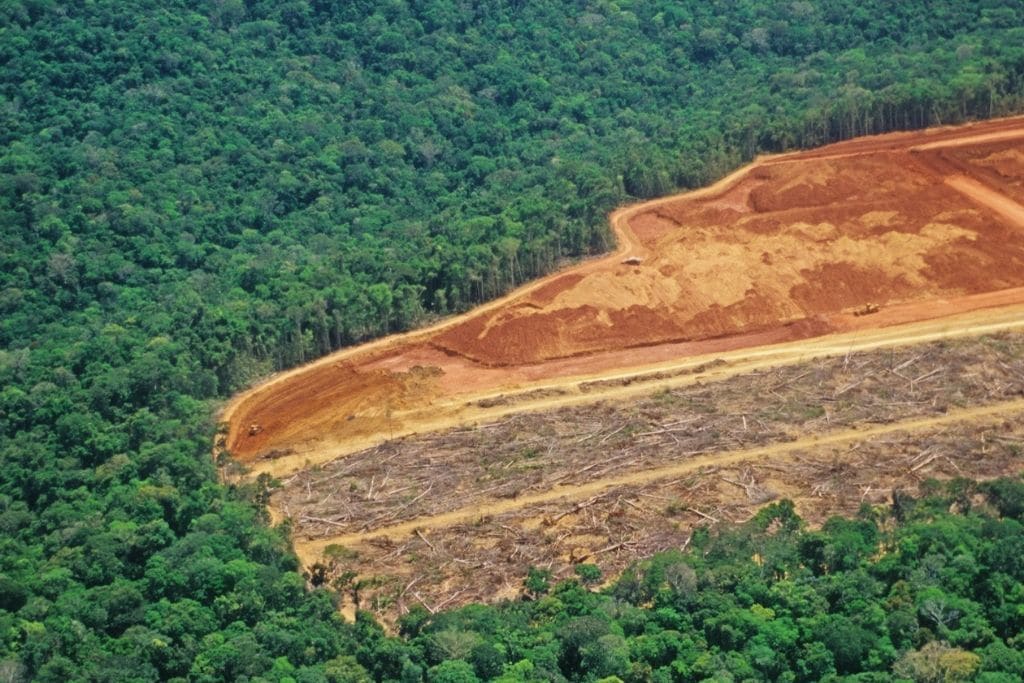
Carbon dioxide and methane are both greenhouse gases, meaning they trap heat in Earth's atmosphere. Over the past 200 years, atmospheric carbon dioxide concentrations have risen from about 0.028% to over 0.042%. This increase is primarily due to human activities, particularly burning fossil fuels and deforestation.
Methane is another important greenhouse gas. About 40% of methane emissions come from natural sources, but human activities now produce the majority. Agricultural practices, particularly cattle farming, contribute significantly to methane emissions. Cattle and other ruminants produce methane through digestion, with cows releasing about 90% of their methane through burping.
Effects of climate change on soil microorganisms
As global temperatures rise, soil ecosystems face significant changes:
Important
Critical Climate Impacts on Soil Systems:
-
Increased microbial activity: Warmer soils lead to increased activity of decomposer microorganisms, potentially releasing more stored carbon and methane from soil organic matter.
-
Permafrost melting: In arctic regions, permanently frozen soil (permafrost) contains vast stores of carbon. As this melts due to warming, it releases additional CO₂ and methane to the atmosphere.
-
Altered soil structure: Increased decomposition rates may change soil composition and reduce its ability to store carbon effectively.
-
Changed plant-microbe relationships: Warmer conditions may affect the beneficial relationships between plants and soil microorganisms.
Biological strategies to reduce greenhouse gases
Biology offers several approaches to help reduce atmospheric greenhouse gas concentrations:
- Reforestation: Planting more trees increases the amount of carbon dioxide absorbed from the atmosphere and stored in plant biomass.
- Genetic modification: Scientists are developing plants that can store more carbon in their root systems or absorb carbon dioxide more efficiently.
- Algae cultivation: Encouraging algae growth, particularly phytoplankton in oceans, can absorb significant amounts of carbon dioxide.
- Soil improvement: Better soil management practices can increase the amount of carbon stored in soil organic matter.
- Biofuel production: Using plant materials and biological waste to create energy-rich biofuels can replace some fossil fuel use.
The nitrogen cycle
Why is the nitrogen cycle important?
Nitrogen is essential for making proteins, DNA, RNA and other vital biomolecules. However, nitrogen gas (N₂) makes up about 78% of the atmosphere but is largely unusable by most living organisms. The nitrogen cycle converts nitrogen between different chemical forms, making it available for use by living things.
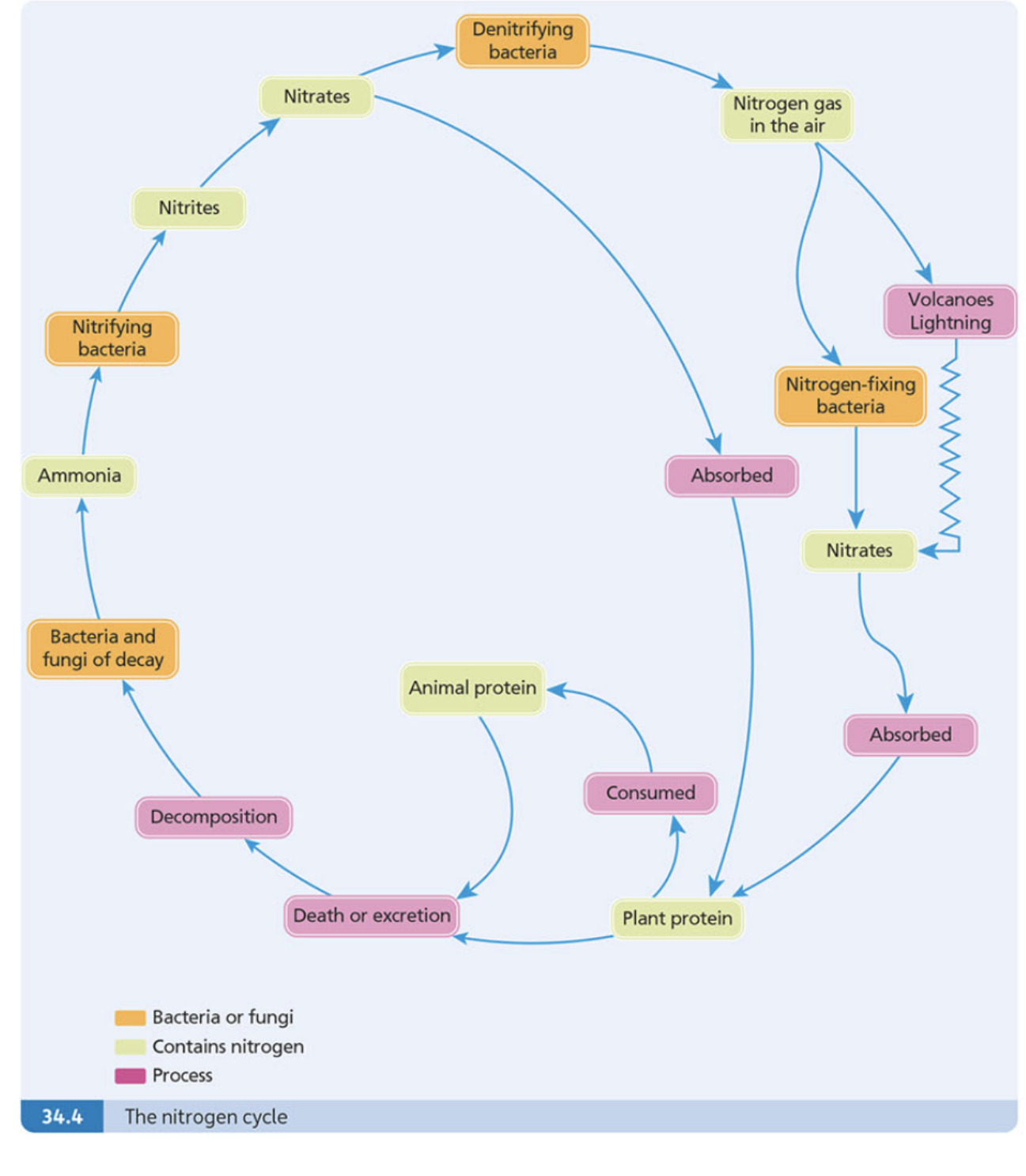
Nitrogen fixation
Nitrogen fixation converts atmospheric nitrogen gas into nitrogen compounds that plants can use. This process can occur through:
- Lightning and volcanic activity: These natural processes provide the energy needed to break the strong bonds in nitrogen gas molecules.
- Industrial processes: Humans produce nitrogen fertilisers through industrial nitrogen fixation.
- Bacterial nitrogen fixation: Specialised bacteria convert nitrogen gas into ammonia, which can then be used by plants.
Note
Symbiotic Nitrogen Fixation
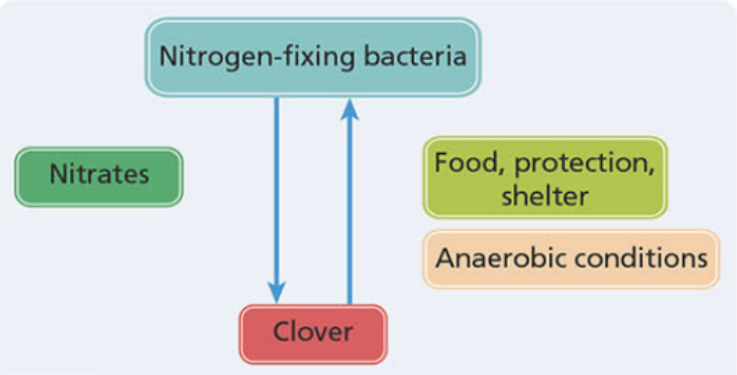
Many nitrogen-fixing bacteria form symbiotic relationships with plants, particularly legumes (such as clover, peas, and beans). The bacteria live in special structures called root nodules on the plant's roots. This relationship benefits both organisms: the bacteria receive food, protection and shelter from the plant, while the plant gets access to fixed nitrogen compounds.

Important
The nitrogen fixation process requires anaerobic conditions (absence of oxygen) because the enzymes involved are sensitive to oxygen. The root nodules provide this oxygen-free environment.
Decomposition
When organisms die or produce nitrogen-containing waste (such as urea in urine), decomposer bacteria and fungi break down these materials. This process releases nitrogen compounds like ammonia back into the soil, making nitrogen available for recycling.
Nitrification
Nitrification is a two-step process carried out by nitrifying bacteria in the soil:
Example
Worked Example: The Nitrification Process
Step 1: Ammonia oxidation Specialised bacteria convert ammonia (NH₃) and ammonium ions (NH₄⁺) into nitrites (NO₂⁻)
Step 2: Nitrite oxidation Different bacteria then convert nitrites into nitrates (NO₃⁻)
Result: Nitrates are the form of nitrogen most easily absorbed and used by plants.
Nitrifying bacteria are chemosynthetic, meaning they obtain energy from these chemical reactions rather than from sunlight.
Denitrification
Denitrification completes the nitrogen cycle by converting nitrates back into nitrogen gas. This process is carried out by denitrifying bacteria, which are anaerobic and live in waterlogged soils or deep soil layers where oxygen levels are low.
Note
While denitrification is a natural part of the nitrogen cycle, it can also represent a loss of soil fertility when too much nitrogen is converted back to gas form and lost from agricultural systems.
Role of organisms in the nitrogen cycle
The soil microbiome plays a central role in nitrogen cycling:
- Nitrogen-fixing bacteria: Convert atmospheric nitrogen into compounds plants can use
- Decomposer bacteria and fungi: Break down organic waste and dead material, releasing nitrogen compounds
- Nitrifying bacteria: Convert ammonia into nitrates that plants can easily absorb
- Denitrifying bacteria: Convert nitrates back to nitrogen gas, completing the cycle
- Plants: Absorb nitrates from soil and incorporate nitrogen into proteins and other biomolecules
- Animals: Obtain nitrogen by consuming plants or other animals, then excrete nitrogen waste
Ethical and sustainability issues
Environmental problems from intensive agriculture
Modern intensive farming practices can disrupt natural nutrient cycles:
Important
Major Environmental Concerns:
-
Soil nutrient depletion: Continuously removing crops without adequate replacement can exhaust soil nutrients, making soil less productive over time.
-
Over-fertilisation: Using excessive amounts of artificial fertilisers can lead to eutrophication when excess nutrients run off into waterways.
Eutrophication process and impacts
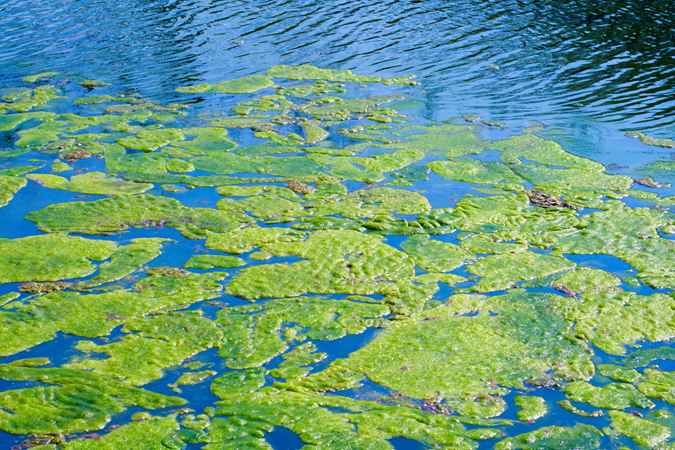
When excess fertilisers or organic waste enter water bodies, they cause rapid algae growth (algal blooms).
Example
Worked Example: The Eutrophication Process
Step 1: Excess nutrients promote explosive algae growth
Step 2: Algae cover the water surface, blocking sunlight for underwater plants
Step 3: When algae die, decomposer bacteria use oxygen to break them down
Step 4: Oxygen levels in the water drop dramatically
Step 5: Fish and other aquatic animals die from lack of oxygen
Step 6: Biodiversity in the ecosystem is severely reduced
Result: Complete ecosystem collapse in affected water bodies
Global sustainability challenges
Several nutrient-related issues affect global sustainability:
- Limited phosphorus supplies: Unlike carbon and nitrogen, phosphorus cannot be replaced and global supplies are finite.
- Greenhouse gas emissions: Fertiliser production and use, along with intensive farming practices, contribute significantly to climate change.
- Soil degradation: Poor farming practices can lead to soil erosion and loss of fertile farmland.
Summary
Key Points to Remember:
-
The carbon cycle moves carbon between the atmosphere, living organisms, and the environment through photosynthesis (removal) and respiration/burning (release).
-
The nitrogen cycle converts nitrogen gas into usable forms for organisms through the actions of specialised bacteria performing nitrogen fixation, nitrification, and denitrification.
-
Microorganisms are essential for both cycles - they decompose organic matter, fix nitrogen, and carry out chemical conversions that make nutrients available to other organisms.
-
Human activities are disrupting natural nutrient cycles through fossil fuel burning, intensive agriculture, and over-fertilisation, leading to climate change and eutrophication.
-
Sustainable practices like reforestation, better soil management, and reduced fertiliser use can help restore balance to these vital ecological cycles.