Fruit, False Fruit and Seedless Fruits (Leaving Cert Biology): Revision Notes
📚Revision Notes
Fruit, False Fruit and Seedless Fruits
Fruit
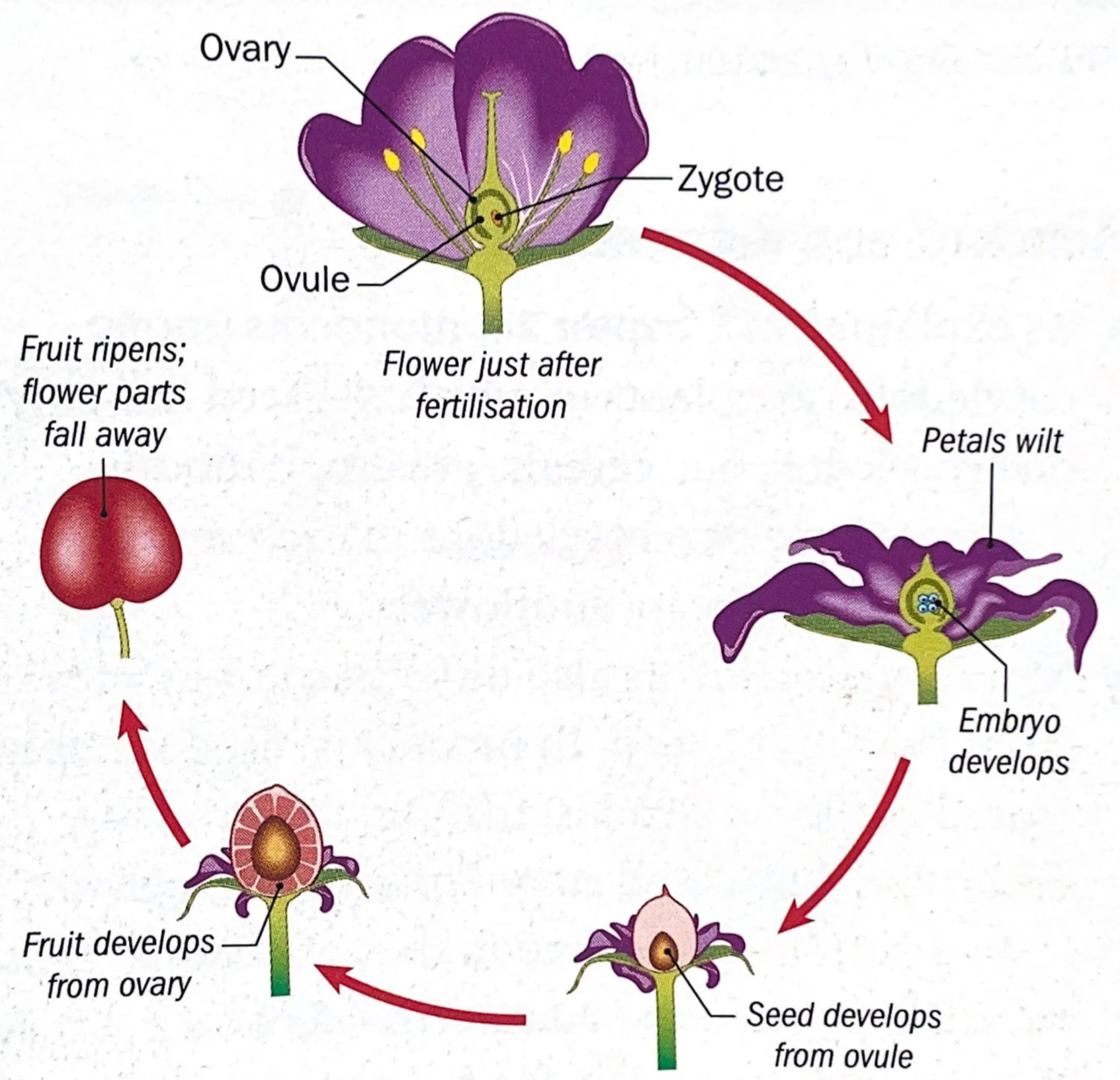
- Fruits develop after fertilisation, as the ovary enlarges to protect and nourish the seeds.
- The ovules develop into seeds.
- As the seed develops, the surrounding ovary becomes the fruit.
- Fruit formation is stimulated by growth regulators (auxins) produced by seeds.
- Types of fruits:
- Succulent fruits swell with water as well as food (e.g., plums, oranges).
- Dry fruits just swell with food (e.g., beans).
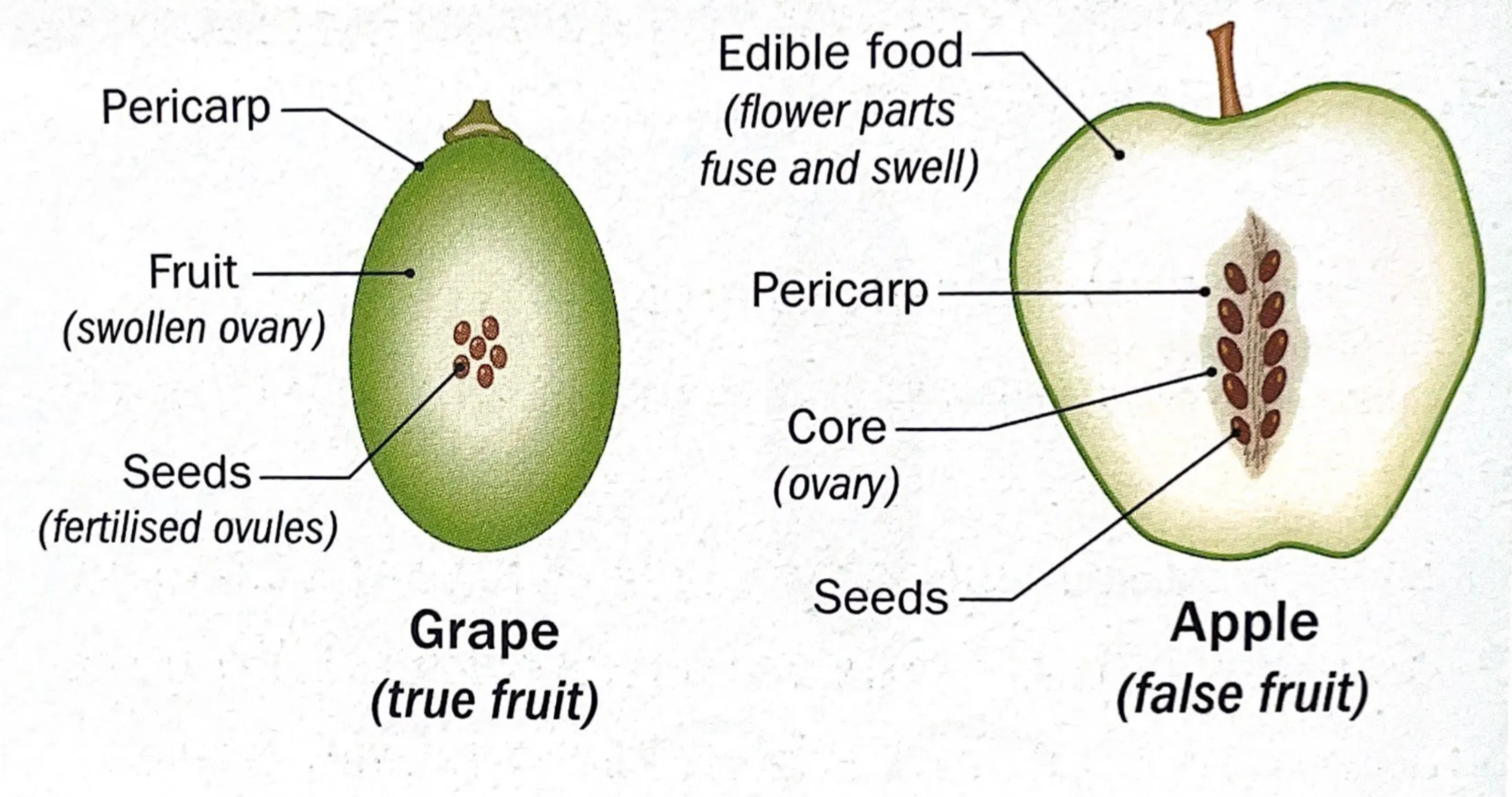
- The wall of the ovary becomes the wall of the fruit, known as the pericarp.
- Fruits are designed to protect the seed and to help in seed dispersal.
- Once the fruit forms, the rest of the flower parts die and fall away.
False Fruits
- Some fruits like apples, pears, and strawberries are known as false fruits.
- They do not develop from the ovary.
- False fruits develop when the receptacle swells with food and water.
Seedless Fruits
- Seedless fruits are fruits produced without seeds. It is a form of virgin birth (no fertilisation).
- This process is called parthenocarpy.
- Bananas, oranges, grapes, and pineapples can be produced without seeds.
- Seedless fruits can be formed genetically naturally or by breeding programmes.
- Seedless fruit formation:
- Natural parthenocarpy:
- Occurs naturally due to genetic factors.
- Examples: bananas, pineapples.
- Artificial parthenocarpy:
- Triggered by spraying plants with growth regulators (e.g., auxins, gibberellins).
- Examples: Seedless cherries, peppers, apricots.
- Commercial applications:
- Ethene gas is used to remove the green colour from fruits and ripen the fruits.
- Carbon dioxide stops fruits from ripening, allowing long-term storage (e.g., over winter).