Pollination (Leaving Cert Biology): Revision Notes
📚Revision Notes
Pollination
Note
Pollination is the transfer of pollen from an anther to a stigma of a flower from the same species.
Note
Self pollination means the anther and the carpel are on the same plant. This leads to self fertilisation, which produces offspring that are weaker.
Note
Cross pollination means that the anther and carpel are on different plants. This leads to cross fertilisation which produces stronger and healthier offspring.
Methods of Cross Pollination
- Wind
- Animal (including insects)
| Feature | Wind Pollination | Animal/Insect Pollination |
|---|---|---|
| Petals | • Small • Green • No scent • Nectar | • Large • Coloured • Scented • Nectar |
| Pollen | • Huge amounts • Small • Light | • Smaller amounts • Large • Sticky |
| Anthers | • Large • Outside petals | • Smaller • Inside petals |
| Stigmas | • Large • Feathery • Outside petals | • Smaller • Rounded • Inside petals |
| Examples | • Grasses • Conifers • Oak | • Daisies • Buttercups • Primroses |
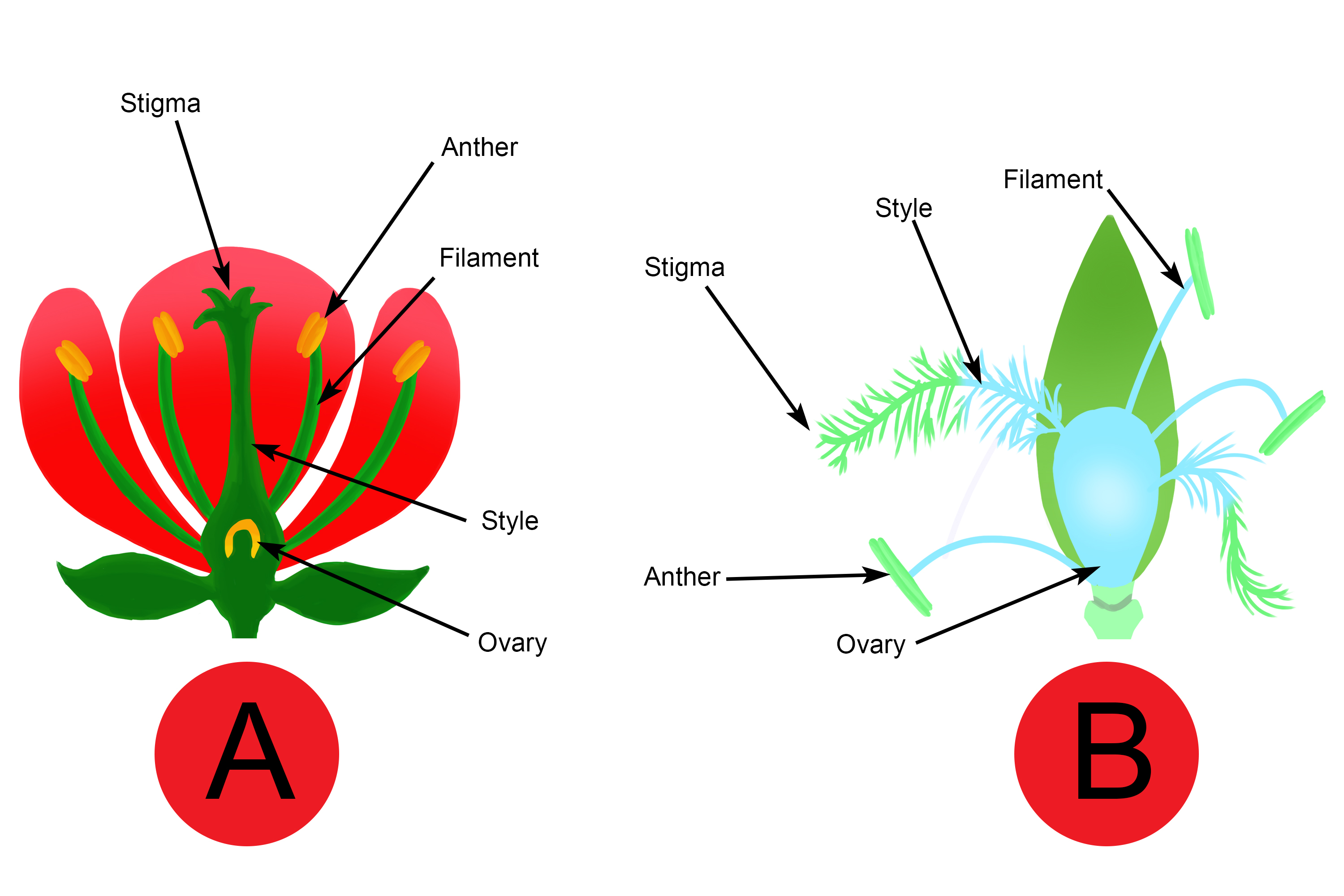
A = animal/insect pollinated flower
B = wind pollinated flower
Hay Fever
- Hay fever is caused by a reaction to pollen grains.
- Symptoms include sneezing, blocked and runny nose, watery and irritated eyes.
- Treatments include;
- Antihistamines to reduce inflammation.
- Decongestant drugs to clear the nose.