Root Systems (Leaving Cert Biology): Revision Notes
📚Revision Notes
Root System
Types of Root Systems
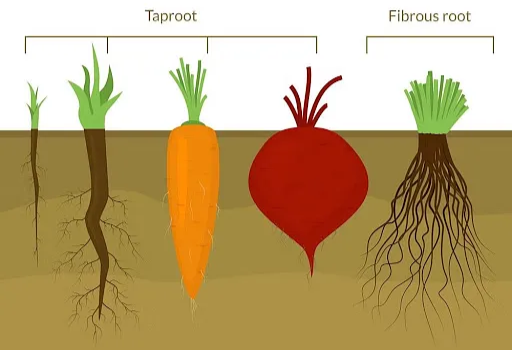
- Tap roots
- Fibrous roots
- Adventitious roots
1. Tap Roots
- Tap roots have a main root called a tap root.
- Lateral roots grow from the main root.
- The tips of the lateral roots have thousands of tiny root hairs for absorption.
- Most dicotyledons (dicots) have tap root systems, e.g., dandelion, ash, carrot, oak.
2. Fibrous Roots
- Fibrous roots consist of many roots that are all the same size.
- Most monocotyledons (monocots) have fibrous root systems, e.g., grasses.
3. Adventitious Roots
- Adventitious roots are roots that grow in unusual or unexpected places.
- Examples include roots at the base of onions and the gripping roots of ivy.
Zones of a Root
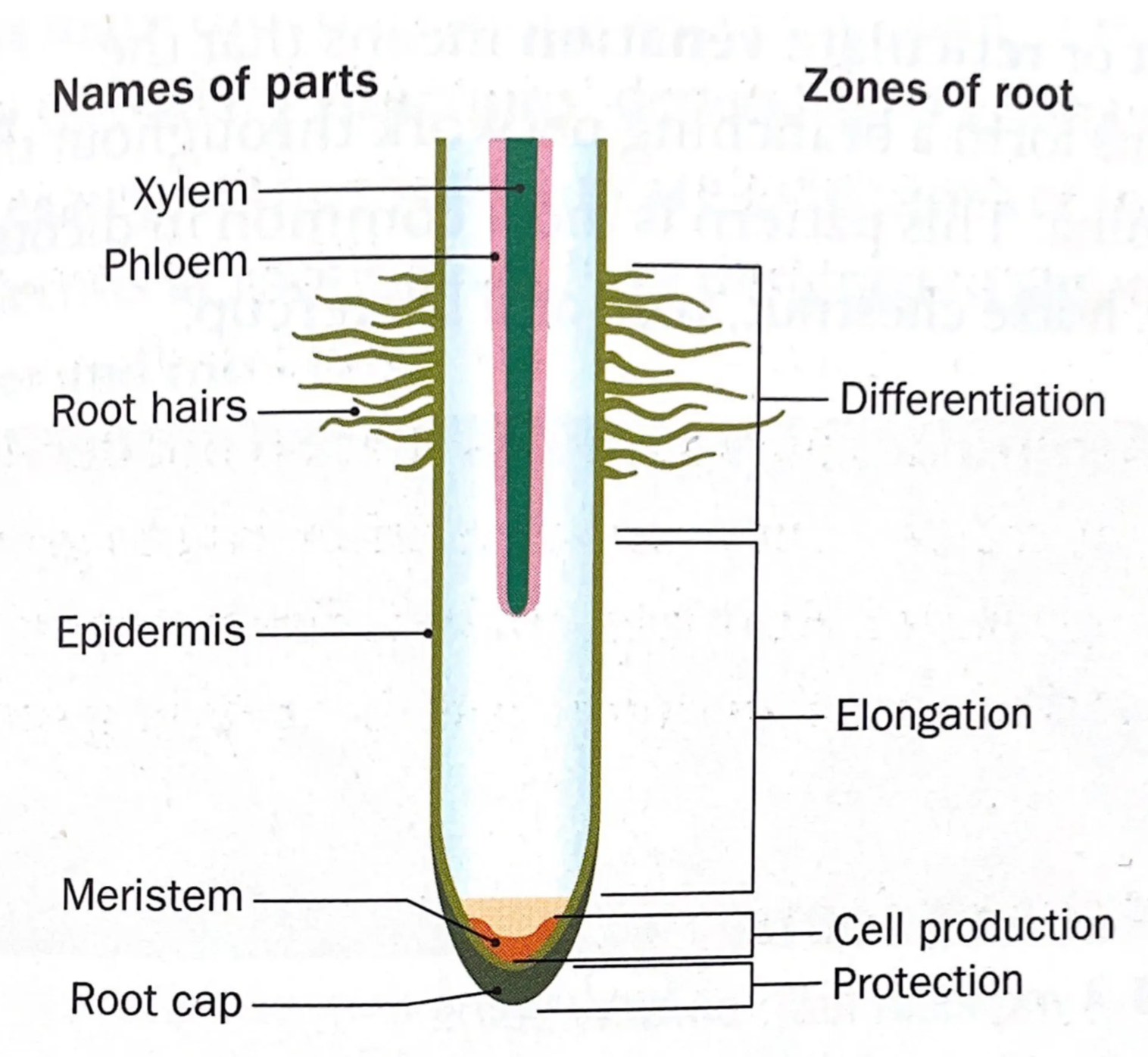
Longitudinal Section of a Dicot Root
-
Zone of protection
-
Meristematic zone
-
Zone of elongation
-
Zone of differentiation
-
Zone of Protection
- The root cap protects the root tip as it grows through the soil.
- Meristematic Zone
- A meristem is an area where cell division (mitosis) takes place in a plant.
- Apical meristems are found in the root and shoot tips.
- Other meristems are found at the edges of some plant stems and in leaves and fruit.
- Zone of Elongation
- When new cells are formed by the meristem, they are very small.
- In the zone of elongation, plant growth regulators (auxins) stimulate the cells to grow longer.
- Zone of Differentiation
- New cells formed from mitosis are all similar (undifferentiated).
- In the zone of differentiation, cells develop into different types of tissues:
- Dermal tissue: Protects the plant.
- Ground tissue: Found between the dermal and vascular tissues.
- Vascular tissue: Xylem and phloem which transport water, minerals, and food.
- Root hairs are formed here, increasing surface area for water and nutrient absorption.
Plant Tissues in a Root
Transverse Section of a Dicot Root
- Root hair
- Dermal tissue
- Ground tissue
- Vascular tissue
- Xylem
- Phloem
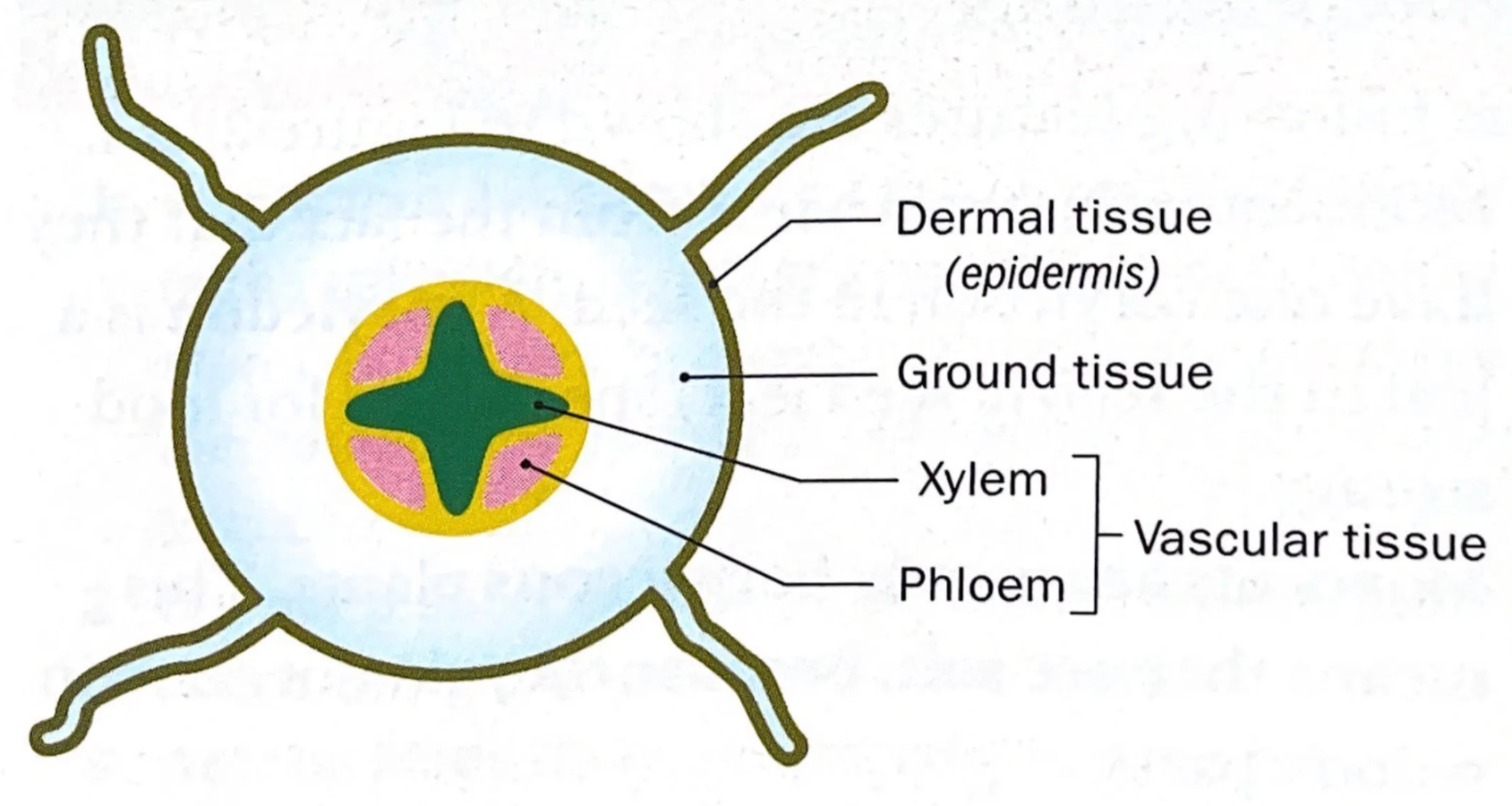
Note: Xylem always forms the 'X' in the vascular tissue.
Note
You must be able to draw and label both the longitudinal and transverse sections of a dicot root.