Changes and Bias (Leaving Cert Biology): Revision Notes
📚Revision Notes
Changes and Bias
Science changes over time
Scientific knowledge is not fixed or permanent. As researchers conduct more studies and gather additional evidence, our understanding of the world constantly evolves. Scientific ideas undergo regular revision, modification, and updating based on new findings.
Note
This dynamic nature of science became particularly evident during the COVID-19 pandemic. Public health guidelines changed frequently as scientists learned more about the virus and how it spreads. These changes reflected the ongoing process of scientific discovery rather than failures in the scientific method.

The scientific method follows a circular or repetitive pattern rather than a straight line. When new discoveries emerge, scientists often need to revisit and revise previous hypotheses. This iterative process ensures that scientific knowledge becomes more accurate and comprehensive over time.
Understanding bias in scientific information
Bias refers to unfair, unreasoned, or personal judgement that can influence how information is presented or interpreted. When evaluating scientific sources, it's essential to identify potential bias that might affect the reliability of the information.
Key questions to identify bias
When examining scientific information, consider these important questions:
Can it be verified? Check whether the source provides valid links or references that allow you to trace the origin of the information. Reliable scientific sources should always cite their evidence.
Is it based on emotions? Be wary of media sources that deliberately use emotional headlines or language designed to grab attention rather than inform objectively.
Is the author an expert? Research the author's background and expertise. Use search engines to determine their qualifications and experience in the relevant field.
Is the report available elsewhere? If information appears in only one source, it's less likely to be reliable. Credible scientific findings are typically reported across multiple reputable sources.
Is the source of the article a reputable source? Many sources report 'news' simply to attract attention rather than provide accurate information. Consider whether the publication has a track record of reliable scientific reporting.
Important
Always apply critical thinking when evaluating scientific sources. Ask yourself these key questions and look for multiple lines of evidence before accepting information as reliable.
Limitations of the scientific method
While the scientific method is our best tool for understanding the natural world, it has several inherent limitations that scientists must acknowledge.
The extent of our knowledge
Scientists can only design suitable experiments and analyse results based on what they already know about a topic. To ask the right questions and reach proper conclusions, researchers must have some prior knowledge of the subject area. This means that our current understanding limits what we can discover next.
The basis of investigation
Scientific progress depends on properly designed and carefully executed experiments. If experiments are poorly designed, if data is incorrectly measured, or if conclusions are drawn incorrectly, then the results become invalid. Just like a computer game with poor programming instructions, poorly carried out experiments will not produce meaningful results.
Interpreting results
Scientists sometimes find it difficult to interpret or understand the data collected during experiments. They may make mistakes or introduce bias when interpreting their findings, which can lead to incorrect conclusions.
Example
Historical Example: The Thalidomide Tragedy
A significant example of misinterpreted results occurred with the drug thalidomide in the 1950s. Scientists tested this drug on animals like rats and rabbits and found it to be safe. However, they incorrectly interpreted this as meaning the drug was safe for humans.
The tragic consequence was that thalidomide caused major birth defects in babies born to women who took the medication during pregnancy. The drug was withdrawn from use in 1961, but later research revealed that thalidomide could be used safely to treat certain forms of cancer and leprosy.
This example demonstrates how scientific interpretation can have serious real-world consequences.
Changes in the natural world
Living organisms constantly change through evolution, which means that scientific knowledge about them must also change to remain accurate. What scientists considered true in previous times may no longer be accurate, making it necessary to form and test new hypotheses that align with changes in the natural world.
Note
Evolution is an ongoing process that affects all living things. As species adapt to their environments over time, scientists must update their understanding and revise their theories accordingly.
Accidental discoveries
Many important scientific discoveries have resulted not from carefully planned research, but from accidents. However, these discoveries only become accepted as part of scientific knowledge after researchers test them through proper experimentation.
Example
Fleming's Penicillin Discovery
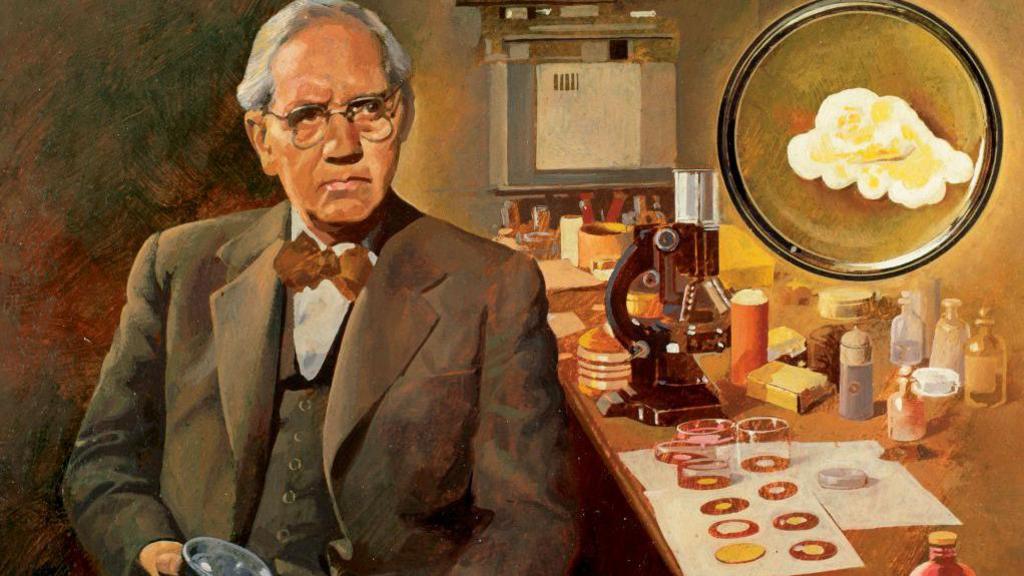
Alexander Fleming's discovery of penicillin in 1928 provides an excellent example of accidental discovery. Fleming accidentally left a petri dish of bacteria uncovered, allowing it to become contaminated by fungus patches. Rather than discarding the contaminated dish, Fleming observed the clear patches around the fungus and realised that there were no bacteria in these areas.
Fleming hypothesised that some substance produced by the fungus was killing the bacteria. Through further experiments, he established that penicillin was the active ingredient responsible for this antibacterial effect. His discovery arose from his prior knowledge and training as a biologist, which helped him recognise the significance of what he observed.
This example demonstrates how scientific discoveries often build upon previous knowledge and training, even when they begin with unexpected observations.
Summary
Key Points to Remember:
- Scientific knowledge constantly changes as new research provides better understanding of natural phenomena
- Bias is unfair or personal judgement that can affect how scientific information is presented - always check sources carefully
- Ask critical questions about scientific sources: Can it be verified? Is the author an expert? Is it available elsewhere?
- The scientific method has limitations including the extent of current knowledge, quality of investigation methods, and challenges in interpreting results
- Changes in the natural world through evolution require scientists to continuously update their theories and understanding