The Government Budget & Workers (Leaving Cert Business): Revision Notes
📚Revision Notes
The Government Budget & Workers
What is the government budget?
The government budget is the annual financial plan that shows how much money the government will spend and where it will allocate resources. Published each October, the budget contains key measures that directly impact workers' daily lives. Understanding how this budget affects you as a worker is essential for making informed financial decisions.
Note
The government budget is released every October and serves as the roadmap for how public money will be spent over the coming year. As a worker, many of these decisions will have direct financial impacts on your life.
Government spending breakdown
The government allocates billions of euros across different sectors each year. The largest areas of spending directly affect workers and their families.
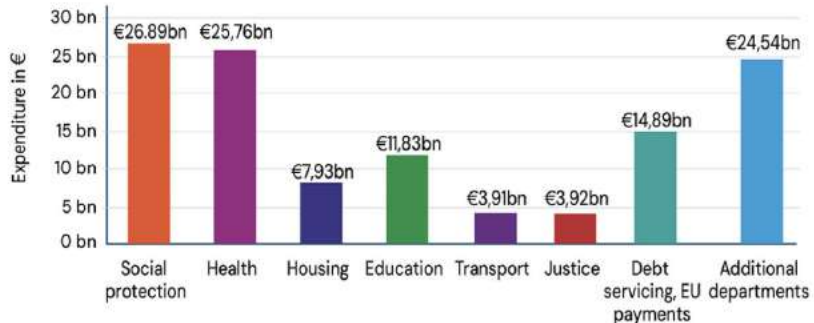
The major spending areas include:
- Social protection (€26.89bn) - unemployment benefits, disability payments, and other welfare supports
- Health (€25.76bn) - hospitals, healthcare services, and mental health support
- Education (€11.83bn) - schools, colleges, and training programmes
- Housing (€7.93bn) - social housing and housing supports
- Transport (€3.91bn) - public transport and infrastructure
Eight ways the budget affects workers
The government budget impacts workers through multiple channels, creating both direct and indirect effects on their financial wellbeing.
1. Income tax and disposable income
Tax rates determine how much of your gross salary you actually take home. The government sets different income tax rate bands for individuals, and any changes directly affect workers' disposable income - the money left after paying taxes.
Tax credits like the Pay As You Earn (PAYE) credit reduce the amount of tax employees pay. When the government increases these credits, workers keep more of their earnings. Changes to Universal Social Charge (USC) rates also affect all income levels, impacting employees across the pay scale.
2. Social welfare and supports
Welfare payments provide crucial support for workers during difficult times. The government decides how much money to allocate to social welfare programmes, including:
- Unemployment benefit for those seeking work
- Illness benefit for workers unable to work due to health issues
- Other supports for families on low incomes
Any increases in these payments benefit workers and help families manage other living costs. Child Benefit and similar payments help working families offset childcare and other expenses.
3. Minimum wage
Changes to the minimum wage directly affect low-wage earners by improving their standard of living and increasing their take-home pay. When the government raises the minimum wage, it helps workers keep pace with rising costs and maintains their purchasing power.
Important
Currently, about 186,000 people in Ireland earn the minimum wage, with this group disproportionately made up of women, younger workers, and people with disabilities, many employed in retail, hospitality, and service sectors.
4. Pensions and retirement
The budget determines pension contributions that employees benefit from, particularly those who will receive a state pension. These decisions are especially important for public sector workers. When the state pension increases, it helps workers achieve greater financial security in retirement.
5. Public services and infrastructure
Budget decisions about public spending significantly impact workers' quality of life:
Healthcare funding affects how much is allocated to the health sector (HSE), including hospitals, mental health services, and clinics. Better healthcare funding means shorter waiting times and better services for workers and their families.
Education and training investments help employees upskill and retrain. When the government invests in further education and trades training (plumbers, carpenters, etc.), workers benefit from improved career opportunities.
Transport investment maintains and improves public transport accessibility and affordability for commuters, making it easier and cheaper for workers to get to their jobs.
6. Cost of living and inflation
The government uses various measures to help offset inflation and cost-of-living increases for workers:
Value-Added Tax (VAT) reductions on essential goods and services like petrol, childcare, and energy help workers manage rising costs in the economy.
Fuel allowances and subsidies help workers cope with increasing energy costs and transport expenses.
Note
VAT reductions on essential items can have an immediate impact on your household budget, as these savings are passed directly to consumers at the point of purchase.
7. Support for business and job creation
Budget measures can influence employment opportunities by supporting businesses through:
- Grants and subsidies for technology and manufacturing companies
- Pay-Related Social Insurance (PRSI) contribution reductions that help businesses retain workers during economic uncertainty
- Tax relief for start-up businesses, encouraging job creation
8. Workplace regulations and workers' rights
The government can introduce new regulations about working conditions and allocate funding to regulatory bodies. Budget allocations might fund workplace dispute resolution services or policies such as parental leave and sick leave, ensuring workers receive adequate pay when unable to work.
Key benefits for workers
The government budget creates opportunities for workers in four main ways:
- Increased disposable income - through tax reductions and credits
- Job creation - through business support and public sector investment
- Improved access to services - through healthcare, education, and transport funding
- Improvement in work-life balance - through workplace regulations and family supports
How the budget shapes working life
The government budget plays a crucial role in shaping working life by balancing economic growth with worker welfare. Budget decisions affect not just individual take-home pay, but also access to public services, job opportunities, and long-term financial security.
When the government increases public service spending or reduces taxes, it creates opportunities for income growth while maintaining the welfare system that supports workers during difficult times. This balancing act is essential for both economic stability and social protection.

Important
The government budget represents a delicate balance between promoting economic growth and ensuring adequate social protection for workers. Understanding this balance helps you better interpret budget announcements and their potential impact on your financial situation.
Summary
Key Points to Remember:
- The government budget directly affects your take-home pay through income tax rates and credits
- Social welfare supports provide important safety nets for workers and their families
- Budget decisions on public services like healthcare, education, and transport impact your daily life
- Minimum wage and pension policies affect your current earnings and future security
- Government support for business and job creation influences employment opportunities in the economy