Stakeholder Conflict (Leaving Cert Business): Revision Notes
📚Revision Notes
Stakeholder Conflict
Conflicts between different stakeholder groups are a natural part of business life. Understanding how these conflicts arise and how they can be resolved is essential for maintaining healthy business relationships and ensuring smooth operations.

What is stakeholder conflict?
Stakeholder conflict occurs when different groups connected to a business have opposing interests or disagreements. These conflicts can significantly impact business performance if not properly managed. The good news is that conflicts can be resolved through various methods, which fall into two main categories: legislative (legal) approaches and non-legislative (informal) approaches.
Note
Understanding the distinction between legislative and non-legislative approaches is crucial, as businesses typically try informal methods first before escalating to legal solutions, which are often more time-consuming and expensive.
Types of stakeholder conflicts
Supplier and business conflicts
The relationship between suppliers and businesses can take different forms, each with its own potential for conflict:
Co-operative relationships involve mutual benefits where both parties work together for shared success. Suppliers provide quality goods at agreed prices, while businesses offer reliable payment and long-term contracts.
Example
Real-world Example: ALDI and Broderick's Partnership
ALDI Ireland's €7.5 million partnership with Dublin confectioner Broderick's demonstrates how co-operative relationships can benefit both sides. This long-term partnership provides Broderick's with guaranteed sales and ALDI with quality Irish confectionery products, creating mutual success.
Competitive relationships can create tension when suppliers and businesses compete with each other. Suppliers might prioritise higher-paying customers, while businesses may switch suppliers to reduce costs or improve quality. This can lead to disputes over pricing, delivery schedules, or product quality.
Business and employee conflicts
Similarly, the relationship between businesses and their employees can be either co-operative or competitive:
Co-operative approaches focus on investing in employee training, offering fair wages, and creating a positive work environment. This benefits both parties as employees become more skilled and motivated, while businesses gain from increased productivity and loyalty.
Competitive approaches often involve businesses trying to minimise wage costs, which can lead to workplace disputes.
Example
Example: Corporate Restructuring Impact
When companies announce layoffs or restructuring (like TikTok's global restructuring plan), this creates significant tension with employees who want job security and fair treatment. Such announcements often lead to conflicts that require formal resolution methods.
Resolving stakeholder conflict
Communication and active listening
Before formal resolution methods, effective communication can prevent many conflicts from escalating. Active listening is crucial for successful conflict resolution. This involves:
- Showing empathy and understanding
- Being willing to listen without jumping to conclusions
- Trying to understand different viewpoints
- Encouraging transparency and honesty between parties
Both sides should focus on understanding each other's positions, clarifying their own arguments, and summarising what they've heard to ensure there's no confusion.
Important
Remember that many stakeholder conflicts can be prevented entirely through proactive communication and regular dialogue. Investing time in building strong relationships with stakeholders often prevents conflicts from arising in the first place.
Non-legislative resolution methods
Negotiation
Negotiation is often the first step in resolving conflicts. This involves both parties making offers and counter-offers until they reach a compromise that everyone can accept. Trade union representatives (shop stewards) often get involved in workplace negotiations to represent employee interests.
The key to successful negotiation is that both sides must be satisfied with the outcome.
Example
Worked Example: Wage Negotiation Process
An employee seeking a wage increase approaches their HR manager. Through negotiation:
- Employee presents their case based on performance and market rates
- HR manager explains budget constraints and company policy
- Both parties discuss possible compromises (performance bonuses, additional benefits, phased increases)
- They reach a settlement that recognises the employee's contribution while staying within company budget
Mediation
When direct negotiation fails, mediation can help. A mediator is an independent person who acts as a go-between, helping disputing parties communicate and find common ground. Mediators don't make decisions for the parties but facilitate discussions and suggest possible solutions.
Example
Example: Bank Loan Dispute Mediation
If a bank customer has a loan repayment dispute, both parties might agree to use a mediator to help them reach an agreement before the situation escalates further. The mediator helps both sides communicate their concerns and explores possible repayment solutions.
Conciliation
Conciliation involves a neutral third party who listens to both sides of the dispute. The conciliator's main role is to encourage both parties to listen to each other and work towards an agreement. Unlike mediators, conciliators don't suggest specific solutions but help create an environment where resolution is possible.
Arbitration
Arbitration is the most formal non-legislative method. An arbitrator is an impartial expert who listens to both sides and makes a binding recommendation on how the dispute should be resolved. Both parties typically agree beforehand to accept the arbitrator's decision.
Note
The Labour Court in Ireland provides arbitration services for workplace disputes and can hear appeals from earlier decisions. This gives both employers and employees a structured way to resolve serious disagreements through an established legal framework.
Legislative resolution methods
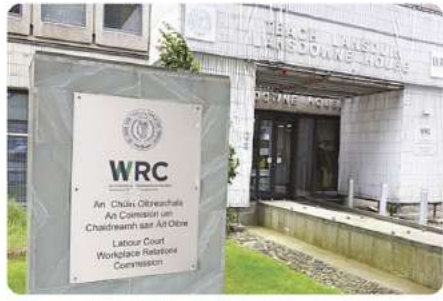
When non-legislative methods fail, parties can turn to the legal system. The Workplace Relations Commission (WRC) plays a vital role in Ireland for employment-related disputes, offering conciliation, mediation, and arbitration services for workplace conflicts.
Note
The WRC provides an accessible way for employees and employers to resolve disputes without going to court, making it an important resource for managing stakeholder conflicts in Irish businesses. Their services are typically faster and less expensive than traditional court proceedings.
Stakeholder mapping
Stakeholder mapping is a useful tool for preventing conflicts by helping businesses understand and prioritise their relationships with different stakeholder groups. This process involves identifying all stakeholders and assessing their level of power (influence over the business) and interest (how much they care about business decisions).
Important
Strategic Stakeholder Priority
Businesses should spend the most time and resources managing stakeholders who have both high power and high interest in the company. These stakeholders can significantly impact business success and need regular communication and attention. Conversely, stakeholders with low power and low interest require minimal attention.
This strategic approach helps businesses allocate their time and resources effectively while reducing the likelihood of conflicts arising from neglected stakeholder relationships.
Summary
Key Points to Remember:
- Stakeholder conflicts are natural in business but can be managed through proper resolution methods
- Communication and active listening are essential first steps in resolving any conflict
- Non-legislative methods (negotiation, mediation, conciliation, arbitration) offer flexible ways to resolve disputes without going to court
- The Workplace Relations Commission (WRC) provides valuable services for workplace disputes in Ireland
- Stakeholder mapping helps businesses prioritise relationships and prevent conflicts by understanding which stakeholders need the most attention
- Both co-operative and competitive relationships can exist between stakeholders, each with different conflict resolution needs