Formation of Fossil Fuels (Leaving Cert CASD): Revision Notes
📚Revision Notes
Formation of Fossil Fuels
What are fossil fuels?
Note
Definition: Fossil fuels are energy sources that developed from the remains of ancient plants and animals over millions of years. These fuels exist within Earth's crust and are made up of carbon and hydrogen compounds that release energy when burned.
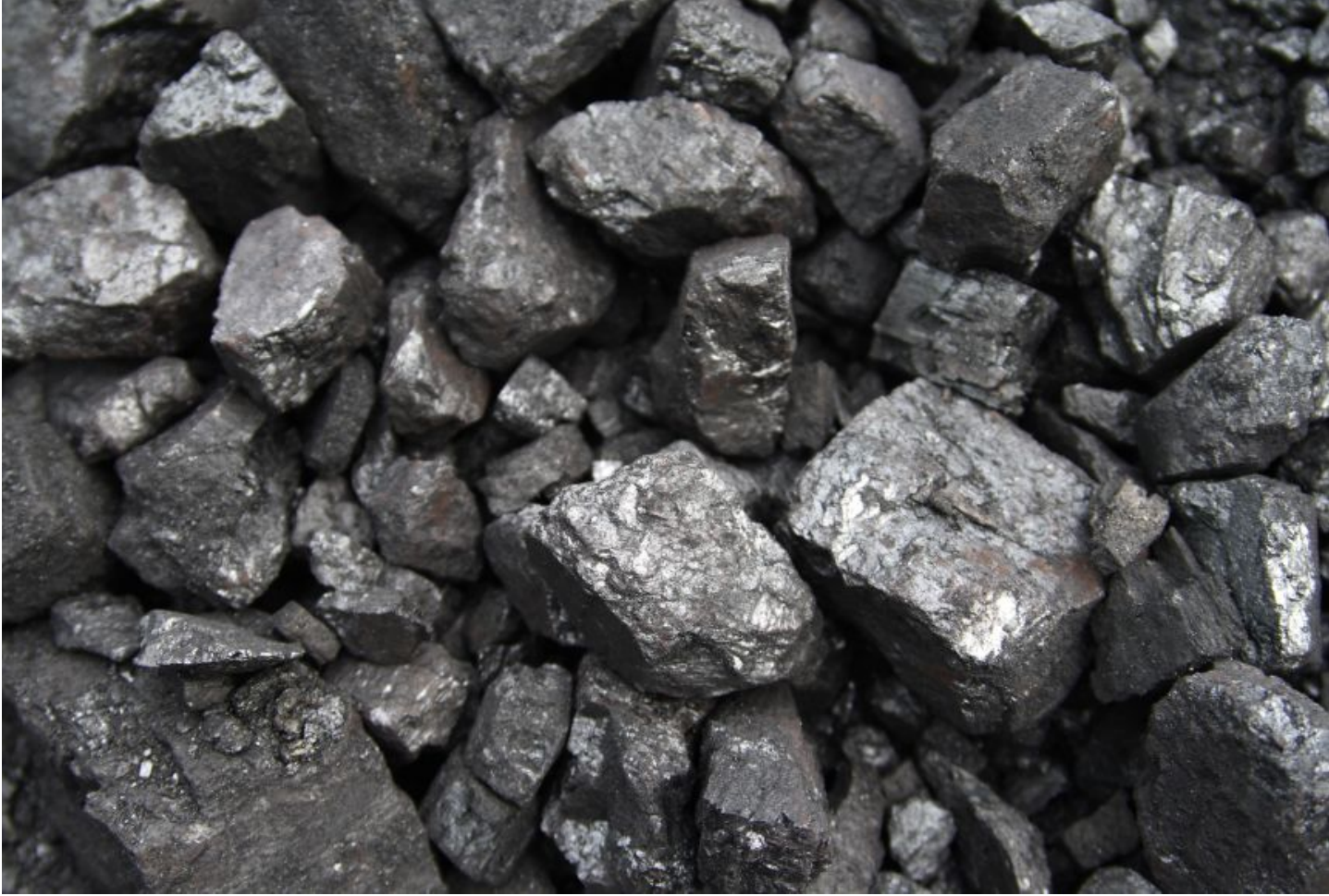
The three main types of fossil fuels are coal, oil (petroleum), and natural gas. Each of these fuels formed through different processes but all share a common origin in ancient organic matter.
Understanding how these fuels formed helps us appreciate both their value and their limitations as nonrenewable energy sources.
The formation process
Basic formation principles
All fossil fuels share a common origin story. They began as living organisms - mainly plants and marine creatures - that died and were buried under layers of sediment. Over enormous periods of time, heat and pressure from the Earth transformed this organic matter into the fossil fuels we use today.
Note
The Five Key Factors in Fossil Fuel Formation
The transformation of organic matter into fossil fuels requires specific conditions:
-
Organic matter: Dead plants and animals provide the raw material
-
Burial: Sediment layers must cover and protect the organic material
-
Time: The process takes millions of years to complete
-
Heat and pressure: Geological forces transform the buried material
-
Lack of oxygen: Prevents complete decay, preserving carbon compounds
Types of fossil fuels and their formation
Coal formation
Coal develops primarily from ancient plant material that accumulated in swampy environments. This process creates the most plant-rich fossil fuel, with more than half of coal's weight coming from fossilised plant material.
Example
Worked Example: Coal Formation Process
Step 1: Plants die and fall into swampy, waterlogged conditions where oxygen is limited
Step 2: The plant matter doesn't fully decay due to the lack of oxygen
Step 3: Over time, layers of sediment bury the plant material
Step 4: Heat and pressure gradually compress the organic matter
Step 5: The material transforms through stages: peat → lignite → bituminous coal → anthracite
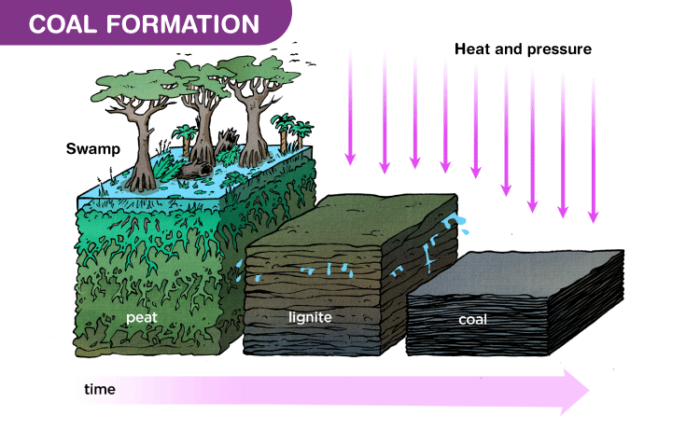
Coal is typically found in sedimentary rock deposits where layers of rock, dead plants, and animal matter have been compressed together over geological time.
Oil formation
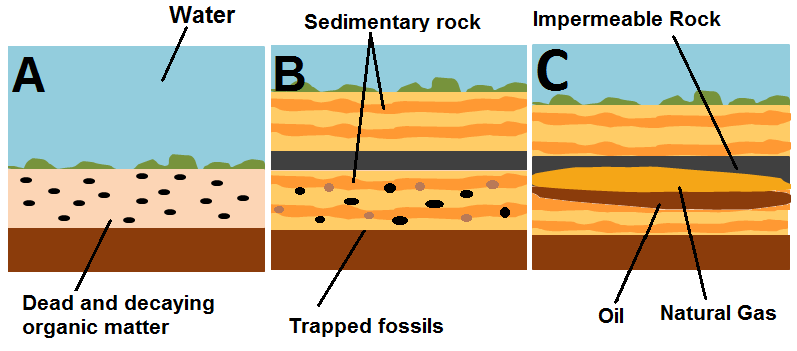
Oil (petroleum) has a different formation story compared to coal, originating from marine organisms rather than land plants.
Example
Worked Example: Oil Formation Process
Step 1: Tiny marine organisms (plankton, algae) die and sink to ocean floors
Step 2: Sediments quickly bury this organic matter, creating oxygen-poor conditions
Step 3: Over millions of years, more sediment layers accumulate on top
Step 4: Heat and pressure gradually "cook" the organic material
Step 5: The material transforms into thick, liquid petroleum
Important
Oil is commonly found as a solid material trapped between layers of sedimentary rock, such as shale. The heating process is crucial - it transforms the solid organic matter into the liquid oil that can be refined into petrol and other products.
Natural gas formation
Natural gas formation often occurs alongside oil formation but requires even more intense geological conditions.
Formation process:
-
Forms from the same organic material as oil (marine organisms)
-
Experiences higher temperatures and pressures than oil
-
Results in lighter hydrocarbon molecules, primarily methane
-
Often found in pockets above oil deposits
-
Can also occur independently in sedimentary rock layers without oil
Natural gas is typically the lightest and most processed form of fossil fuel, having undergone the most intense geological transformation.
Geological time and location
Time scales involved
Important
Geological Time Scale
The formation of fossil fuels occurs over geological time - periods so long they're difficult to imagine:
-
The process typically takes millions of years to complete
-
Most of today's fossil fuel deposits formed between 300-400 million years ago
-
This makes fossil fuels a nonrenewable resource - we cannot wait millions of years for new deposits to form
Where fossil fuels are found
Fossil fuels are located in sedimentary rock formations because:
-
Sedimentary rocks form from layers of sediment that preserve organic matter
-
These rocks provide the right conditions for fossil fuel formation
-
The layered structure traps and concentrates the fuels
-
Sedimentary basins often contain multiple types of fossil fuels in different layers
Environmental and energy considerations
Current dependency
Fossil fuels currently provide the majority of global energy needs. They power homes, businesses, factories, and transportation systems worldwide. However, this heavy reliance comes with significant challenges.
Environmental impact
The burning of fossil fuels releases carbon dioxide and other greenhouse gases into the atmosphere, contributing significantly to climate change. These gases trap heat in the Earth’s atmosphere, leading to global warming, rising average temperatures, and more frequent extreme weather events such as heatwaves, droughts, and flooding. Increased temperatures also cause polar ice to melt and sea levels to rise, threatening coastal communities and ecosystems. This has prompted scientists and engineers worldwide to seek cleaner alternatives and more efficient ways to use existing fuels.
Future solutions
Note
Research and Development Approaches
Researchers are developing various approaches to address fossil fuel challenges:
-
Carbon capture and sequestration: Removing carbon dioxide from the atmosphere and storing it underground
-
Cleaner burning technologies for existing fuels
-
Natural gas as a transitional fuel (produces less carbon dioxide than coal)
-
Renewable alternatives to reduce fossil fuel dependency
Summary
Key Points to Remember:
-
Fossil fuels form from decomposed plants and animals buried under sediment layers over millions of years
-
Coal develops mainly from ancient plant matter in swampy conditions and contains over 50% fossilised plant material
-
Oil forms from marine organisms that were heated and compressed between rock layers like shale
-
Natural gas, primarily methane, often forms above oil deposits or separately in sedimentary rocks under high heat and pressure
-
All fossil fuels are nonrenewable resources because they take millions of years to form, making sustainable alternatives increasingly important