Volcanic Eruptions (Leaving Cert CASD): Revision Notes
📚Revision Notes
Volcanic Eruptions
How volcanoes work
Understanding how volcanoes erupt starts deep beneath the Earth's surface. The incredible heat within our planet causes solid rocks to gradually melt, transforming them into a thick, flowing material called magma. This molten rock is less dense than the surrounding solid rock, which means it naturally rises upward through the Earth's layers.
Note
The concept of density is key here - because magma is less dense than solid rock, it behaves like a balloon filled with helium, naturally rising through the denser material around it.
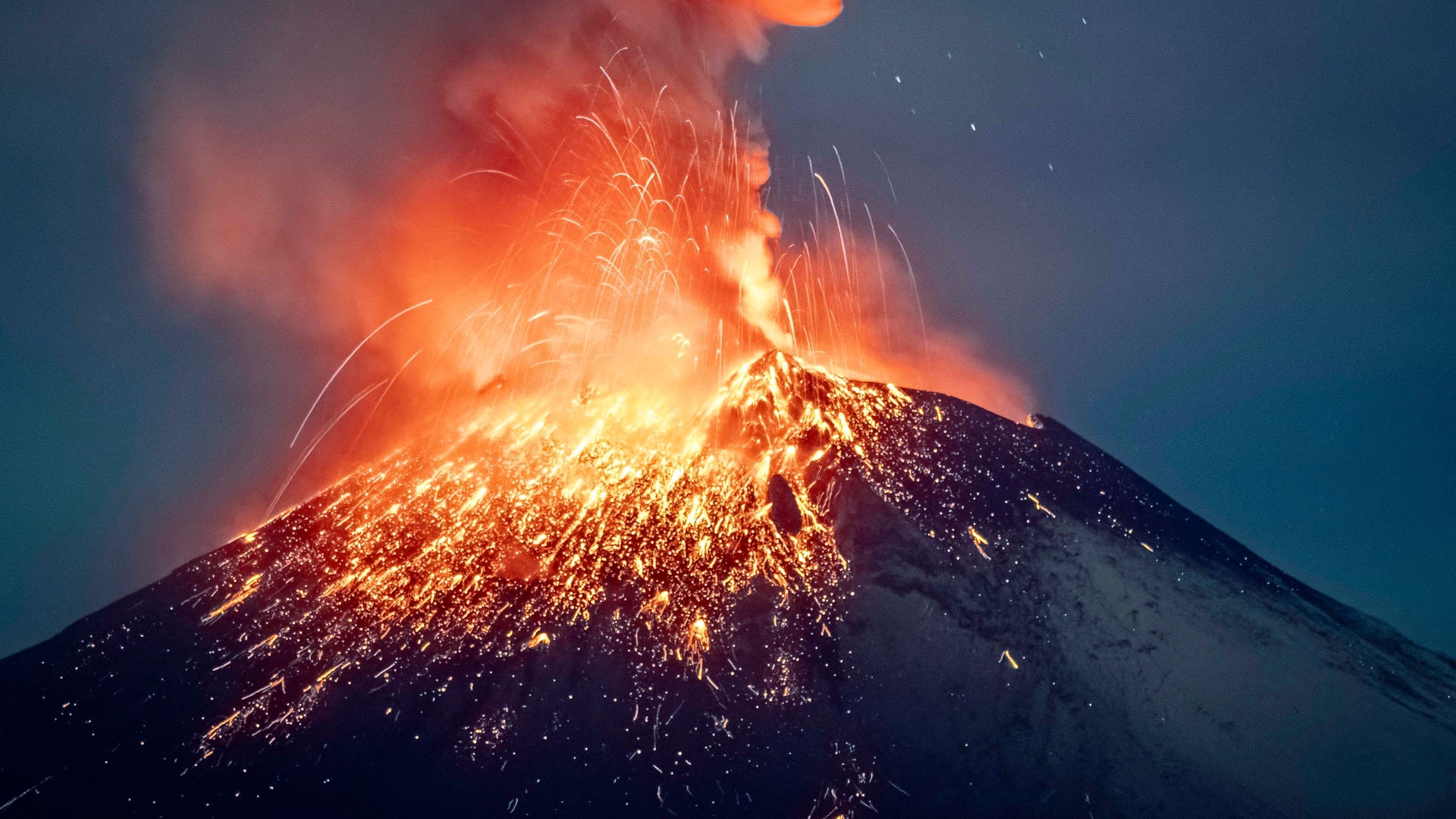
As magma moves upward, it accumulates in underground spaces known as magma chambers. Eventually, this molten material finds pathways to the surface through cracks, vents, and fissures in the Earth's crust. Once magma reaches the surface and erupts from a volcano, it's called lava.
Types of volcanic eruptions
Not all volcanic eruptions behave the same way. The explosivity of an eruption depends largely on the composition and consistency of the magma involved.
Effusive eruptions
When magma is thin and runny, gases can escape from it easily. This type of magma flows relatively gently out of the volcano, creating what we call an effusive eruption. Hawaiian volcanoes provide excellent examples of this type of activity. These lava flows move slowly enough that people can usually evacuate safely from their path, making them less immediately dangerous to human life.
Explosive eruptions
In contrast, when magma is thick and sticky, trapped gases cannot escape easily. Pressure builds up dramatically until the gases escape violently, causing an explosion. Mount St. Helens in Washington State exemplifies this type of eruption. During explosive eruptions, magma is blasted high into the atmosphere and breaks apart into fragments called tephra, which can range from tiny ash particles to massive boulders.
Volcanic hazards
Important
Explosive volcanic eruptions create multiple serious hazards that pose immediate threats to human life and property. Understanding these hazards is crucial for anyone living near active volcanoes.
-
Fiery clouds of hot tephra race down mountainsides at tremendous speeds, destroying nearly everything in their path
-
Ash fallout from the sky can blanket large areas like powdery snow, potentially suffocating plants, animals, and humans if thick enough
-
Mudflows (called lahars) form when hot volcanic materials mix with water from streams, melted snow, or ice, creating devastating flows that have buried entire communities near active volcanoes
Climate impacts of volcanic eruptions
Volcanic eruptions can significantly influence Earth's weather patterns and climate on both regional and global scales.
Mount Pinatubo case study (1991)
Example
Worked Example: Mount Pinatubo's Global Climate Impact
The eruption of Mount Pinatubo in the Philippines in 1991 provides a dramatic example of volcanic climate impact. This eruption:
Step 1: Atmospheric injection
-
Sent fine ash and gases high into the stratosphere
-
Created a massive volcanic cloud that circled the globe
Step 2: Chemical release
-
Released approximately 22 million tonnes of sulphur dioxide ()
-
Produced brilliant sunsets and sunrises worldwide
Step 3: Global cooling effect
- Cooled global temperatures by up to 0.5 degrees Celsius
The process: The sulphur dioxide combined with atmospheric water to form tiny droplets of sulphuric acid, which blocked some incoming sunlight from reaching Earth's surface, thereby reducing temperatures in affected regions.
Historical example: Tambora volcano (1815)
Example
Historical Case Study: The Year Without a Summer
An even more dramatic climate impact occurred in 1815 with the cataclysmic eruption of Tambora Volcano in Indonesia. This represents the most powerful volcanic eruption in recorded history.
The eruption's effects included:
-
Global temperature reduction of up to 3 degrees Celsius
-
Severely cooler summer temperatures across the northern hemisphere even a year after the eruption
-
1816 became known as "the year without a summer" in parts of Europe and North America
These examples demonstrate that major volcanic eruptions can affect weather patterns for several years following the initial event.
Benefits of volcanic activity
While volcanic eruptions can be destructive, they also provide significant long-term benefits to humanity and the environment.
Note
It's important to remember that despite their destructive potential, volcanoes play a crucial role in creating conditions that support life and human civilisation on Earth.
Fertile soils
Over geological time, volcanic materials break down and weather to create some of Earth's most fertile soils. These nutrient-rich soils have supported abundant agricultural production and enabled the development of prosperous civilisations in volcanic regions worldwide.
Geothermal energy
The internal heat associated with active volcanic systems can be harnessed to produce geothermal energy. This renewable energy source provides clean electricity and heating for communities in volcanically active areas.
Mineral resources
Many of the world's most valuable metallic minerals are directly linked to volcanic processes. Important metals such as copper, gold, silver, lead, and zinc are often found in deposits associated with ancient magma systems deep within the roots of extinct volcanoes.
Remember!
Summary
Key Points to Remember:
-
Magma forms underground when Earth's heat melts rocks; it becomes lava once it erupts at the surface
-
Thin, runny magma creates gentle lava flows (like Hawaii), while thick, sticky magma causes explosive eruptions (like Mount St. Helens)
-
Major volcanic eruptions can cool global temperatures for years by blocking sunlight with ash and sulphur dioxide particles
-
Volcanic activity provides long-term benefits including fertile agricultural soils, geothermal energy, and valuable mineral deposits
-
The 1815 Tambora eruption was so powerful it caused "the year without a summer" in 1816, demonstrating volcanoes' significant climate influence