Earth Systems (Leaving Cert CASD): Revision Notes
📚Revision Notes
Earth Systems
Earth is a complex planet where different systems work together to create the environments we see around us. Understanding these Earth systems and how they interact is crucial for studying climate action and sustainable development.
Note
Think of Earth as a complex machine where every part affects every other part. Understanding these connections helps us make better decisions about protecting our planet.
What are Earth systems?
Earth systems are large-scale natural processes that operate on our planet. Think of them as interconnected parts of a giant machine - each system has its own job, but they all work together to keep Earth functioning. Scientists have identified five main Earth systems that interact to produce the environments we're familiar with.
Important
Key Concept: Earth systems are deeply interconnected. Changes in one system will always affect the others, creating complex chains of cause and effect across the entire planet.
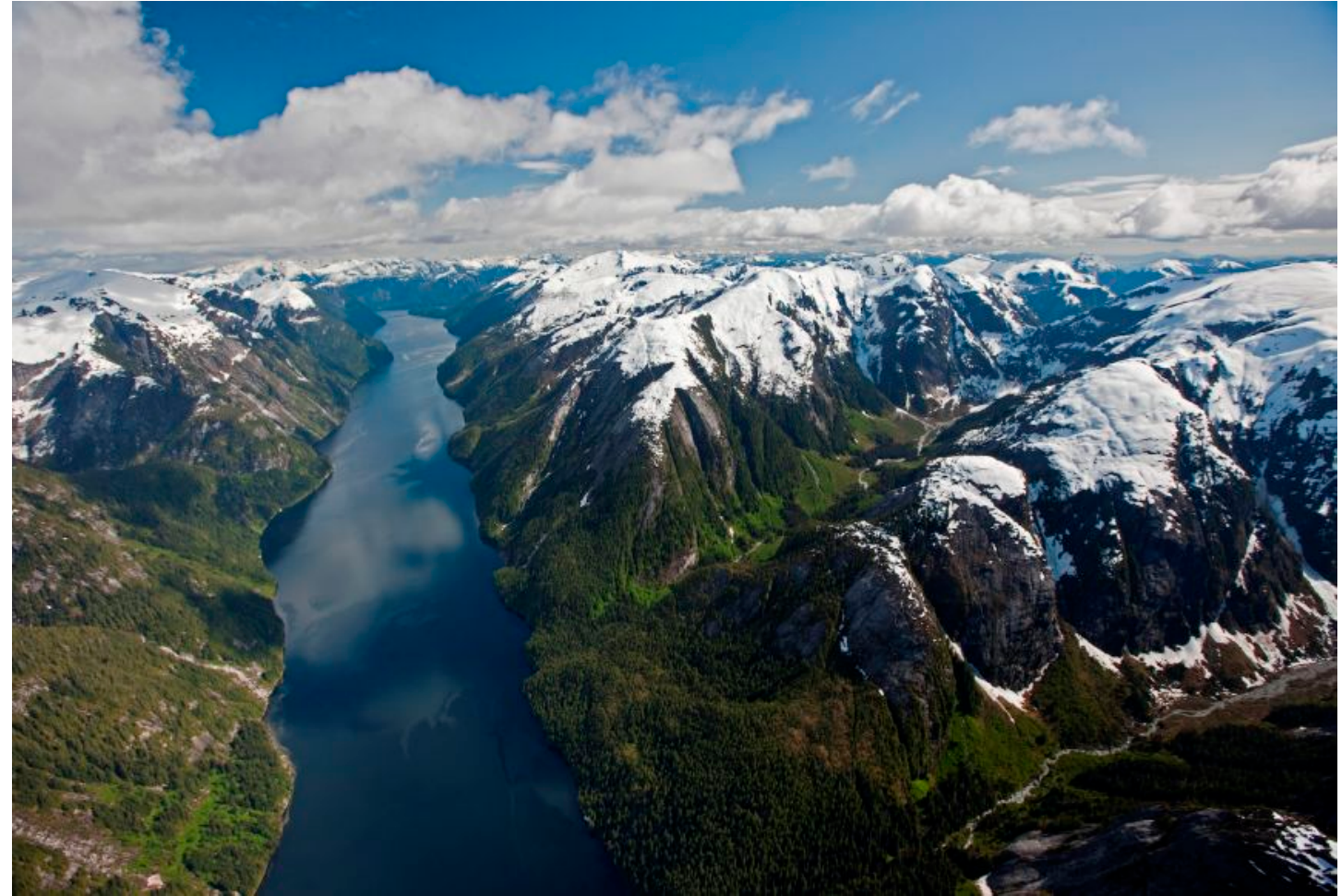
The dramatic landscape shown above demonstrates how multiple Earth systems interact in one location - you can see ice and snow (cryosphere), water (hydrosphere), rocky mountains (geosphere), vegetation (biosphere), and the sky (atmosphere) all working together.
The five Earth systems
Geosphere
The geosphere forms the solid foundation of our planet. It includes:
-
Earth's interior (the hot, molten rock beneath the surface)
-
Earth's surface (mountains, valleys, and all rocky features)
-
All rocks, from tiny grains of sand on beaches to massive mountain ranges
The geosphere provides the physical structure that supports all other systems and contains valuable resources like minerals and fossil fuels.
Note
Earth's Interior: The temperature at Earth's core reaches approximately 6,000°C - as hot as the surface of the Sun! This intense heat drives many geological processes that shape our planet's surface.
Biosphere
The biosphere is where life exists on Earth. This system encompasses:
-
All living organisms (plants, animals, fungi, and microorganisms)
-
The environments where these organisms can survive
-
Biotic factors (living components like trees, fish, and bacteria)
-
Abiotic factors (non-living components that support life, such as water, air, and sunlight)
Scientists call the variety of life in the biosphere biodiversity. The biosphere is relatively small compared to other Earth systems, but it's incredibly important because it includes us!
Note
Biotic vs. Abiotic: Understanding the difference between living (biotic) and non-living (abiotic) factors helps scientists study how ecosystems function and how they respond to changes.
Hydrosphere
The hydrosphere contains all water on Earth in its liquid form. Key facts about the hydrosphere:
-
Includes oceans, rivers, lakes, and underground water
-
96.5% of Earth's water is saline (salty) and not suitable for drinking without treatment
-
Only a small percentage is fresh water that humans and most animals can use
-
Water vapour in the atmosphere is also considered part of the hydrosphere
Important
Critical Fact: With 96.5% of Earth's water being saline, fresh water is an incredibly precious and limited resource. This makes water conservation and protection essential for all life on Earth.
Cryosphere
The cryosphere is essentially the frozen version of the hydrosphere. It includes:
-
Ice at the North and South poles
-
Glaciers and ice sheets
-
Frozen ground (permafrost)
-
Snow cover
Surprisingly, about three-quarters of all fresh water on Earth is locked up in the cryosphere as ice, making it a crucial water reservoir.
Important
Fresh Water Storage: The cryosphere stores approximately 75% of the world's fresh water as ice. This makes polar ice caps and glaciers critical water sources that millions of people depend on indirectly.
Atmosphere
The atmosphere is the layer of gases surrounding Earth. It consists of:
-
Mostly nitrogen and oxygen
-
Smaller amounts of water vapour, carbon dioxide, ozone, and argon
-
Acts like a protective blanket that keeps Earth warm
-
Shields us from harmful ultraviolet radiation from the sun
-
Provides the oxygen we breathe and carbon dioxide that plants need for photosynthesis
Note
Earth's Protective Shield: The atmosphere doesn't just provide air to breathe - it acts as a multi-layered protection system that maintains suitable temperatures and blocks dangerous radiation from space.
How Earth systems interact
Earth's systems don't work in isolation - they're deeply interconnected. What happens in one system affects the others, creating a complex web of interactions.
Overlapping systems
Many features of Earth involve multiple systems:
-
Ice is part of both the hydrosphere (frozen water) and cryosphere (ice system)
-
Water vapour in the atmosphere connects the hydrosphere and atmosphere
-
Living organisms in the biosphere need resources from all other systems to survive
Examples of system interactions
Example
Worked Example: Precipitation and Erosion
Step 1: Atmospheric process begins
- Air in the atmosphere becomes saturated with water vapour (atmosphere ↔ hydrosphere)
Step 2: Precipitation occurs
- Rain or snow falls to Earth's surface (atmosphere → geosphere/hydrosphere)
Step 3: Erosion and weathering follow
-
Water promotes erosion and weathering of rocks (hydrosphere → geosphere)
-
Large rocks break down into smaller pieces and sediments like sand and mud
Result: This demonstrates how atmosphere, hydrosphere, and geosphere work together in a continuous cycle.
Example
Worked Example: Glacier Erosion
Process: Large glaciers (cryosphere) scrape away pieces of rock from the bedrock beneath them (geosphere)
Demonstration: This shows how the frozen water system actively shapes and modifies the rocky system through physical force and movement over time.
Life support systems:
The biosphere depends on all other systems:
-
Geosphere and hydrosphere provide habitats for living things
-
Atmosphere provides essential gases for breathing and photosynthesis
-
All systems must work together to maintain temperatures suitable for life
Human impact on Earth systems
Humans are part of the biosphere, but our activities now significantly affect all Earth systems. A key example is fossil fuel consumption:
Example
Worked Example: Fossil Fuel Impact Chain
Step 1 - Formation (Millions of years ago):
- Plants and animals (biosphere) died and were compressed within Earth to form coal, oil, and natural gas (geosphere)
Step 2 - Human extraction:
- Humans extract and burn these fossil fuels for energy
Step 3 - Atmospheric effects:
- Combustion releases carbon dioxide and other gases into the atmosphere
Step 4 - Global consequences:
These emissions contribute to global warming, which affects:
-
Cryosphere (melting ice)
-
Hydrosphere (changing ocean chemistry and sea levels)
-
Biosphere (threatening biodiversity and ecosystems)
Conclusion: This demonstrates how human actions create a chain reaction affecting all Earth systems.
Important
Critical Understanding: Human activities have now become a major force affecting Earth systems. Our actions can trigger changes that ripple through all systems, often in ways we don't immediately recognise.
System interactions in action
Earth system interactions are happening constantly around us, though their effects aren't always immediately obvious. Some interactions are dramatic (like volcanic eruptions and tsunamis), while others are slow and nearly undetectable (like gradual changes in ocean chemistry or soil biodiversity).
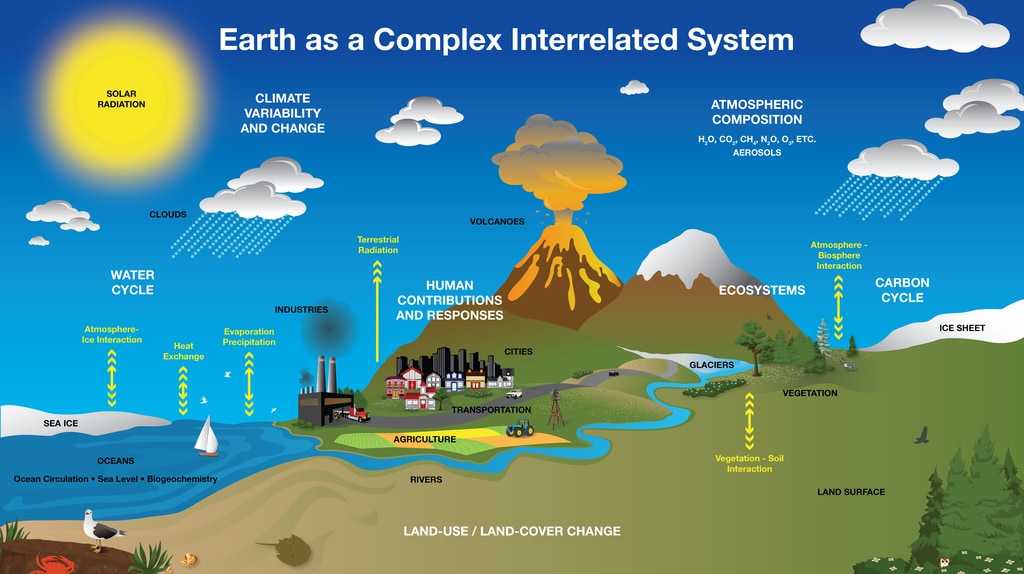
Every part of our planet - from Earth's inner core to the top of the atmosphere - plays a role in making Earth home to billions of different life forms.
Summary
Key Points to Remember:
-
Earth has five main systems: geosphere (rocks), biosphere (life), hydrosphere (liquid water), cryosphere (ice), and atmosphere (gases)
-
All systems are interconnected - changes in one system affect all the others
-
Most of Earth's water is salty (96.5%), and three-quarters of fresh water is frozen in ice
-
The biosphere depends on all other systems to provide the right conditions for life
-
Human activities now significantly impact all Earth systems, especially through fossil fuel use and its contribution to global warming