The Alkynes and Aromatic Hydrocarbons (Leaving Cert Chemistry): Revision Notes
📚Revision Notes
The Alkynes and Aromatic Hydrocarbons
The alkynes
Alkynes are a fascinating group of unsaturated hydrocarbons that contain at least one carbon-carbon triple bond (C≡C). These compounds are highly reactive due to their triple bonds and follow a systematic naming pattern where the ending "-ane" from alkanes is changed to "-yne".
The general formula for alkynes is CH, which shows they have even fewer hydrogen atoms than alkenes. The simplest and most important alkyne you need to know is ethyne (also called acetylene), with the molecular formula CH.
Note
Alkyne Naming Pattern: The systematic naming of alkynes follows the same rules as alkenes, but with the suffix "-yne" instead of "-ene". The triple bond position is indicated by the lowest possible number in the carbon chain.
Structure and bonding in ethyne
Ethyne has a distinctive linear molecular structure. The triple bond consists of one strong sigma bond and two pi bonds, making it quite similar to the bonding found in nitrogen molecules. This arrangement gives ethyne its characteristic properties and high reactivity.
Note
Triple Bond Composition:
- 1 sigma (σ) bond - formed by direct overlap of orbitals
- 2 pi (π) bonds - formed by sideways overlap of p orbitals
- Bond angle: 180° (perfectly linear)
- Bond length: shorter than double or single bonds
Practical applications of ethyne
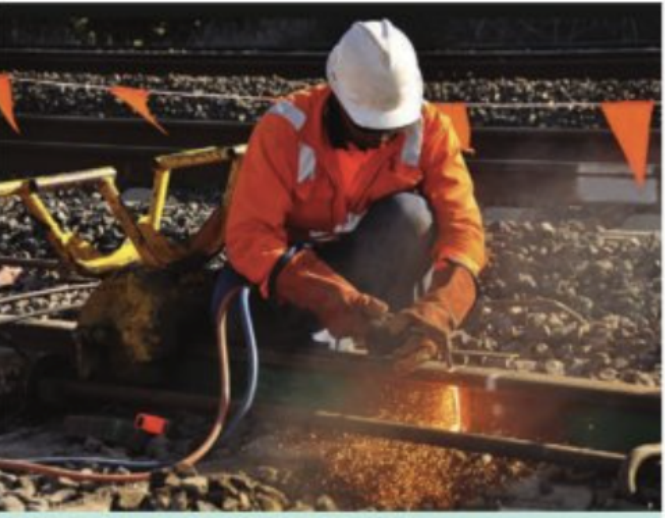
One of the most important uses of ethyne is in oxyacetylene welding and cutting. This process requires two cylinders - one containing oxygen and another containing ethyne (acetylene). The technique is valuable because when ethyne burns in controlled amounts of oxygen, it can reach extremely high temperatures exceeding 3000°C.
Important
Safety in Oxyacetylene Welding: The separate oxygen cylinder is essential not just for achieving high temperatures, but also for safety. Pure ethyne can be explosive under pressure, so it's often dissolved in acetone and stored in porous material within the cylinder.
Combustion of ethyne
When ethyne undergoes complete combustion in excess oxygen, the reaction produces carbon dioxide and water with the release of significant energy.
Example
Worked Example: Complete Combustion of Ethyne
The balanced chemical equation is:
This reaction releases approximately 1300 kJ/mol of energy, which explains why oxyacetylene flames can reach such high temperatures.
However, ethyne typically burns with a very sooty flame when there's insufficient oxygen in the air. This is why the oxyacetylene torch uses a separate oxygen cylinder to ensure complete combustion and achieve the high temperatures needed for welding.
Aromatic hydrocarbons
Aromatic hydrocarbons represent a special class of organic compounds that contain a benzene ring structure in their molecules. These compounds have unique properties that distinguish them from the open-chain hydrocarbons (called aliphatic compounds) we've studied previously.
Understanding aliphatic vs aromatic compounds
An aliphatic compound is an organic compound consisting of open chains of carbon atoms and closed chain compounds (rings) that behave similarly in their chemical properties. In contrast, aromatic compounds have very different chemical behaviour due to their special ring structure.
Important
Key Distinction - Aliphatic vs Aromatic:
- Aliphatic: Open chains or simple rings that behave like open chains
- Aromatic: Contain benzene rings with delocalised electrons
- Chemical behaviour: Aromatic compounds are much more stable and undergo substitution rather than addition reactions
Benzene - the foundation of aromatic chemistry
The most important aromatic compound is benzene, with the molecular formula CH.
Benzene was discovered by Michael Faraday in 1825, and its structure puzzled chemists for many years. Initially, it was thought to be highly unsaturated and therefore very reactive, but benzene actually shows remarkable stability.
The special structure of benzene
Benzene has several key structural features that make it unique and distinguish it from other hydrocarbons with similar molecular formulas.
Note
Benzene's Unique Structural Features:
- Planar molecule: All atoms lie in the same plane
- Bond angles: Each carbon has bond angles of 120°
- Equal bond lengths: All carbon-carbon bonds are identical (139 pm - between single and double bond lengths)
- Hexagonal ring structure: Six carbon atoms form a regular hexagon
- Molecular geometry: Dh symmetry group
Delocalised electrons and resonance
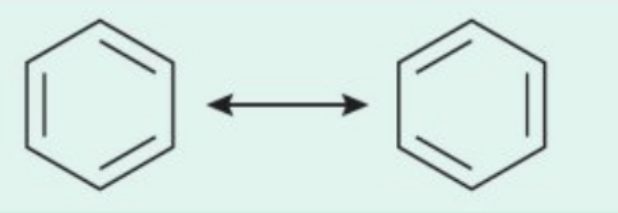
The most important concept in understanding benzene is electron delocalisation. The six electrons in the pi bonding system don't belong to any particular pair of carbon atoms. Instead, they are described as six delocalised electrons that are free to move around the entire ring system.
Important
Electron Delocalisation - The Key to Aromatic Stability: This delocalisation gives benzene extra stability compared to what we might expect from alternating single and double bonds. The electrons help bind together the entire six-carbon ring structure, which explains why benzene doesn't undergo typical addition reactions like alkenes.
The stabilisation energy (resonance energy) of benzene is approximately 150 kJ/mol, making it much more stable than expected.
Representing benzene structure
Chemists use different ways to show benzene's structure, each with its own advantages for understanding different aspects of the molecule.
Note
Two Common Representations of Benzene:
- Kekulé structures: Show alternating single and double bonds (though this isn't quite accurate as it suggests localised electrons)
- Circle notation: A hexagon with a circle inside represents the delocalised electrons more accurately and is preferred in modern chemistry
Examples of aromatic compounds
Many aromatic compounds are based on the benzene ring with different substituent groups attached. These substituents can significantly modify the properties while maintaining the aromatic character.
Example
Common Aromatic Compounds:
- Methylbenzene (toluene): CHCH - benzene with a methyl group
- Ethylbenzene: CHCH - benzene with an ethyl group
- Phenol: CHOH - benzene with a hydroxyl group
- Aniline: CHNH - benzene with an amino group
These compounds maintain the aromatic properties of the benzene ring while having additional functional groups that can participate in other reactions.
Properties and safety considerations
Understanding the safety aspects of aromatic compounds is crucial for laboratory work and industrial applications.
Important
Safety Considerations for Aromatic Compounds: Benzene itself is highly toxic and carcinogenic, making methylbenzene the recommended substitute for most laboratory and industrial applications. Methylbenzene is much safer for small-scale use and is commonly used as a solvent in the manufacture of plastics and explosives.
Always use proper ventilation and safety equipment when working with aromatic compounds.
Exam tips
Important
Common Exam Mistakes to Avoid:
- Drawing benzene: Don't forget to include the circle when drawing aromatic compounds - leaving it out is a major error in exams
- Molecular mass calculations: Remember that aromatic compounds often have substituent groups that add to the molecular mass
- Structure recognition: Practice identifying whether compounds are aliphatic or aromatic by looking for benzene rings
- Reaction types: Remember that aromatic compounds undergo substitution, not addition reactions
Summary
Key Points to Remember:
- Alkynes contain carbon-carbon triple bonds and follow the general formula CH
- Ethyne (CH) is linear and used in oxyacetylene welding due to its high-temperature combustion reaching over 3000°C
- Aromatic compounds contain benzene rings with delocalised electrons that provide extra stability
- Benzene (CH) is planar with 120° bond angles and equal bond lengths throughout the ring
- Delocalised electrons in benzene create a stable pi bonding system that doesn't undergo typical addition reactions like alkenes
- The resonance energy of approximately 150 kJ/mol makes benzene much more stable than expected
- Always use methylbenzene instead of benzene for safety reasons in laboratory applications