Pharmaceuticals (Leaving Cert Chemistry): Revision Notes
📚Revision Notes
Pharmaceuticals
What are pharmaceuticals?
Pharmaceuticals are medicines designed to prevent, treat, and cure diseases. Most medicines we use today, including pain relievers, antibiotics, and anti-cancer drugs, are organic compounds. These complex molecules contain multiple functional groups such as alcohols, carboxylic acids, esters, and benzene rings that give them their medicinal properties.
Chemists working in the pharmaceutical industry spend their careers designing and creating these important medicines. Many pharmaceutical drugs are large, complex molecules with several functional groups that work together to produce the desired therapeutic effect.
Note
The complexity of pharmaceutical molecules is truly remarkable - a single drug can contain multiple interconnected ring systems and functional groups, each contributing to its specific therapeutic action and how the body processes it.
Natural products as sources of medicine
Throughout history, humans have discovered that many plants and animals contain compounds with medicinal properties. These natural products are organic compounds found in living organisms that can be used to treat various conditions.
Some important examples of natural sources and their medicinal compounds include:
| Plant source | Active compound | Medical use |
|---|---|---|
| Willow bark | Salicylic acid | Pain relief, blood thinner |
| Chinchona bark | Quinine | Anti-malarial medicine |
| Opium poppy | Morphine, codeine | Pain relief |
| Coca plant | Cocaine | Addictive and illegal drug |
Table: Some natural products with medicinal or narcotic use
Note
The discovery of medicinal properties in natural products often happened through traditional knowledge passed down through generations, long before scientists understood the underlying chemistry.
From willow bark to aspirin
The development of aspirin provides an excellent example of how natural products can be transformed into modern medicines. As far back as 400 BC, the ancient Greek physician Hippocrates recommended chewing willow bark to relieve headaches.

Example
Worked Example: The Development of Aspirin
Step 1: Natural Discovery Ancient civilizations discovered willow bark's pain-relieving properties through traditional use.
Step 2: Chemical Identification Scientists isolated salicylic acid as the active compound in willow bark.
Step 3: Problem Identification Salicylic acid caused severe stomach irritation as a side effect.
Step 4: Chemical Modification In 1897, Felix Hoffmann at Bayer created acetylsalicylic acid (aspirin) by chemically modifying the original compound.
Step 5: Improved Medicine The new compound maintained pain-relieving properties while reducing stomach problems.
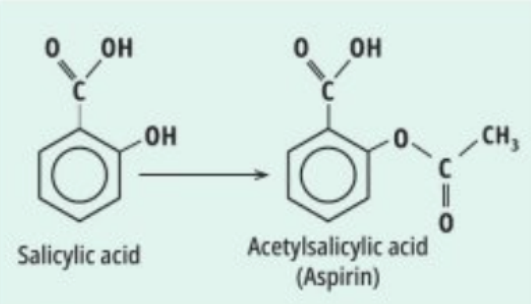
The synthesis of aspirin from salicylic acid demonstrates how chemists can improve upon natural products. The original compound from willow bark serves as a precursor - the starting material from which the new medicine is created.
Key pharmaceutical structures
Paracetamol (acetaminophen)
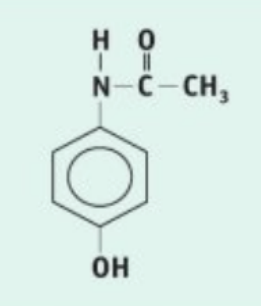
Paracetamol is one of the most commonly used pain relievers and fever reducers worldwide. Its molecular structure contains a benzene ring with hydroxyl (-OH) and acetamide functional groups.
Note
Despite its widespread use and apparent simplicity, paracetamol's exact mechanism of action in the body is still not completely understood by scientists.
Penicillin
Penicillin represents one of the most important discoveries in medical history. This antibiotic has a complex molecular structure containing multiple functional groups and ring systems.
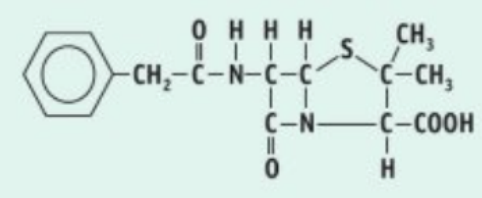
Most products of the modern pharmaceutical industry are large, complex organic molecules containing several functional groups. Aspirin has a relatively simple structure, but antibiotics like penicillin are much more complex in their molecular architecture.
Important
Penicillin's discovery by Alexander Fleming in 1928 revolutionised medicine and has saved millions of lives. This accidental discovery highlights how scientific breakthroughs can emerge from unexpected observations.
Biotechnology in pharmaceutical production
Modern pharmaceutical manufacturing often uses biotechnology - the application of living organisms or biological systems to create useful products or carry out industrial processes.
Important
Biotechnology Definition: The application of living organisms or biological systems to create useful products or carry out industrial processes. This field combines biology and chemistry to solve complex manufacturing challenges.
Penicillin production is manufactured on a large scale through fermentation using nutrient-rich broths. The penicillin produced can be chemically modified by organic chemists to improve effectiveness. For example, adding -OH groups improves absorption in the body. These modified antibiotics (such as amoxycillin) are called semi-synthetic penicillins.
This approach demonstrates biotechnology in action, combining biological processes with chemical modifications to create more effective medicines.
Note
Semi-synthetic penicillins like amoxycillin represent the best of both worlds - they maintain the natural antibiotic activity of penicillin while incorporating chemical improvements that enhance their effectiveness and reduce side effects.
Pain relief compounds from natural sources
Opiates are natural products derived from the opium poppy that provide powerful pain relief. Examples include morphine and codeine. Morphine is a potent painkiller with a complex molecular structure, while codeine is a milder painkiller and cough suppressant.
Important
Critical Safety Information: The use of opiates is highly regulated due to their addictive properties. These compounds show how natural products can have both beneficial medical uses and potential for abuse. Always follow medical supervision when using opiate-based medications.
Challenges in pharmaceutical development
During the nineteenth century, organic chemistry focused mainly on isolating natural products from plants and studying their properties. However, many of these compounds were difficult to obtain due to seasonal plant availability, weather conditions, and other factors.
Note
Historical vs. Modern Approaches: While early chemists were limited to extracting compounds from natural sources, modern analytical techniques now allow chemists to determine molecular structures and synthesise these compounds in laboratories. This ability to create medicines artificially ensures consistent supply and allows for improvements to the original natural compounds.
Summary
Summary
Key Points to Remember:
-
Pharmaceuticals are organic compounds used as medicines, containing multiple functional groups that provide their therapeutic effects
-
Natural products from plants and animals have been the source of many important medicines throughout history, from willow bark (aspirin) to bread mould (penicillin)
-
Modern drug development often starts with natural compounds that are then modified chemically to improve effectiveness and reduce side effects
-
Biotechnology combines biological and chemical processes to manufacture complex medicines like penicillin on an industrial scale
-
Understanding molecular structure is crucial for developing new pharmaceuticals and improving existing ones