Polymers (Leaving Cert Chemistry): Revision Notes
📚Revision Notes
Polymers
What are polymers?
Polymers are large molecules that consist of long chains made up of many smaller units joined together. These smaller building blocks are called monomers. The word "polymer" comes from Greek, where "poly" means many and "mer" means parts, which perfectly describes their structure.
Think of polymers like a very long necklace made of many identical beads strung together. Each bead represents a monomer, and the entire necklace represents the polymer. In the chemical world, these "beads" are small molecules that link together through chemical reactions to form much larger molecules.
Polymers are more commonly known as plastics in everyday life. They surround us constantly - from the food containers we use to store our lunch, to the toys children play with, and even in some medical creams and ointments.
Note
The etymology of "polymer" perfectly captures its essence: "poly" (many) + "mer" (parts) = many parts joined together. This Greek origin helps us remember that polymers are fundamentally about combining many small units into one large structure.

How polymers form through addition polymerization
Polymers form through a process called addition polymerization. This is a special type of chemical reaction where many small monomer molecules join together to create one large polymer molecule.
The polymerization process
In addition polymerization, the monomers must contain double bonds between carbon atoms (C=C). During the reaction, these double bonds break open, allowing the molecules to link together in a long chain. The process can be represented simply as:
monomer + monomer + monomer + ... → polymer
Important
Critical Requirement for Addition Polymerization: Monomers must contain C=C double bonds. Without these double bonds, addition polymerization cannot occur. The double bonds provide the "breaking point" that allows monomers to link together.
Formation of polyethene
One of the most common examples is the formation of polyethene (also called polythene) from ethene monomers. Ethene molecules each contain a C=C double bond. When polymerization occurs, these double bonds break and the ethene molecules link together to form a long carbon chain with hydrogen atoms attached.
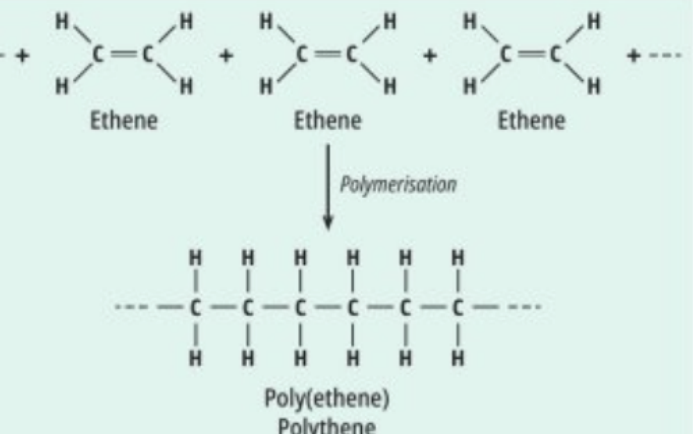
This process creates the familiar plastic material used in shopping bags, food packaging, and many other everyday items.
Common types of polymers
Polyethene (Polythene)
Polyethene is made from ethene monomers and is one of the most widely used plastics. It's particularly useful for making bowls, lunch boxes, food-wrapping film, washing-up liquid bottles, toys, buckets, and fuel tanks in cars. Its versatility and durability make it invaluable in modern life.
PVC (Polychloroethene)
PVC is formed when vinyl chloride monomers (also called chloroethene) undergo addition polymerization. The presence of chlorine atoms in the structure makes PVC different from polyethene.
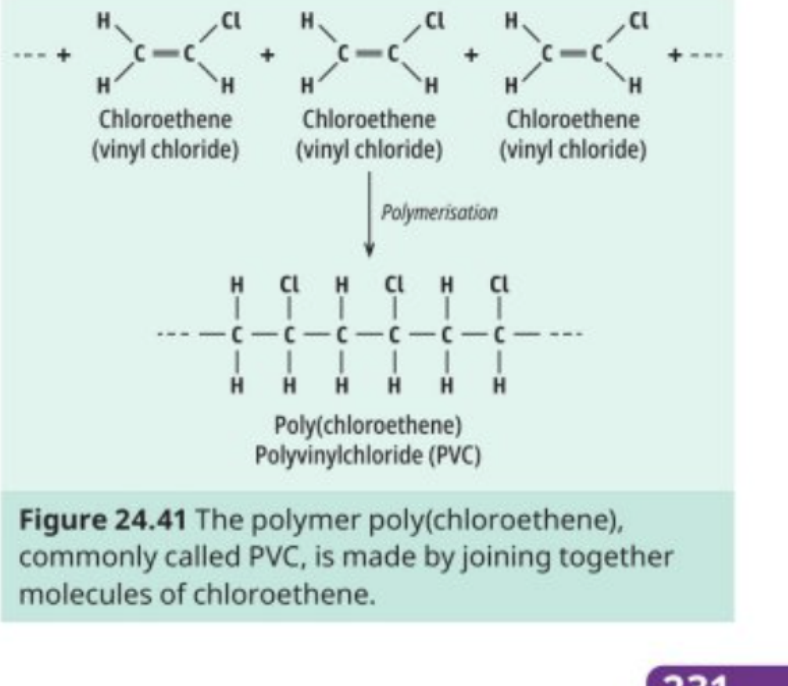
The chlorine atoms create stronger attractions between the polymer chains, making PVC a more rigid plastic. This strength and durability make it perfect for manufacturing items like window frames, doors, gutters, drainpipes, and bank cards.
Polystyrene (Polyphenylethene)
Polystyrene forms when phenylethene monomers polymerize. What makes this polymer special is that each monomer contains a benzene ring, which creates a bulky side group attached to the main carbon chain.
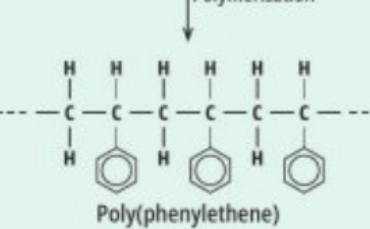
There are two main types of polystyrene:
- Rigid polystyrene: Used for making items like yoghurt containers, disposable drinking cups, flowerpots, and cases for ballpoint pens
- Expanded polystyrene: Used as packing material for fragile objects, ceiling tiles, insulation, and between walls in houses
Understanding repeating units
A crucial concept in polymer chemistry is the repeating unit. This is the smallest part of the polymer that, when repeated many times, produces the complete polymer chain (except for the end groups).
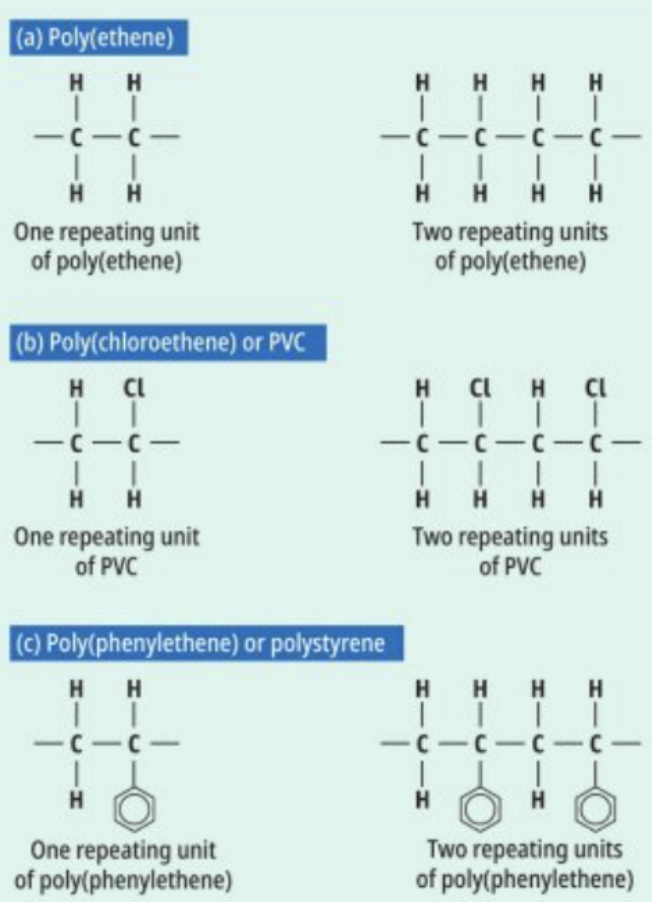
Note
Repeating units are like the basic pattern in wallpaper - the same design repeats over and over to create the full pattern. In polymers, the same small unit repeats thousands of times to create the long polymer chain.
Exam tip for drawing repeating units
Important
Essential Exam Technique: When drawing repeating units in exams, you must not write in the atoms at the ends of the repeating unit, but you may show the end bonds. This helps indicate how the units connect to each other in the full polymer chain.
Environmental impact of polymers
While polymers are incredibly useful, they present significant environmental challenges. Most addition polymers are non-biodegradable, meaning they cannot be broken down into natural substances like carbon dioxide and water by microorganisms in the environment.

Why are polymers non-biodegradable?
The reason polymers persist in the environment is because of their strong carbon-carbon polymer chains. These single bonds in the main chain are very stable and resistant to attack by microorganisms. Microorganisms simply do not have any way of breaking down these strong bonds.
Environmental consequences
Important
Critical Environmental Impact: Addition polymers can exist in the environment for hundreds of years. Their durability, which is an advantage for everyday use, becomes a serious problem when they accumulate as waste. This leads to:
- Accumulation of plastic waste in landfills
- Ocean pollution affecting marine life
- Contamination of natural environments
Research solutions
Note
Scientists are actively researching ways to develop more biodegradable polymers. These new materials contain functional groups such as esters, which can be more easily broken down by microorganisms, offering hope for more environmentally friendly alternatives.
Remember!
Summary
Key Points to Remember:
- Polymers are long chain molecules made by joining many small monomer molecules together
- Addition polymerization occurs when monomers with C=C double bonds link together, with the double bonds breaking to form single bonds in the chain
- Common polymers include polyethene (from ethene), PVC (from vinyl chloride), and polystyrene (from phenylethene)
- Repeating units represent the basic pattern that repeats throughout the polymer chain
- Most addition polymers are non-biodegradable due to their strong carbon-carbon backbone, creating environmental challenges that require ongoing research solutions